Together we Eat: Jordanian Ka'ak
a guest essay and recipe from Laila Ibrahim
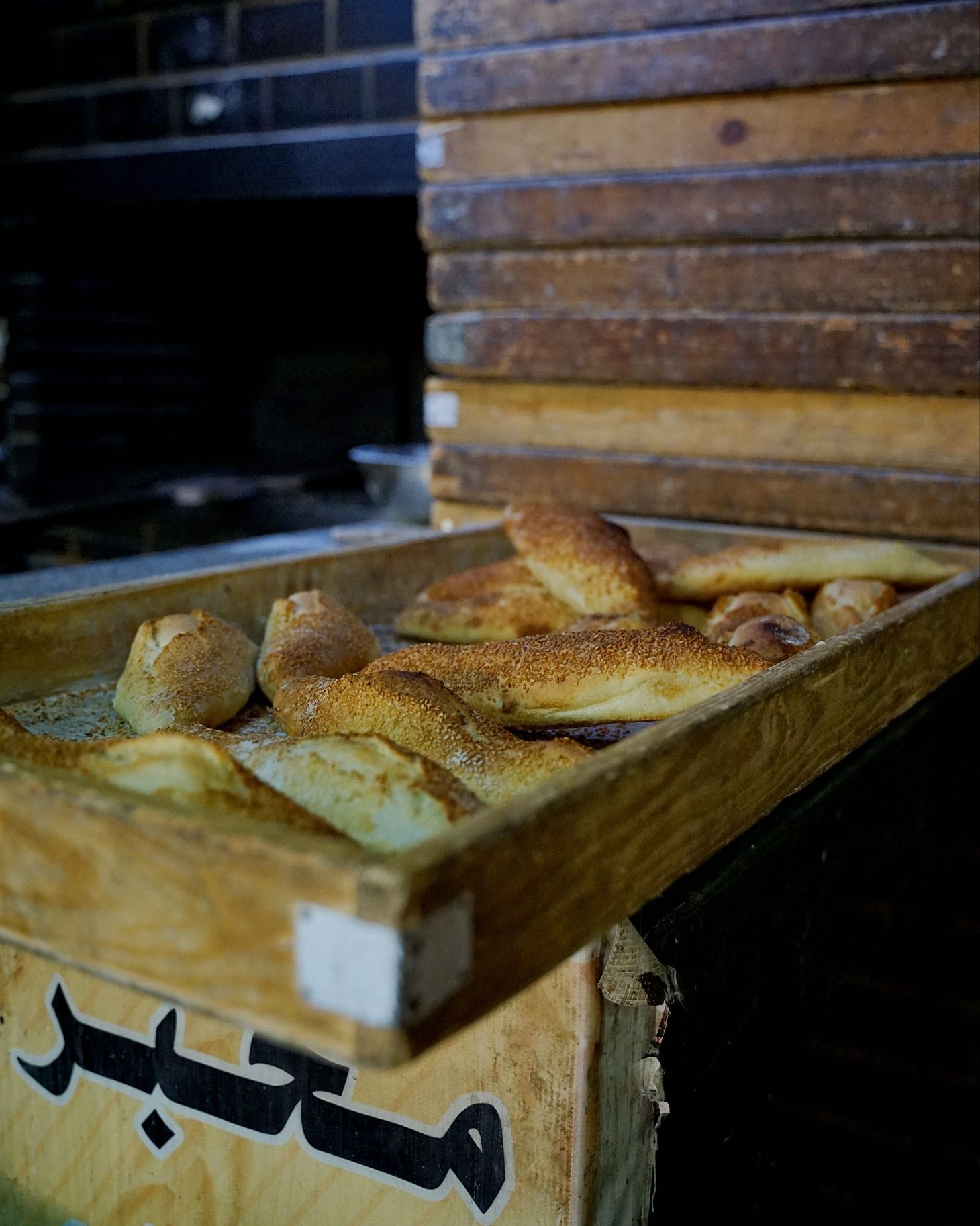
Table of Contents
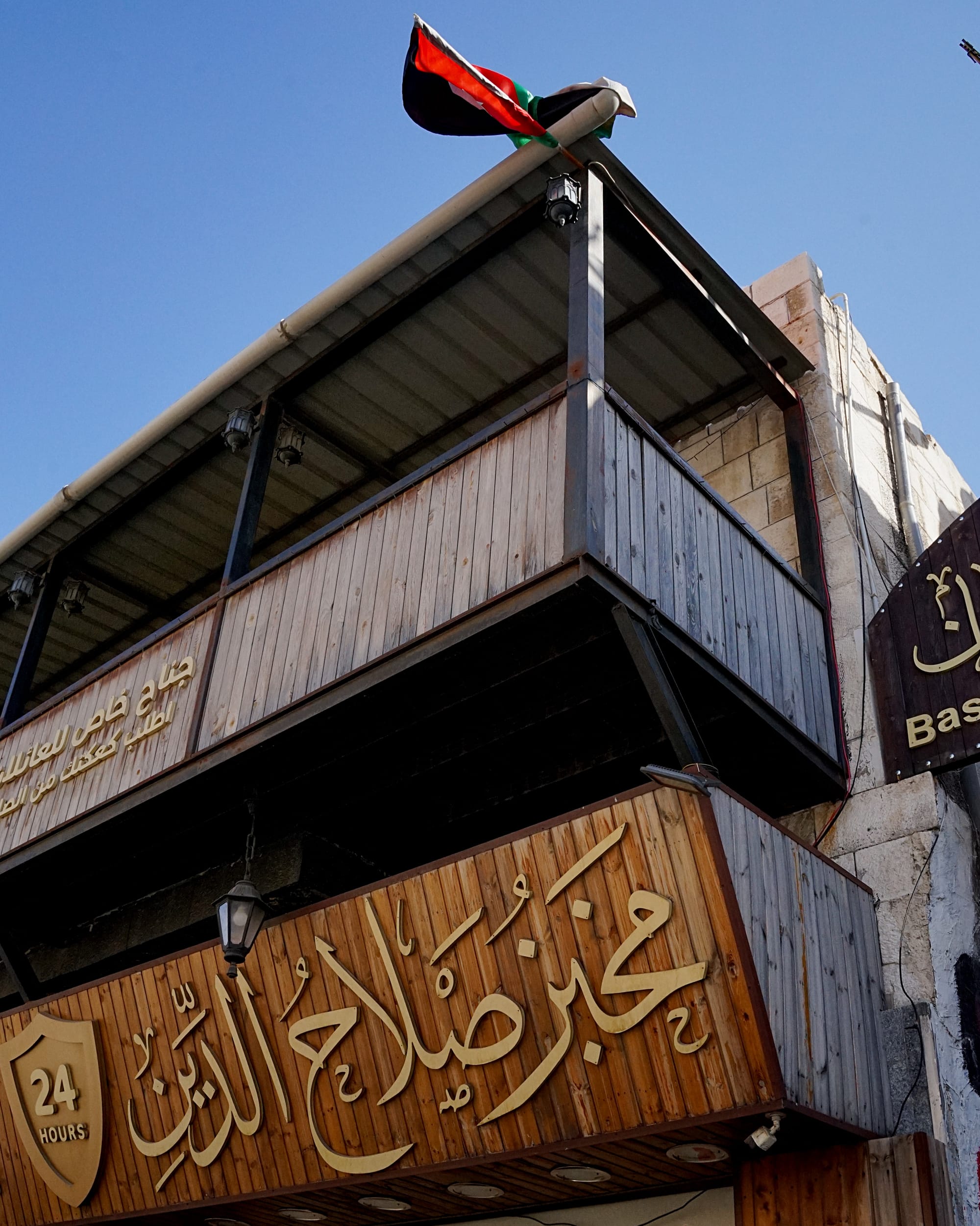
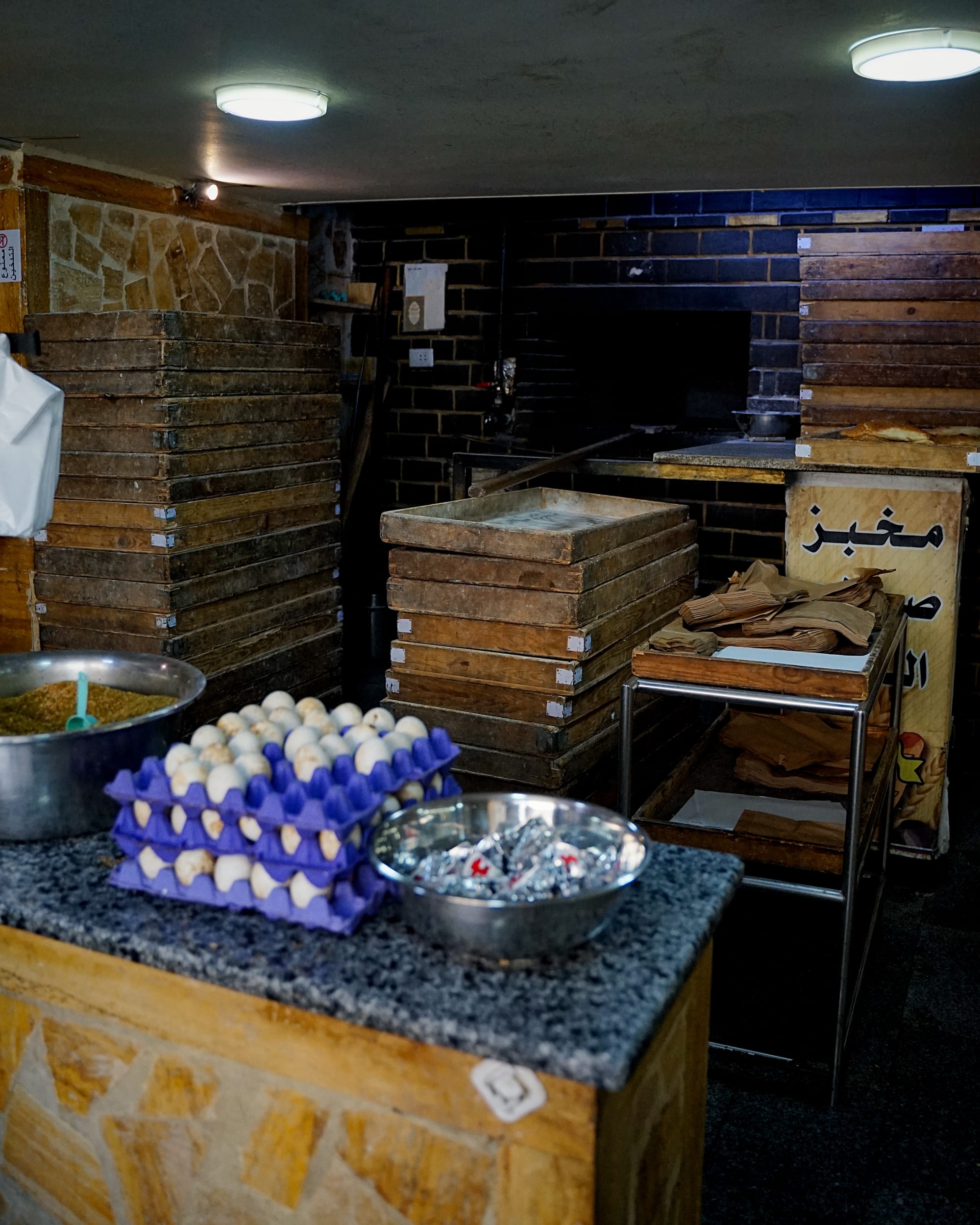
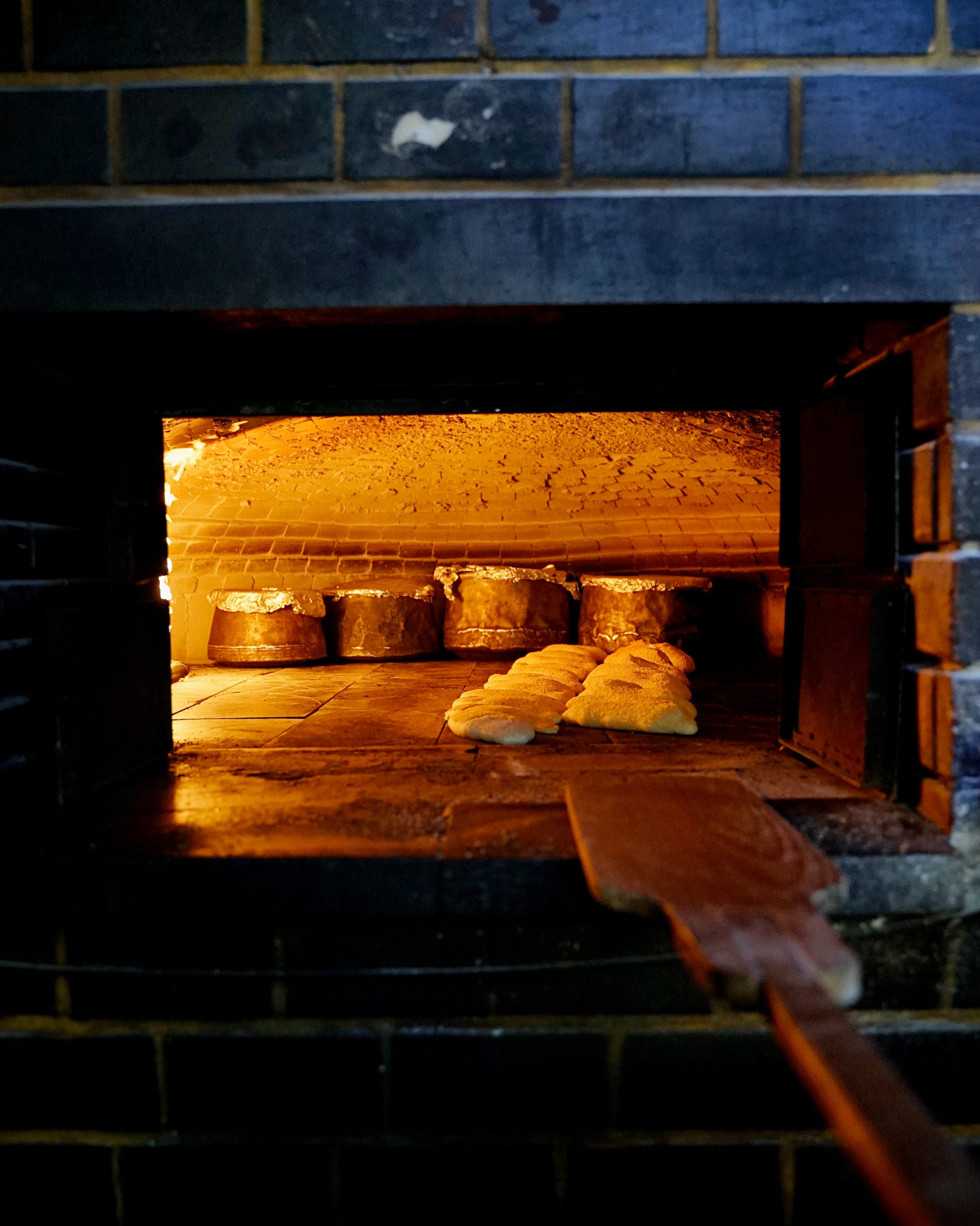
Crates of sesame-crusted ka'ak sit stacked near the counter at Salaheddin Bakery in Downtown Amman, Jordan, still warm from the oven, while trays of eggs baked in hay pile up beside them. For decades, the bakery was known for ka'ak w beid—soft sesame-coated bread split open and filled with eggs. The offerings are deliberately spare: bread, eggs, triangles of soft, foil-wrapped cheese similar to La Vache Qui Rit, along with za'atar and a fermented hot sauce.
The bakery runs on an honor system, a setup that feels almost unmoored from the careful tallying one might expect in a busy bakery. Customers grab what they need, assemble their sandwiches at the counter, and when it’s time to pay, simply tell the cashier how many loaves of bread, eggs, and cheese triangles they took. As for the endless supplies of za'atar and hot sauce, they’re on the house.
On any given morning, the bakery draws a steady stream of people from across Amman—construction workers stopping in before a shift, families picking up sandwiches, curious tourists, and the occasional cluster of high school students lingering near the counter. Even loaded with eggs and cheese, the sandwich costs about 0.70 Jordanian dinars—roughly a dollar.
What makes ka'ak so distinctive
The first documented recipe for ka’ak appeared in a 13th century Aleppo cookbook, “Kitab al-Wusla ila l-Habib,” (Winning the Beloved’s Heart With Delectable Dishes and Perfumes), attributed to Syrian historian Ibn el-Adim.
Different ka'ak shapes can be found across the Levant. At Salaheddin, the loaves freshly emerge from the oven lightly golden and generously blanketed with sesame seeds across the top and sides. The crumb is soft and fluffy with a subtle sweetness—which might explain why Levantines use the same word also to describe cake—while the seeds lend a gentle crispness. Unlike a baguette, whose thick crust shatters when bitten, ka'ak remains tender, yielding easily when split open and filled.
For many children growing up in Jordan, it is closely tied to school lunches—filled with labneh and slices of cucumber. The style is closely related to ka'ak al-Quds, the sesame-covered bread famously associated with Jerusalem, though here it is shaped differently.
The technique behind the dough
The dough for this ka'ak needs to strike a careful balance. The bread should be soft enough to yield easily when filled, yet structured enough to hold its shape and support fillings without collapsing. At the same time, it should develop the lightly sweet flavor and tender crumb typical of the sesame-crusted loaves sold in bakeries across Jordan.
The dough begins simply: Yeast is stirred with a small portion of the water and sugar and left briefly until foamy. This step isn’t strictly necessary, but it confirms the yeast is active and helps it disperse evenly before the remaining ingredients are added. Flour, olive oil, salt, and the rest of the water are then mixed together until a smooth, elastic dough forms. The relatively high hydration helps produce the soft, airy crumb that defines this style of ka'ak.
To achieve that balance, the dough includes a modest amount of olive oil, which tenderizes the crumb and keeps the bread supple without making it overly rich. The oil tenderizes the crumb while keeping the bread supple rather than crusty, producing a loaf that remains soft even after it cools. A modest amount of sugar contributes subtle sweetness and encourages the bread to bake to a light golden color.
Some recipes incorporate milk powder to soften the crumb, but in my testing, it pushed the bread too far in that direction, producing a loaf that felt overly enriched.
After mixing, the dough is left to rise until doubled in size. Once risen, it’s divided and briefly rested before shaping, which makes the dough easier to handle.
Shaping the loaves
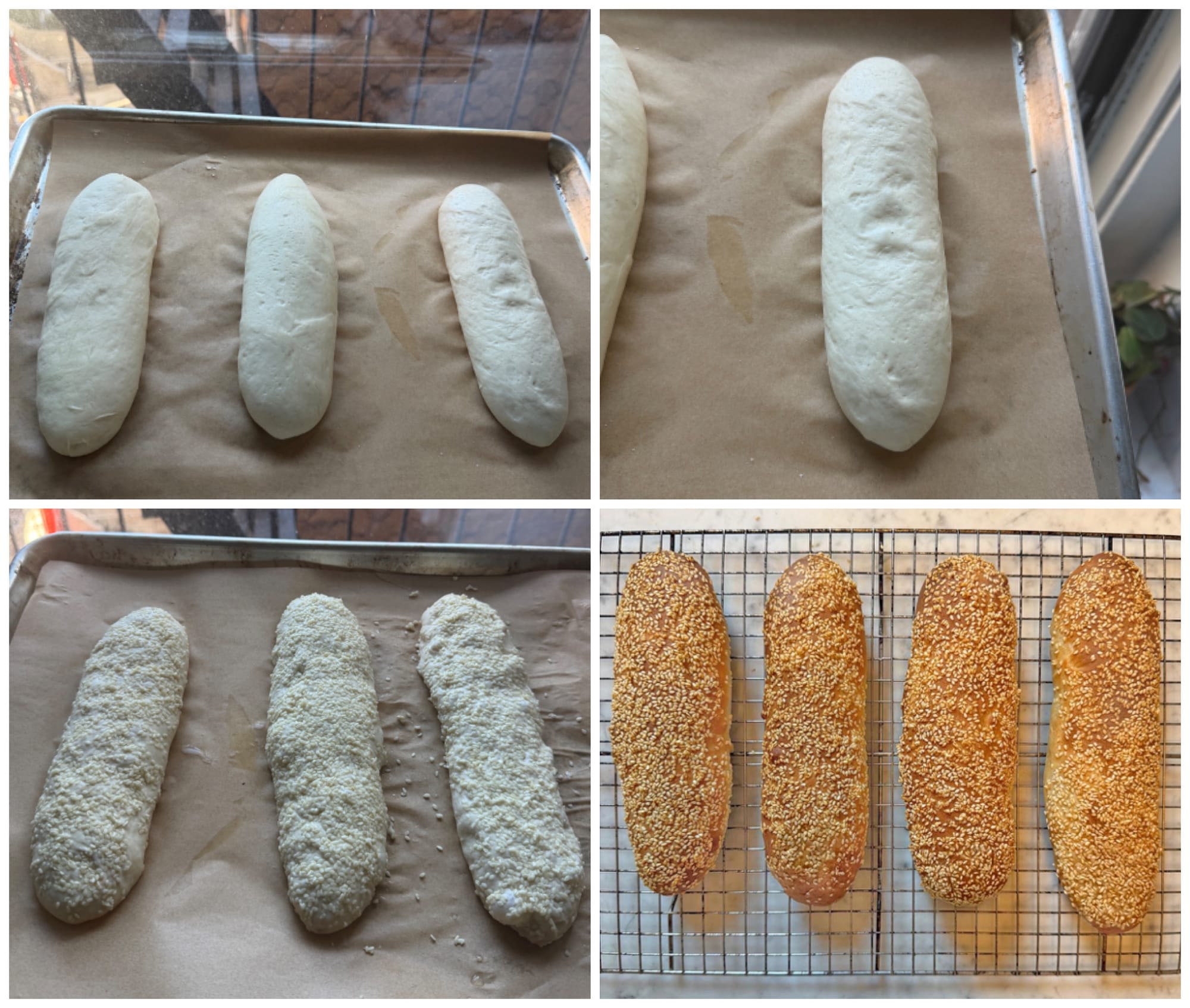
The shaping of the loaves also plays an important role in the final texture. The finished bread is gently elongated with slightly tapered ends, forming a torpedo-like shape.
In early tests, I shaped the dough much like a demi-baguette, rolling it tightly to build surface tension. While the bread baked well, the tighter shaping compressed the crumb slightly, producing a denser interior than I was aiming for.
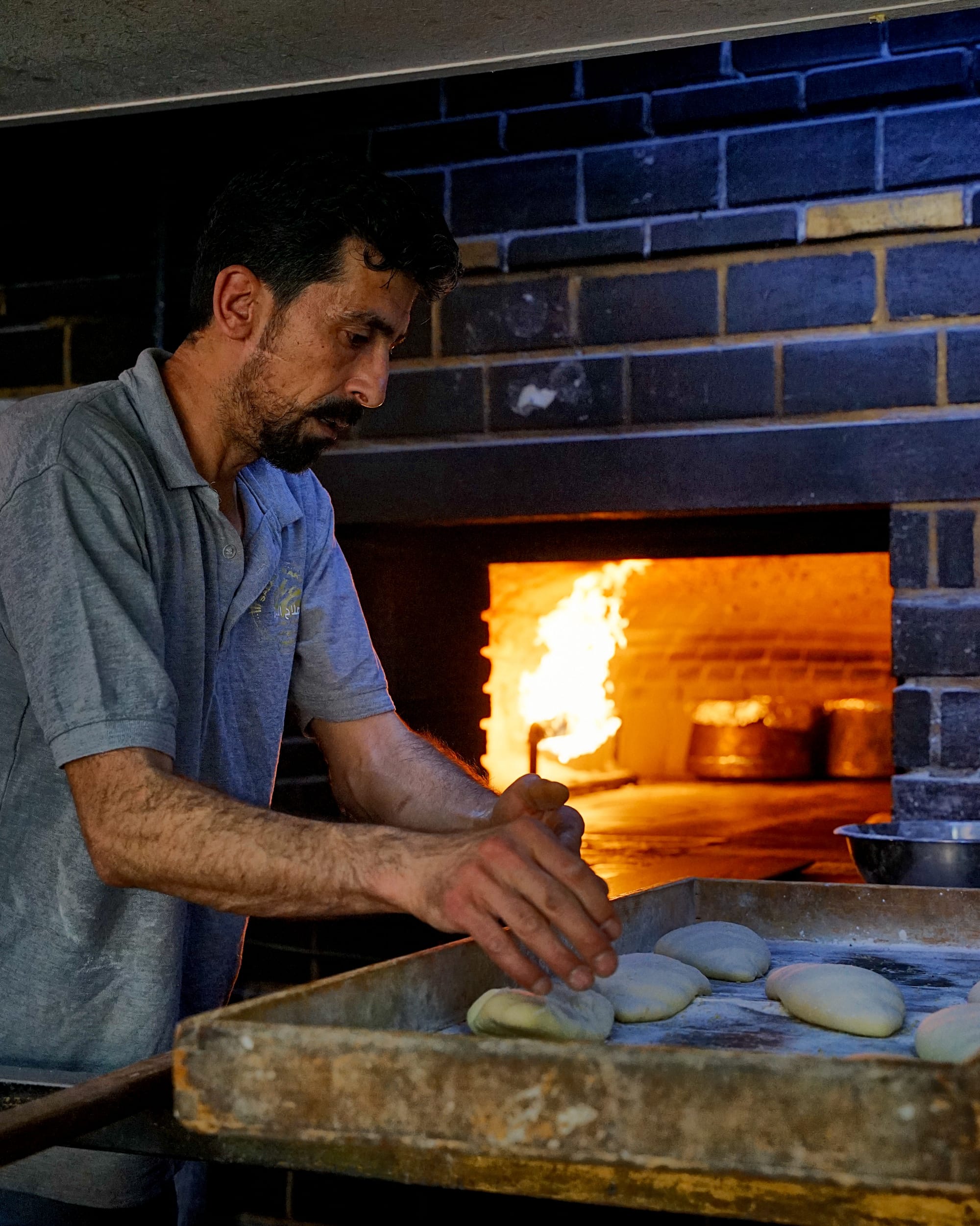
After many rounds of testing, revisiting photos my sister and I had taken at Salaheddin revealed a simpler approach. The bakery loaves were shaped into logs with only gentle tightening rather than the firm rolling used for baguettes. Replicating that method produced a loaf that remained soft and airy while still holding its shape during baking.
The sesame coating
A defining feature of this bread is its generous sesame coating. The seeds should cover the loaves evenly so they toast as the bread bakes, giving the crust a gentle crispness and a deeply nutty aroma.
In my first tests, I brushed the shaped loaves with water and pressed sesame seeds onto the surface by hand. While this method worked well enough, it required careful handling and still produced uneven coverage.
Looking again at the photos my sister and I had taken at Salaheddin, I noticed that the loaves were dipped directly into a mixture of sesame seeds and water before baking. At first, I hesitated to try the same method, worried that flipping the dough into the seeds might distort the shape. But the photos told a different story: The bakers handled the loaves with practiced ease, tossing and turning them quickly without much concern for minor bumps or shifts in shape. Replicating that approach solved the problem immediately. The seeds adhered easily across the entire surface of the bread, creating the dense sesame coating that gives this ka'ak its distinctive look and flavor.
Baking the loaves
Once coated in sesame seeds, the loaves are baked at a relatively high temperature until lightly golden. The heat encourages the seeds to toast as the bread bakes, deepening their flavor and giving the exterior a gentle crispness.
The finished loaves should emerge fragrant and sesame-covered, with a lightly golden crust and a soft interior that yields easily when filled. While the bread is best the day it’s baked, it freezes well, making it easy to keep ka'ak on hand.
Whenever I return to Jordan, I still make a point of stopping there. I grab a loaf of ka'ak, two eggs, and two triangles of cheese, peeling the eggs on the crowded counter before tucking them into the bread with the cheese. A spoonful of za'atar scooped from a giant metal bowl and plenty of the bakery’s hot sauce go on top, and the sandwich is slipped into a brown paper bag. I step outside and take a seat on the steps around the corner, where others are doing the same. Together we eat, sharing in the merriment of a warm, just-baked loaf of bread.
Recipe: Jordanian Ka’ak
Makes 6
Prep Time: 40 mins
Cook Time: 20 mins
Proofing Time: 1 hour 40 mins
Cooling Time: 30 mins
355 g room-temperature water, divided
30 g granulated sugar
10 g active dry yeast
500 g all-purpose flour
30 g extra-virgin olive oil, plus more for greasing
9 g salt
65 g white sesame seeds
2 tablespoons (30 ml) water
- In the bowl of a stand mixer fitted with a dough hook, combine 60 g water, yeast, and sugar. Let stand until foamy, about 5 minutes. Add flour, olive oil, salt, and remaining 295 g water. Mix on medium-low speed until smooth, elastic dough forms, 8 to 10 minutes. Gather dough into a ball and transfer to work surface.
- Lightly grease mixing bowl. Return dough to bowl and turn to coat. Cover bowl with plastic wrap and let rise at room temperature (75˚F/24˚C) until doubled in size, 60 to 90 minutes.
- Punch down dough. Turn dough out onto lightly floured work surface. Divide into 6 equal portions (about 150 g each). Shape each portion into tight ball by cupping hand over dough and rotating against counter to create surface tension. Cover loosely with lightly greased plastic wrap and let rest for 15 minutes.
- Line two rimmed baking sheets with parchment paper and set aside. On a lightly floured surface, working with 1 portion at a time (keeping remaining pieces covered), gently stretch and press dough into a slightly flattened oval, about 1/2-inch thick, arranging it so one of the shorter ends is parallel to kitchen counter.
- Starting with the end closest to kitchen counter, roll dough into a tight log, sealing very lightly with the heel of the hand after each fold, then pinch the seam firmly closed.
- Place seam-side down and gently roll under palms to form an 8-inch log, tapering the ends slightly. Transfer to prepared baking sheets, placing 3 logs per each sheet.
- Cover loosely with lightly greased plastic wrap and let rise until puffy, 25 to 35 minutes. The dough should spring back slowly when gently pressed, leaving a slight indentation.
- While rolls are proofing, adjust oven racks to upper-middle and lower-middle positions and preheat oven to 425°F (220°C). In a small bowl, stir sesame seeds and water. Transfer sesame seed mixture to a large plate; set aside.
- When rolls are done proofing, working with one roll at a time, gently invert roll onto sesame seed mixture to coat. Return roll to baking sheet and top with more sesame seed mixture to fill in any sparse areas. Transfer baking sheets to oven. Bake until lightly golden, 18 to 20 minutes, rotating pans from front to back and top to bottom halfway through baking.
- Transfer to wire racks and cool at least 30 minutes before serving.
Notes
Ka’ak is best eaten the day it’s made. To freeze, let rolls cool completely, then wrap tightly in plastic wrap and place in resealable freezer bags. Freeze for up to 2 months.
Equipment
Stand mixer with dough hook attachment, two rimmed baking sheets, parchment paper, wire racks
Laila Ibrahim is a Palestinian-Jordanian chef and food writer based in Brooklyn, New York. A graduate of the Culinary Institute of America, she spent several years working in professional kitchens before pursuing a career in food media. She previously worked as a test cook at America’s Test Kitchen and is now part of the team at Serious Eats. Her Arab heritage is a strong influence on her cooking, and her work is driven by a fascination with food as a window into history, culture, and the people and places behind culinary traditions.
wordloaf Newsletter
Join the newsletter to receive the latest updates in your inbox.