A Lot More Bread to Our History Than We Know
A guest interview from Amy Halloran with Andrew Coe, author of 'American Bread: A History'
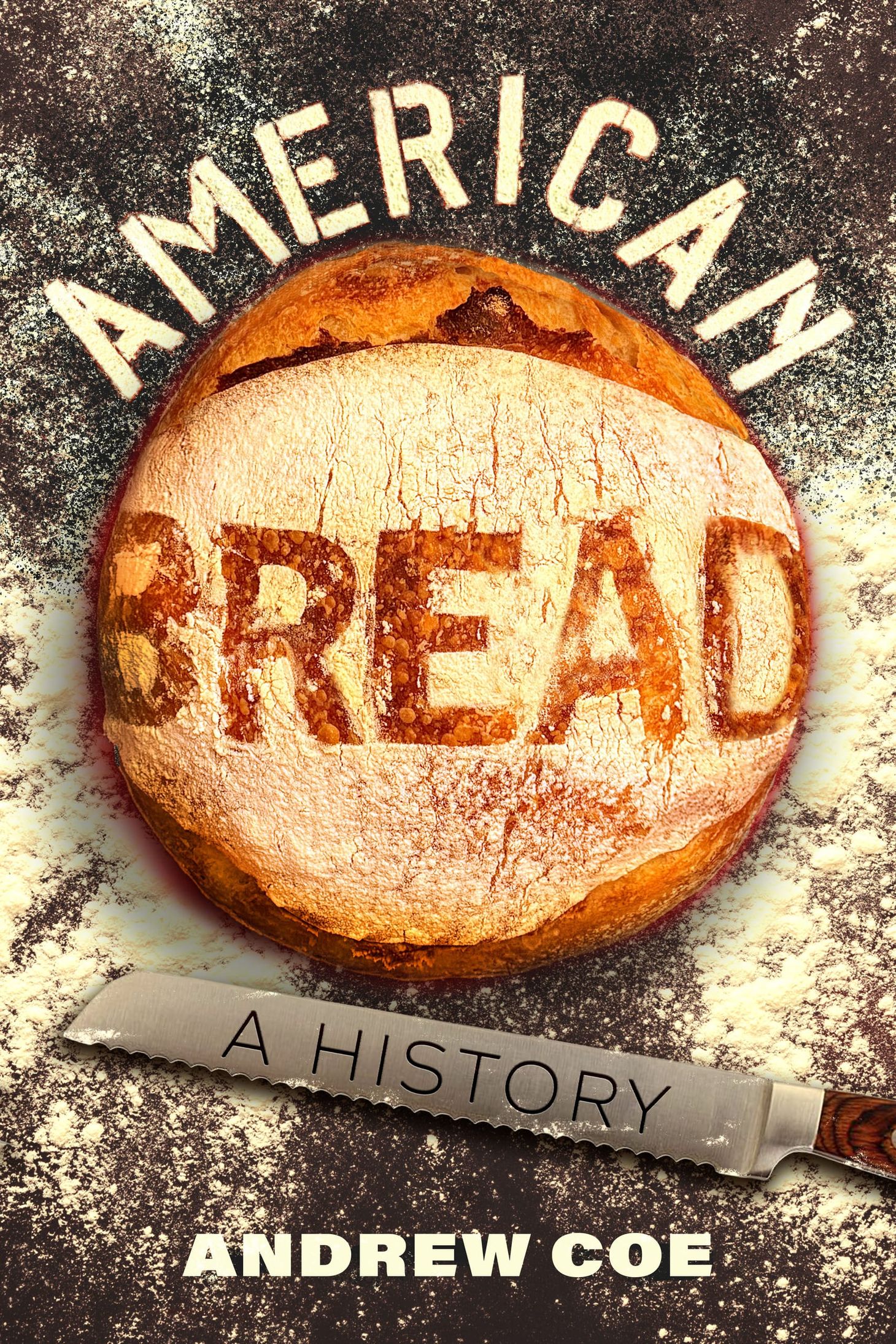
Table of Contents
American Bread: A History is a gift of a book, one that introduces readers to the breads that fed America, and the grains, milling and leavening involved. Hunting for this has been a piecemeal affair, but now, the facts are assembled into a coherent story that puts our staple food into several historical contexts. Andrew Coe’s writing is inviting and conversational, tracing the story of bread in a bakers’ dozen of loaves and chapters.
A food writer and scholar who covered the New York City bread beat for Serious Eats, Andrew Coe is also the author of Chop Suey: A Cultural History of Chinese Food in the United States and, with Jane Ziegelman, A Square Meal: A Culinary History of the Great Depression. Some of the other places you’ll find his writing are The Atlantic, Saveur, Gastronomica, Los Angeles Times, The New York Times, and The Oxford Companion to American Food and Drink.
I loved how A Square Meal explained the rise of the sandwich, and I am grateful that Andrew Coe applied his curiosity and research chops to bread more broadly. I’ve been hungry for this book for 15 years, when I began trying to understand why we have the kinds of flour and bread we do. The book includes supplemental resources, like a timeline of bread, and a bibliographic essay for each chapter. I think the timeline should be illustrated and available on its own—maybe as a poster!
Andrew Coe invited me to bake from the book with him, and I’ve been enjoying exploring the recipes he highlights, and trying to nail down ingredients, like homemade yeast and particular grinds of flour. Maybe you’d like to join our bake-along? I hope you have as much fun reading the book, and using it, as I do, and that you enjoy our conversation.
You can also read an excerpt from American Bread below:
 Andrew Janjigian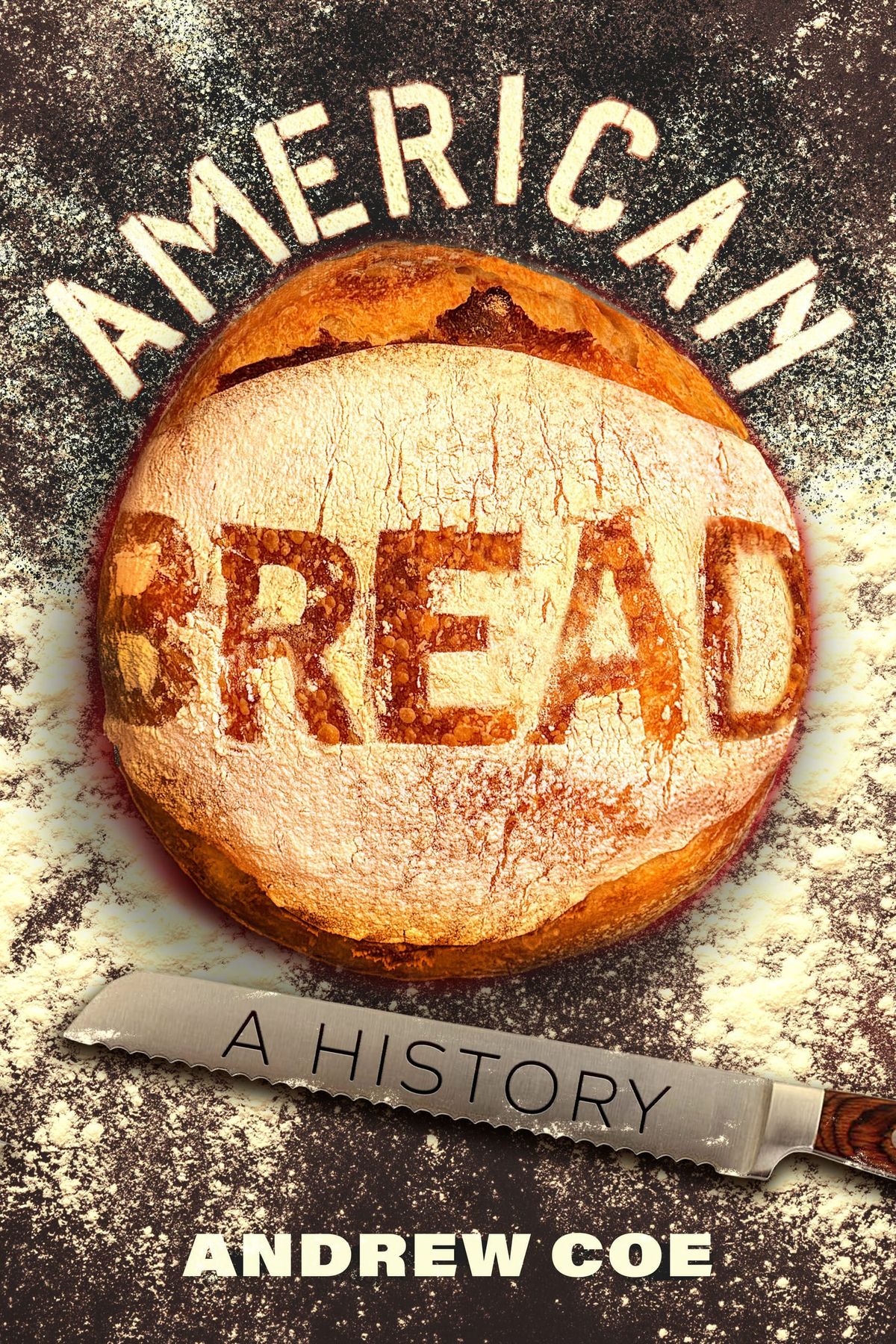
—Amy Halloran
Amy Halloran: How long did the book take, from idea to now?
Andrew Coe: I guess I began working on it about maybe four years ago. I don't remember exactly. Coming out of COVID, I was wondering what my next book project would be, and a lot of things sort of came together. First of all, I've always loved bread, and then there was the COVID bread craze. I was one of the people who started making bread at that time, even though I had written a lot about bread before. I realized that there was a big hole in the literature of food history, and it's a loaf shaped hole. Nobody had really written about the history of bread, not just in the United States, but in a lot of other countries as well. Writings about the history of bread are very spotty. In places like France, which obviously has an incredible bread tradition, there's some great stuff, but in other parts of the world, not so much. I had been taking another look at Elizabeth David's English Bread and Yeast Cookery. I really loved the book. I read it from cover to cover, and decided, why don't I do an American version? That's a very idiosyncratic book, though, and I realized that an American version simply wouldn't work. So, I had to come up with my own book and here we are.
AH: How did you get from that impulse to what we have now?
AC: Well, first you have to think about the subject and write a proposal, which is a thinking exercise where you have to put it down on paper, and get from A to B or A to Z and fill in all the blanks in between. I needed a framework, and I decided to do it based on the most important loaves. Each chapter is a separate loaf, chronologically. Each of those loaves represents something very important about bread and about the United States at those different periods in our history.
AH: Let’s talk about you and your wife Jane as food scholars, and how this book fits in your individual and combined lineage.
AC: We're both food historians and we've both written a lot about American food and particularly immigrant food. One of my first big food histories was a cultural history called Chop Suey: A Cultural History of Chinese Food in the United States, and that was about the American interaction with Chinese food from the arrival of the first Americans in China in 1783 all the way up until today. I was pursuing the idea that foods don't just exist in the present, that they have a history, and that there's a past. And the past really informs ideas about food today. So, in the case of Chinese food, there's a lot of misconceptions about Chinese food and what Chinese eat, which still linger in the backs of the mind today. An idea of what bread is also was based on very, very old European roots, essentially going back thousands of years. I mean, the idea that white bread is like the classy, fancy, good bread, and that brown bread, anything dark is coarse and only for peasants—I mean, that's something which has very, very old roots.
AH: It's not new! Tell us the trajectory of how you became a food historian.
AC: I went to college and I actually was a writing major. I thought I would be a fiction writer and that didn't happen. The more important influence on my career was actually my parents because I grew up the child of two anthropologists. The study of other cultures, and taking other cultures seriously was always very, very important. More specifically, my mother, Sophie Coe, was an early food historian. She wrote a book about the foods of the ancient Aztecs, Mayas, and Incas. And then she started, and she passed away, but my father completed, a book called The True History of Chocolate. So, food and the history of food was very, very important in my family. And somehow, I'm continuing the legacy.
AH: Did you fight it at all? Did you resist taking the mantle?
AC: No. Well, what happened was, I was writing more and more about New York history. And I had seen at the New York Public Library a photograph of New York Chinatown in the 1940s. There were a lot of restaurants along the street and signs above the restaurants, but instead of saying restaurant and then whatever the name was, they would say Chop Suey. I looked at that photo and I said, well, why do all these signs say Chop Suey? And then the next question is, well, what is Chop Suey? What was Chop Suey? How come it was so important then? I know Chinatown very well, and I wondered how come none of the signs say Chop Suey today? What happened? That turned into an article, and I soon realized that the article could be a book because nobody had written a history of Chinese food in the United States. And here I am.
AH: Great. Now, let's walk through your history of enjoying bread and writing about bread.
AC: Well, I mean, I've always loved bread. One of my fondest memory, my fondest bread memories is back, I guess, in, you know, the late 70s, back at the time of like the Whole Earth Catalog and all those, back to the land things which were in the air at that time. My mother started making bread. I think she was probably using the Shaker Cookbook or one of the recipes from a book like that. And so, it would be a pretty earthy, early American loaf. I remember it just coming out of the oven and slicing it up still warm, which of course the early Americans didn't do because they thought it was poisonous, but we didn't know that. I remember putting fresh butter on it, might have been butter that my mother had churned herself and or we had churned, the kids had churned. And, you know, that was like a little bit of heaven. And from then, I've always loved bread.
But I really started getting into it when I was writing more and more about food and eating a lot of bread in New York City. Suddenly, about 15 or 20 years ago, the focus of food media turned from what I thought were worthy subjects to cupcakes. And I'm like, why are they talking about this blankety blank little piece of goo here? They should be talking about bread. That's real food. And I just said, we need more food writing about bread. That's when I started writing about bread for Serious Eats. For a few years, I had a bread column reviewing the city's best bakeries. And that was a lot of fun. I met a lot of bakers, ate a lot of bread and learned a lot about bread. Those bakers are still around today in one place or another, and they make great bread. I think they should be honored and supported, so that's part of the reason why I wrote my book. In the acknowledgements, I acknowledge all the bakers.
AH: And what about your own baking? Where does baking bread fit in?
AC: Well, you know, I started baking during COVID and I've been baking ever since. I generally bake from like one to three loaves a week. I eat bread every day. Bread is my breakfast and a lot of times, my dinner. I don't eat it so much for lunch. I just love it. I love the taste of it and smell of it and how it goes with food. And I really enjoy baking. I mean, I love the creativity, the working with your hands, that whole aspect of it. The sensory component of the smell. I mean, it's just so lovely, the smell of the starter, the smell of the dough, the smell of the bread baking in the oven. It's just like a pleasure all around. And in a time when everybody's eyes are glued to screens 24/7, it's a perfect, lovely distraction. It reminds me of why we're here on Earth and not to stare at screens.
AH: Indeed! As you made your way through COVID, what were some of the recipes that you used?
AC: That's a good question. The first couple of loaves came out like hockey pucks, and whatever recipe I used, I've forgotten it. But then at some, I loved the corn rye from Stanley Ginsburg's The Rye Baker. I'd written a lot about corn rye. I tasted corn rye from all the existing Jewish bakeries that still made corn rye, which unfortunately, I don't know if any make corn rye anymore, perhaps one. So I really knew what the bread was supposed to taste like. And when the bread was in the oven, I thought, hey, this is the right smell. This is the way it's supposed to smell. And what came out was a corn rye. And that was a lovely thing. It's one of my favorite breads.
AH: Did you start a starter?
AC: Yes. I've always used an all rye starter and, you know, I did it from scratch and I have been using the same starter ever since. Rye starters are strong starters compared to wheat. I think I did a few wheat starters, and it didn't have the same pop. If I want to do a wheat bread, then I sort of blend in the wheat (into the starter) and go from there. I'm all-in on rye.
AH: Great. I want to know about your research and writing process.
AC: Well, I have the good fortune to live in New York City, which has one of the greatest libraries in the world, the New York Public Library. My writing process has been to go into the New York Public Library, sit down and order books and go through books. When I'm starting a new chapter, I have to figure out the parameters of the material. So, I'm ordering 20 books a day or something like that and going through a huge stack of books. And then as I learn the material and see what directions I want to take, then I kind of winnow things down. So, it's like research and writing at the same time. In the beginning of a section, I'm taking a lot of notes, but then I'm writing, but I always have books by my side to consult and to follow through on.
AH: And I think that there's a writing room where you can keep books?
AC: There's something called the Vartan Gregorian Scholar Center. And Vartan Gregorian was a president of the New York Public Library back in the 1980s and at the time the library was not doing so well. He really put it back on its feet and he's still revered today. There's a bunch of rooms on the second floor of the library which are set aside for scholars. Most importantly, all the scholars there have shelves, where you can keep your books. And they won't get sent back to the stacks or anything like that until you give them back. So if you're working on something, it's really, really nice to know that the books are there and you can just go grab them.
AH: Let's talk about the Tolley baking archives (also in the New York Public Library). I had an appointment with them, and it was my last outing before the COVID shutdown. Boy, I just love those formula booklets.
AC: Right. Well, his name was Albert Tolley and he was the head baker, beginning in the early 20th century through the 1950s for the Ward Baking Company. That was the big baking conglomerate which essentially tried to take over industrial baking all across the United States and become the one lead bakery until they were stopped. After they were broken up by an antitrust action, Tolley worked for Bond Bread and a bunch of other of the spin-offs from Ward. The breads that Ward made included Tip Top Bread and Wonder Bread. They had a bunch of brands under their umbrella. Mr. Tolley was in charge of the basic formulas for all those breads. He has these notebooks which are about this big (the size of an index card), and usually leather covers, with little pages on the spiral rings. And they're like typed out red formulas, which are sort of like chemical formulas, in shorthand. The page tells you if it's a straight dough or a sponge dough, and it tells you what the ingredients are. It just says, Eight pounds flour, two buckets, water was usually done in buckets, six ounces of yeast, et cetera, et cetera. And it gives you very basic like rising instructions. It just says two hours, which one assumes is a two-hour rise. et cetera. And this was enough information that an experienced baker could just take this formula and make the bread.
You can see through his notebooks from the like in the 1910s all the way through the 50s. And you can see how the recipes evolve. A lot of the early recipes have lard in them as a shortening, and then that disappears. And then in the 1920s, you start getting the additives, which were things to boost the dough and then preservatives and softeners and things like that. The first big additive was Arkady, and then it went on from there. You can see how factory made bread evolved into the stuff we get in the supermarkets today.
AH: Do you feel like you got a sense of the person making those formulas?
AC: Well, you get the sense that he was very proud of being a part of the Ward family—I mean the corporate family, not family family. Beyond the formula books, there's a lot of ephemera, promotional booklets and annual corporate annual reports put together for the annual meeting of all the bakery heads internationally, all going to Milwaukee or wherever to have their meeting. It really gives you a sense of the internal culture of the bakeries, as well.
AH: What other materials did you use?
AC: For the first two centuries of American colonial history, there are no American cookbooks. We don't have bread recipes as we know them today from the colonies. You have to go looking through explorers’ accounts, and all kinds of things like that to learn about bread and what they ate. In the 19th century, Amelia Simmons was the first American cookbook. Starting in 1820 or so, you have a boom of cookbooks, people like Lydia Child, et cetera, et cetera. There are a lot of bread recipes, like Eliza Leslie was a very prolific writer about bread. There's tons of stuff. This is not factory bread or bakery bread. This is home bread. Because 90% or more of Americans ate bread that was made at home, rather than bread that they bought in a bakery. Except in the big cities, it was different, but there weren't that many big cities. One of the interesting things about the late 19th century is that you start to get the baking trade magazines and the milling trade magazines, and you start getting recipes, and listening to bakers and millers talk to each other about the business and what's going on. You've got all these great advertisements, which you can get a lot of information from.
From the mid-19th century on, you get a lot of newspaper recipes. Over the last 15-20 years, tons of newspapers have been digitized and that's made a food historian's work a lot easier. In the 20th century, you're looking at cookbooks. You're looking at magazines and newspapers. A big change, which was a long time coming, is people start to appreciate more immigrant breads—Italian bread, French bread, Eastern European, Jewish bread. You begin to get, particularly in the 1960s and on, books which give recipes for that kind of stuff. And that goes on to today. Over the last 10 years or so, we've had a real boom in the sourdough cookbooks, for sure.
AH: Tell me about the Hagley Museum and Library.
AC: It’s in Delaware, and has a lot of interesting business records, and there's some really interesting stuff in the archives. One of the things that I found was that in the 1950s and 60s, there was a well-known guy who was a consultant for consumer sentiment. And so companies that were trying to sell to consumers wanted to know what consumers think about our products? Among them were bread companies and Wonder Bread, which was the dominant bread at the time. They asked this guy to have focus groups and do all the things that he does, a little bit like mumbo jumbo, a mystic thing. It came out was the consumers didn't really like Wonder Bread and other breads. They ate it because their kids saw all the commercials on TV and demanded the bread. And so that's what they had to eat. But if the kids weren't there, they would eat some completely different kind of bread. They like Italian bread, they like French bread. Wonder Bread was not in their heart, the number one bread.
AH: Wow. That’s pretty remarkable. I have a question. In the process of researching, you're going to have preconceptions challenged. Do you have any moments where you got really surprised by what you thought compared to what you found?
AC: Well, it’s not like my Chinese food history where I found a lot of very blatant myths, which I did my best to shoot down. Of course, it didn't work. They're still being repeated. Like about the stories of like the origins of chop suey and things like that. In the food history world, there's a lot of what has been called fake lore, folklore which is not real, and particularly about origins of food. But bread doesn't have so many origin stories, so they're not quite as many preconceptions. One thing that's a lot of confusion about is where sourdough comes from. I think it arrived in the United States at least four times. And so it's an interesting story which people don't really know about.
AH: I loved how you spelled that out. I think that that is very useful because that's sort of bread-washing that we have going on.
AC: Well, people like food journalists in particular, like to make facile connections. They like to tell like a good story, and complicated stories aren't good stories.
AH: Well, complicated stories make good books! So talk to me about your life as a New Yorker with bakery breads.
AC: Well, I live in New York, one of the great bread baking cities in the United States. I'm surrounded by great bakeries, including a couple near where I live in Brooklyn. I really like their breads. One of the things which unfortunately I kind of get tired of is people asking me, What's your favorite bread? I don't have a favorite bread. It's like whatever my mood is at the moment. Bread is a very, very complicated thing for me and for my taste buds. There are a lot of bakeries making some great breads. I could rattle off a list of the breads I like. But I also like the breads I make at home because they fit my taste at that time. For instance, I like making a lot of rolls. And I think that rolls are an underappreciated form of bread. You know, we spent some time in Denmark a couple of years ago, and that's a roll culture. I wish we had more rolls in the bakeries, but we don't. So, I make them at home.
AH: What kinds of rolls are you making?
AC: Well, I make mostly Scandinavian rolls. Lately, I've been making a lot of Finnish carrot rolls. It's a very simple yeast roll, but it's a bunch of grated carrot, and has a faint but distinct orange tint and a bit of a carrot flavor and it's just a very tasty breakfast roll.
AH: Can you think of anything that the Wordloaf readership would want to know about the book?
AC: Well, one thing that I hope that readers will take from this is like an interest in breads that have disappeared, but were important parts of American history, and maybe to start making those breads. As you know, I've included a bunch of recipes. These recipes don't just embody history, and the work of all these people, all these people who came before, our ancestors, our forefathers, and the people who helped build the United States, but also they embody tastes and flavors and textures, which we no longer have access to because we don't make those breads. We make a lot of different kinds of breads, but if you want to paint American bread today with a broad brush, supermarket white bread is the main American bread. There are pockets where we have other kinds of breads, some immigrant breads, and then there's a fair amount of good sourdough bread out there. But that's it. What I'm trying to do is to help people see there's a lot more bread to our history than we know. And I hope that we can bring some of those loaves back.
Amy Halloran lives in Troy, New York, where she is writer in residence at the Hart Cluett Museum. Her book, The New Bread Basket, is about the revival of regional grain production. Her fiction has been published by Gargoyle and McSweeney’s. She is studying the twinned histories of the modern American loaf and the modern American woman, and working on a book about the myths and other ingredients that baked her, and her forebears. She writes letters to baking fans at Dear Bread.
wordloaf Newsletter
Join the newsletter to receive the latest updates in your inbox.