Variegato Di Castelfranco and King Philip Corn
From The Curious Lives of Vegetables, by Ali Francis and Adriana Picker
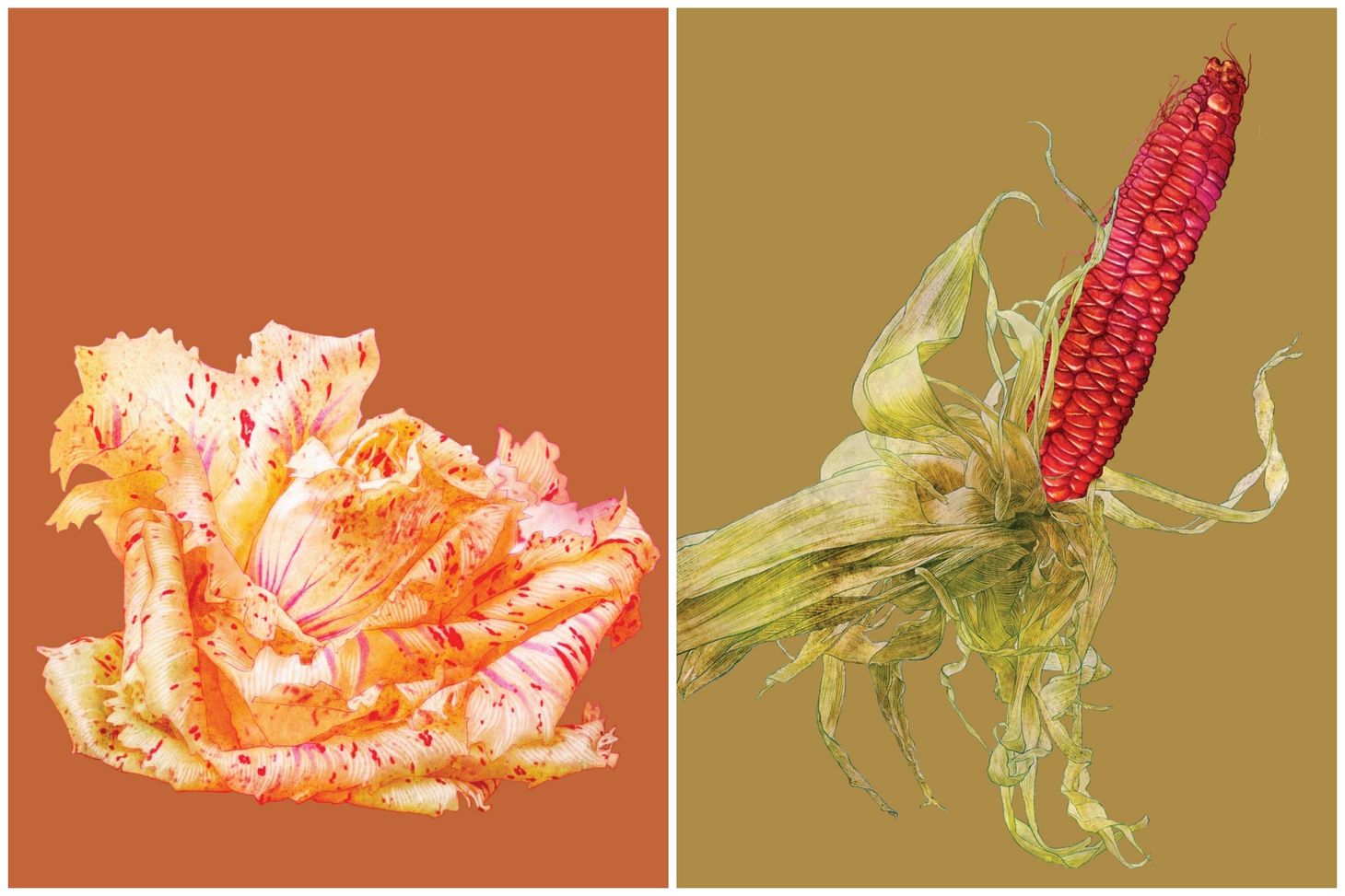
Table of Contents
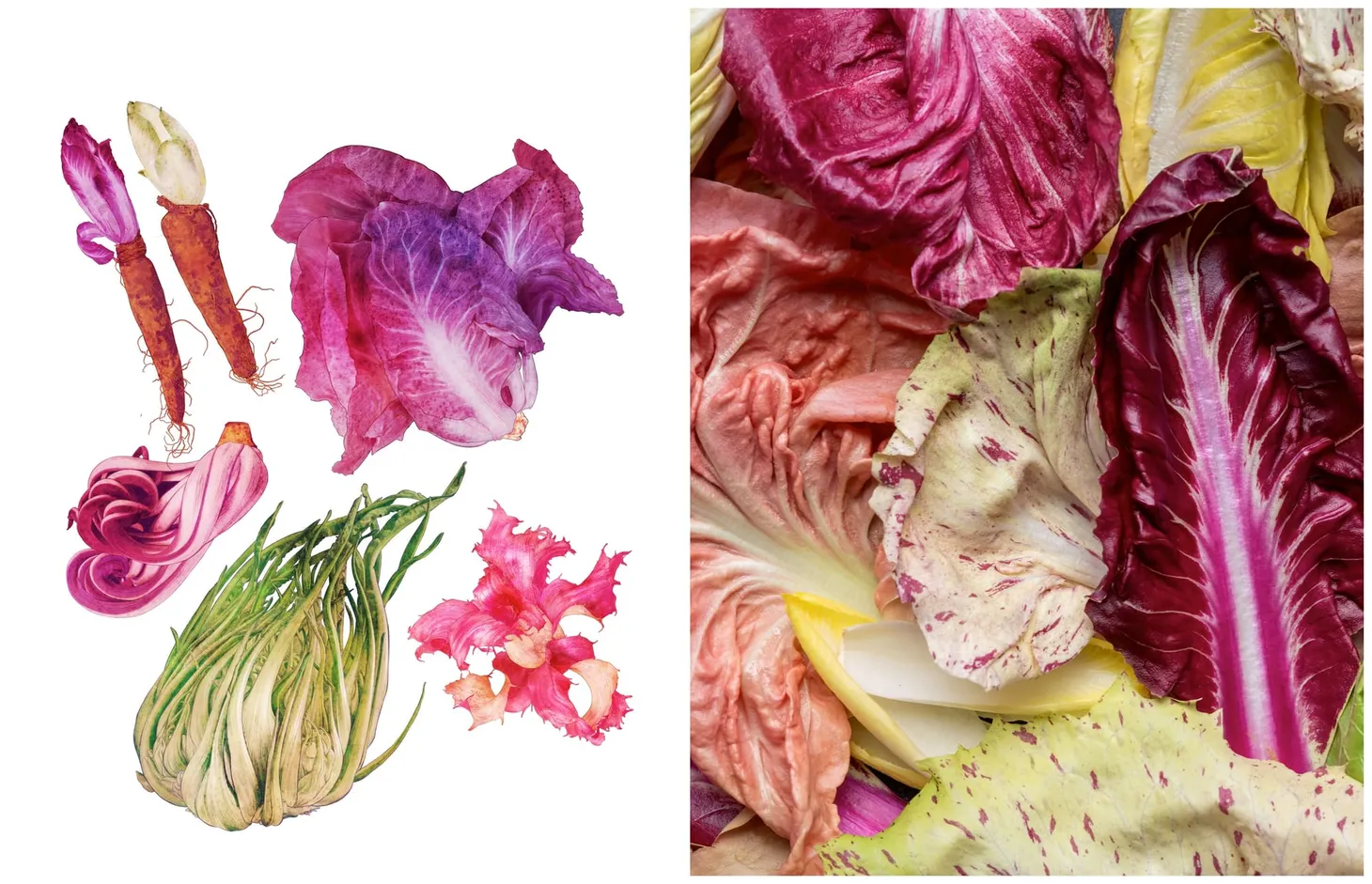
Variegato Di Castelfranco
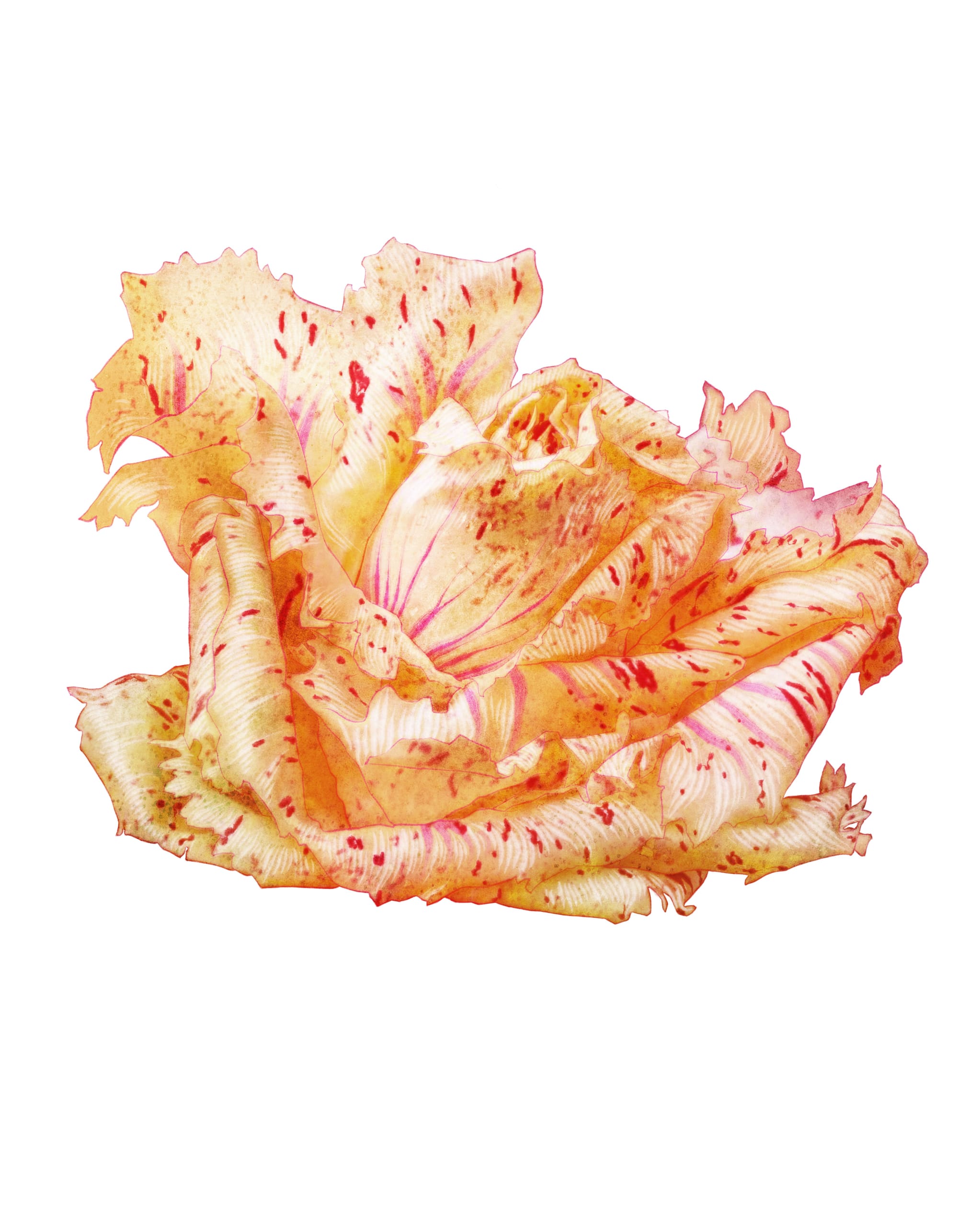
FAMILY: Asteraceae (Daisy)
BOTANICAL NAME: Cichorium intybus
ORIGINS: Italy
Read the phrase “salad greens,” and you’re likely picturing the flaccid leaves stuffed inside plastic boxes and piled up in supermarkets.
Castelfranco—an artfully speckled crimson and- chartreuse radicchio marketed as i fiori che si mangia (“the flowers you eat”)—shatters such expectations. It emanates the kind of otherworldly beauty one might associate with an ethereal painting or a painstakingly designed gown. These leaves are deserving of your adoration; they’re the result of millions of moments of selection, a good amount of coddling, and protection by the same standards that put Balsamic Vinegar of Modena in a class of its own.
“Every variety of radicchio, from the pink rose-shaped Rosa di Gorizia to the sculptural oxblood tangle of Treviso tardivo, is a member of the same species: Cichorium intybus, or common chicory,” writes Margarett Waterbury for Whetstone. People have been eating these plants and using them medicinally for thousands of years. Pollen granules from the skinny Mediterranean native, which produces a firework of periwinkle flowers, have been found at Bronze Age village sites in Veneto.
Radicchio’s shift from wild chicory to a cultivated crop isn’t fully documented, but “the process seems to have been well underway during the Renaissance,” writes Waterbury. In 1537, Venetian satirist Pietro Aretino used the word “radicchio” in a letter urging a friend to plant it for better salads. And, along the way, growers widely adopted imbianchiamento, the practice of digging up mature plants, trimming their roots, and regrowing them in dark, humid spaces to produce paler, crisper, sweeter leaves.
Things only got weirder and more colorful from there. Wild chicories hold a ton of genetic diversity and are overtly promiscuous—ready to cross “with one another to produce offspring with novel shapes, colors, forms, and habits,” explains Waterbury. Castelfranco, which emerged in the early 1900s, likely came from hands-on selection: farmers saving and replanting seed from oddballs, the variegated rosettes streaked with red. By 1996, those pretty heads had earned Protected Geographical Indication status, enshrining the centuries-long tinkering of Veneto farmers as a product of place.
A world away from watery lettuces, these sturdy leaves are crisp yet buttery, with a faint bitterness that begs for collaboration, not conquering. During the Renaissance, cooks braised chicories or tucked them into rustic pies to soften the bite. At home, you can follow suit: give Castelfranco leaves a quick flap like warm towels out of the dryer, then dress them simply with a punchy vinaigrette and flaky salt. Melt them into risotto. Char whole rosettes so that butter and honey seeps into their crooks and crannies.
Radicchio is tough, adaptable, and a little bit feral. It’s got the right attitude to stick with us finagling humans for the long run. Waterbury compares it to a house cat: unlike, say, the French bulldog, it’s “domestic, but just one generation away from a successful reversion to wildness.”
For farmers like Jason Salvo, that’s exactly why he keeps growing the fussy crop at Local Roots Farm in Washington’s Snoqualmie Valley. “In many ways, our love of radicchio comes from our increasing disconnect from our own cultural traditions,” he writes in Radicchio Zine. The chicory “represents a return to a way of life before big-box stores, before convenience became the paragon, before homogenization started eroding the regional and cultural differences that make life interesting.”
King Philip Corn
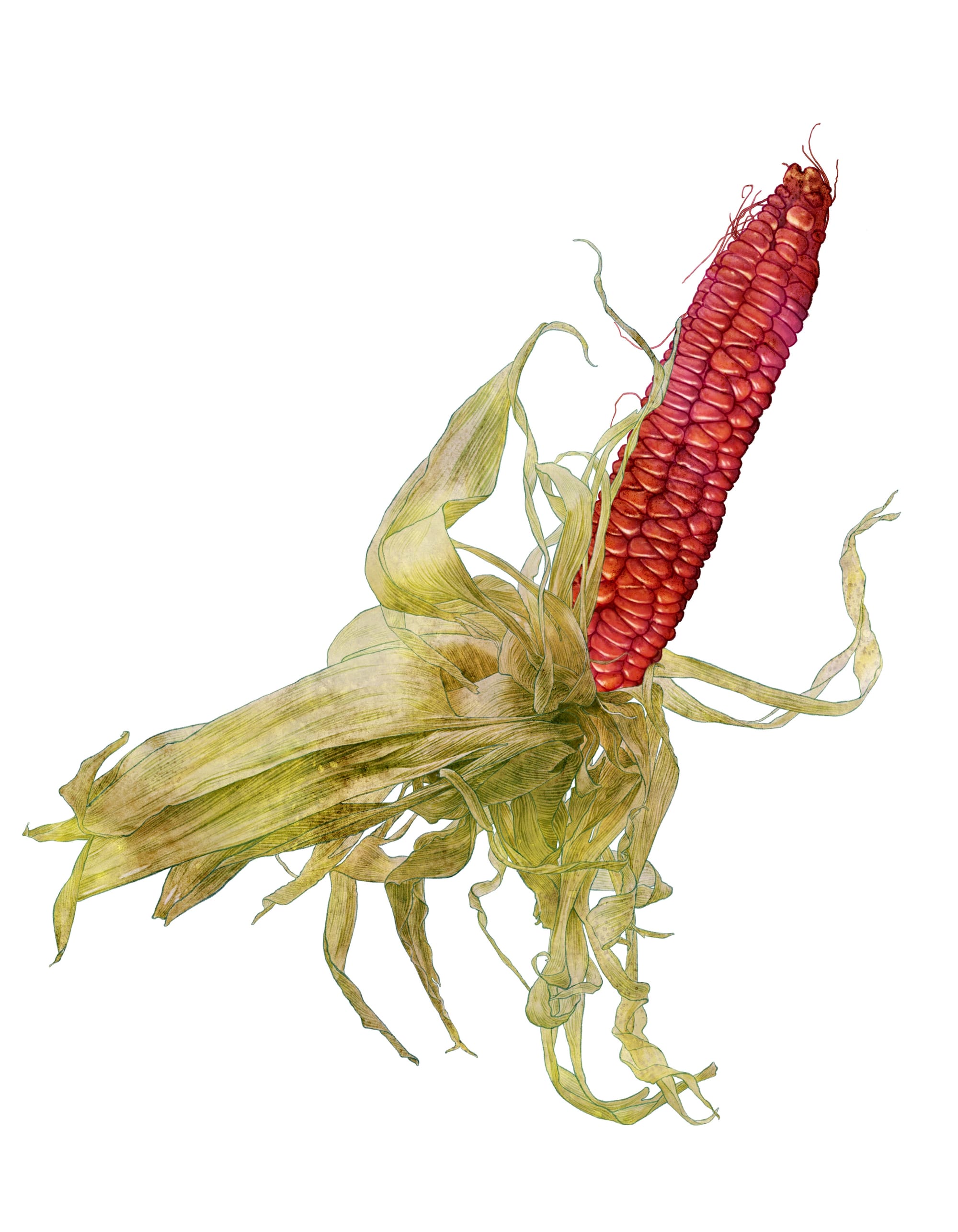
FAMILY: Poaceae (Grasses/Grains)
BOTANICAL NAME: Zea mays
ORIGINS: United States
On October 18, 2021, the sky over America’s Midwest was cloudless. The corn harvest was wrapping up, and from space, NASA’s Terra satellite captured a striking image: fields hugging Lake Michigan—from Iowa to southern Illinois and eastern Ohio—had turned yellow-brown. Juxtaposed against the lush, green surrounds, the area looked like a giant, overcooked croissant.
Backed by billions in government subsidies, over a third of the world’s maize is grown in the US, with the largest share coming from this 50-millionacre swath known as the Corn Belt. That same year, farmers harvested 15 billion bushels of corn, according to NASA—more than enough, as Rebecca Rupp recounts in How Carrots Won the Trojan War, “to bury all of Manhattan Island sixteen feet deep in kernels.” Yet less than 1% of that colossal haul was destined to be eaten fresh. Roughly a third becomes ethanol, another third feeds livestock, and the rest becomes byproducts: cornstarch, syrup, and oil.
None of this resembles the world corn came from. Maize originated in Mexico’s Central Balsas River Valley, where 9,000-year-old starch granules have been found on ancient grinding tools, writes Mitch McCulloch in The Seed Hunter. It took humans thousands of years of careful selection to coax its wild ancestor—a scraggly grass called teosinte—into the neat rows of glossy kernels we eat today. To grow corn, the Olmec, Maya, Aztec, and Inca carved terraces into Andean peaks and built chinampas—floating gardens that turned shallow Lake Texcoco into a checkerboard of green. And by the time Columbus ferried maize across the Atlantic in 1493, Indigenous farmers had already carried it from Chile to Canada
Corn became the ultimate shape-shifter, molding itself to the needs of the people and places that grew it. The kernels spun off into a rainbow of landraces: ruby, cobalt, obsidian, gold, and this rusty-orange variety named for Metacom, the 17th-century Wampanoag leader English colonizers called King Philip. It’s unclear whether the tribe “shared the seeds freely or if colonists stole them during King Philip’s War (1675–1676), a brutal conflict that occurred when Indigenous people desperately attempted to protect their land from colonial control,” writes McCulloch. “After their defeat, Metacom was captured, beheaded, and quartered; his head was mounted on a spike and displayed at Plymouth Colony for 25 years.”
And yet his namesake seed carried on. King Philip is a kind of Indian corn, or flint corn, as the University of Wisconsin–Madison notes: low in water, dense in protein and starch, and sheathed in a hard outer layer that turns each kernel into a tiny tooth-breaking stone when dried—giving the variety its name. But that toughness is what made King Philip ideal for storing through the cold months. Once ground, it could be transformed into soft tortillas and tender tamales, or simmered into Indian pudding—a molasses-lashed polenta porridge.
Today, an estimated 94% of the US maize supply is genetically modified—most of it a type of dent corn named for the little dimple that forms at the top of each kernel as its soft starch dries. GMOs were once marketed as a way to curb chemical use, but corn tells a different story. Herbicide-tolerant varieties have led to a 15-fold increase in spraying and helped create resistant superweeds. And because wind-pollinated corn is, as Rupp writes, “promiscuously prone,” pollen from GMO fields can drift for miles, infiltrating heirloom plots. This unintended mingling alters the genetic makeup of native varieties like King Philip, eroding the distinct traits that let them thrive in specific regions for millennia.
Heirloom maize survives only because people choose it. Without human hands, corn would vanish—modern kernels are sealed inside tightly wrapped husks that act, Rupp writes, like “a sort of malignant chastity belt.” Left alone, fallen cobs are reproductively cursed: seedlings sprout in a cramped cluster, all of them competing for water, food, and sunlight. And King Philip faces another challenge: it’s listed as endangered by Slow Food’s Ark of Taste because it can’t tolerate the petroleumbased fertilizers used in industrial farming, “which would send the stalks into leaf production.”
So NASA’s satellite likely won’t register any of the tiny plots where it does still grow. But King Philip’s future isn’t only about scale or visibility. It’s also about intention—that somewhere, someone is still putting these seeds into the ground.

Excerpted with permission from The Curious Lives of Vegetables: An Artful Exploration of the Wonderful World of Edible Plants, Their History, and Their Crucial Role in Our Future by Ali Francis, published by Hardie Grant North America, September 15, 2026, RRP $30.00. Hardcover.
wordloaf Newsletter
Join the newsletter to receive the latest updates in your inbox.