Recipe: Vegan Chickpea Shoyu
From Sho Spaeth's 'Homemade Ramen'
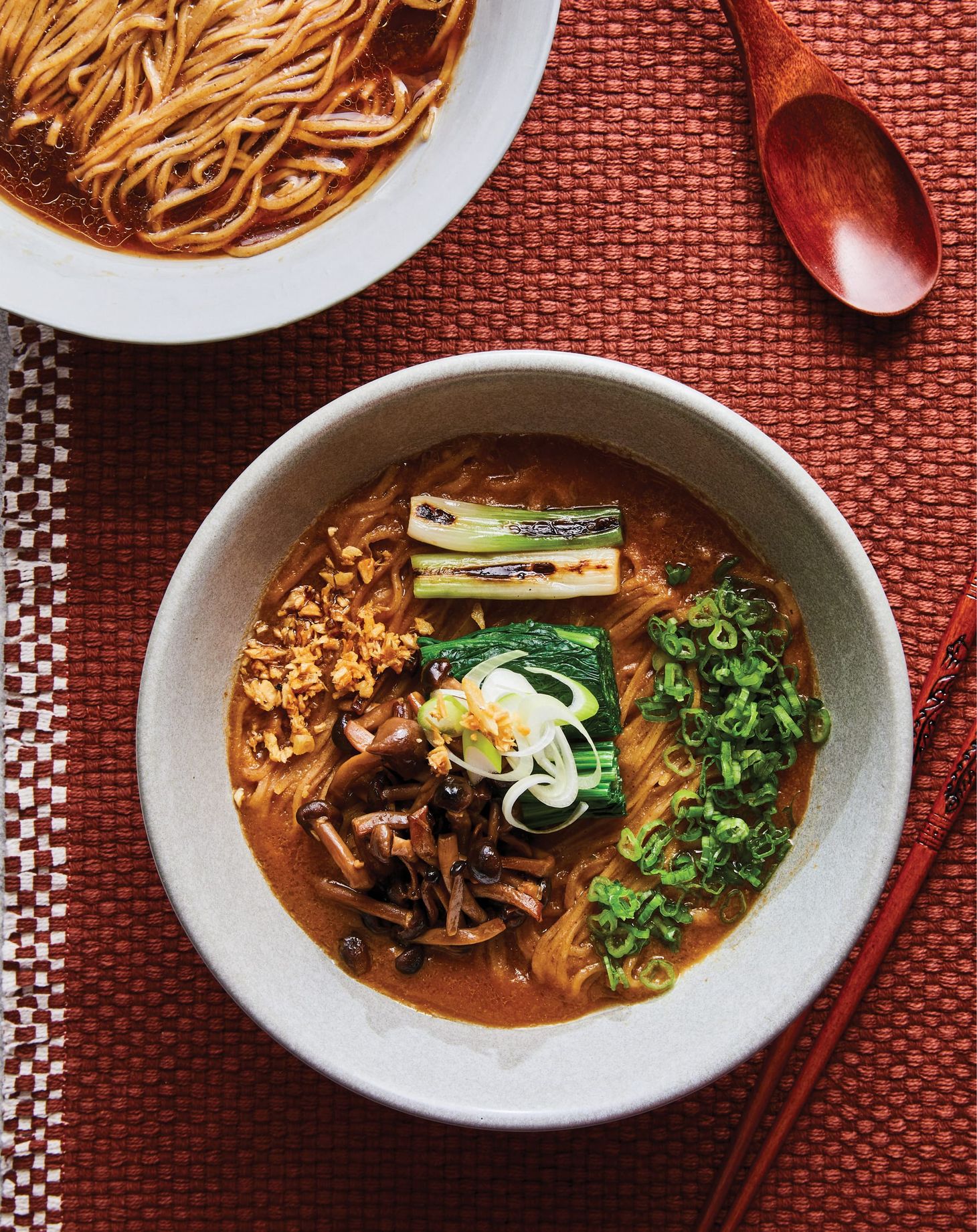
Table of Contents
Making a good vegan ramen is challenging, since ramen cooks typically rely on a range of animal products: fish sauce, dried fish, meaty bones, and so on, but not out of reach. By using flavorful and aromatic products like tomato paste, smoked chilies, and dried spices, you can turn a bean broth—in this case, chickpea broth—into a soup that is as tasty as one packed with meat and dried fish. To make up for the relative lack of body a bean broth has, use all the suggested accompaniments for the bowl of ramen, particularly the fried onion bits, as they help to give the soup texture.
For more depth of flavor, I add morita chilies and black cardamom to the cooking liquid, which lend it a little smokiness, as well as charred ginger and onion, in the manner of pho, and roasted button mushrooms, for some brown notes from the Maillard reactions. (If you are sensitive to spiciness, I suggest seeding the chili.) I give you the option of making a clear broth or a paitan, by blending cooked chickpeas into the broth. If you choose to use the paitan version, the soup will need slightly more seasoning to account for the pulverized chickpeas.
While any shoyu tare that doesn’t contain dried fish elements will be vegan, the tare for this bowl is designed for use in a stock that has no gelatin or inosinic acid. It will work well with nonvegan stocks too.
Just as with meat-based stocks, the broth can be used for other styles of ramen, such as miso (page 243) and tantanmen (page 245). To make the miso ramen vegan, simply use the vegan shoyu tare from this recipe. To make the tantanmen vegan, substitute crumbled tofu or plant-based “meat” for the pork in the soboro.
Instead of trying to mimic chashu, I chose a simple shimeji mushroom stir-fry. Shimeji are diminutive thin mushrooms with a mild flavor, but you can use other mushrooms, such as oyster mushrooms or shiitake, provided you cut them into similar sizes as the shimeji; the cooking time will be slightly longer. When serving this mushroom stir-fry with rice, I like to toss in a handful of daikon radish sprouts right at the end.
Recommended toppings: Blanched Spinach (see below) and karashi takana (spicy pickled mustard leaves)
For each bowl of ramen, you need:
350 ml (1 1/2 cups) Chickpea Broth (see below)
2 tablespoons (30 ml) Vegan Shoyu Tare (see below) or more to taste
2 tablespoons (30 ml) Naga Negi Oil (see below)
Pinch of white pepper, or to taste
Salt if needed
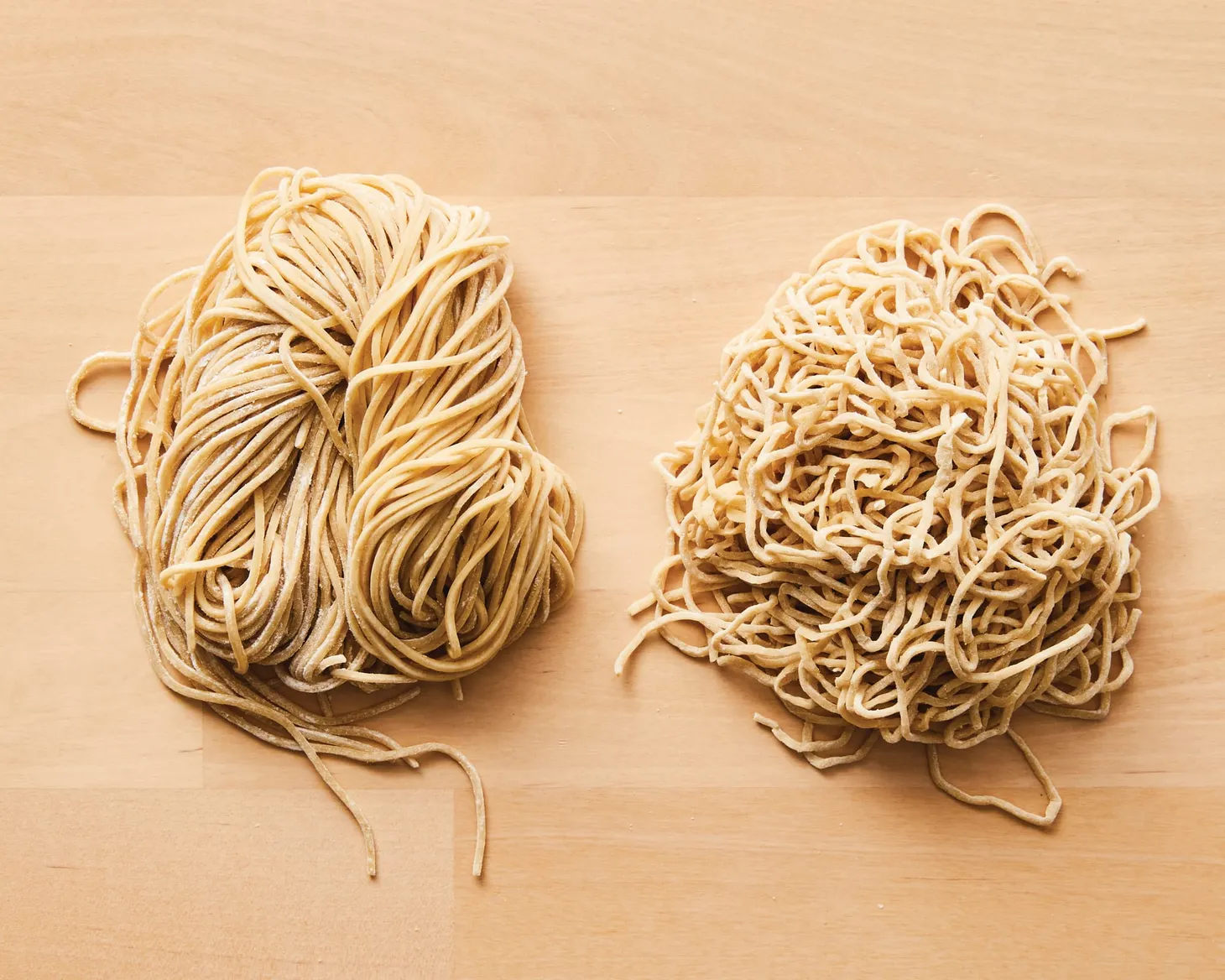
1 serving 38%-Hydration Noodles (link)
¼ cup Stir-Fried Shimeji Mushrooms (see below)
2 Charred Scallion Whites (see below)
Fried Naga Negi (see below)
Other toppings as desired
Sliced scallions or naga negi for serving
Toasted sesame oil for drizzling
- Bring the noodle cooking water to a boil. Bring the soup stock to a simmer.
- Add the noodles to the cooking water and set the timer for 1 minute 15 seconds. Bring the stock to a boil.
- Add the tare, oil, and white pepper to a warmed serving bowl. Pour in the boiling stock. Taste and add salt or more tare if necessary.
- Once the noodles are cooked, drain thoroughly and add them to the bowl. Using chopsticks, loosen the noodles and fold them once or twice over themselves to distribute the seasonings and form a platform for the toppings.
- Add the shimeji mushrooms, charred scallions, and fried naga negi/scallions, along with any other toppings you’d like. Garnish with sliced scallions or naga negi and drizzle with sesame oil. Serve immediately.
Chickpea Broth
Yield: About 3 quarts (3 liters)
Soaking time: 6 to 12 hours
Total cook time (pressure cooker): 1 hour 30 minutes, plus time for coming to pressure/depressurizing
Total cook time (stovetop): 2 hours 30 minutes
Active time: 45 minutes
3 1/4 quarts (3.1 liters) water, divided
A 6-inch square of kombu (12 g)
2 dried shiitake mushrooms (6 g)
3 morita chilies (12 g), snipped in half
1 pound (450 g) dried chickpeas
1 tablespoon (9 g) Diamond Crystal kosher salt
2 heads garlic
2 large white onions, peeled and halved
A 6-inch piece of ginger, halved
1 carrot, peeled
3 ribs celery
2 black cardamom pods
1 bay leaf
1 tablespoon (30 ml) tomato paste
2 tablespoons (30 ml) neutral oil
8 ounces (225 g) button mushrooms, quartered
- For the dashi: Combine 3 cups (710 ml) of the water, the kombu, shiitake, and morita chilies in a sealable container and refrigerate for at least 6 hours, preferably overnight (12 hours).
- Combine the chickpeas and salt in a medium metal mixing bowl and cover with 1 inch of boiling water. Let soak for at least 6 hours.
- When ready to make the broth: Drain the chickpeas and add them to a stockpot or a pressure cooker, along with 1 head of garlic, 1 onion, the carrot, celery, cardamom pods, bay leaf, tomato paste, and 1 tablespoon (15 ml) of the oil. Remove the dashi from the refrigerator, give the container a vigorous shake, and add to the pot. Add the remaining 2 1/2 quarts (2.4 liters) water and heat until small bubbles start to form around the kombu (about 140° to 150°F/60° to 65°C), about 15 minutes. Using tongs or chopsticks, swish the kombu through the mixture several times, then remove it; reserve for another use or discard. Continue heating the liquid until it reaches a bare simmer (about 200°F/93°C); remove the shiitake and discard.
- If using a pressure cooker: Seal the pressure cooker, bring it up to pressure, and cook for 10 minutes. Allow the pressure cooker to depressurize naturally.
- If using a stockpot: Cook until the chickpeas are completely soft, about 2 hours.
- While the chickpea broth cooks, preheat the broiler on high. Place the halved onion and halved ginger on a quarter sheet pan and cook, turning them once, until they are thoroughly charred, about 10 minutes for the onion and 15 minutes for the ginger. Remove and set aside.
- Adjust a rack to the middle position and preheat the oven to 400°F (200°C). Place the mushrooms in a mixing bowl, add the remaining tablespoon of oil, and toss to coat the mushrooms. Spread the mushrooms in a single layer on a quarter sheet pan and roast in the oven until the mushrooms release their liquid, about 15 minutes. Take the pan out of the oven. Pour the liquid into a small bowl and reserve it. Return the mushrooms to the oven and cook until thoroughly browned, about 30 minutes. Remove from the oven and set aside.
- When the chickpeas are cooked, add the remaining head of garlic, the charred ginger and onion, mushroom liquid, and roasted mushrooms to the pot and bring the liquid back up to a simmer. Cook for 30 minutes.
- Set a half sheet pan on a wire cooling rack and set a large metal mixing bowl on top of the pan. Using a slotted spoon, remove the black cardamom, bay leaf, and vegetables from the broth, leaving the chickpeas behind. Strain the broth through a fine-mesh sieve into the large bowl; reserve the chickpeas.
- To make a “paitan” chickpea stock: Transfer 2 cups (280 ml) of the chickpeas and 2 cups (280 ml) of the broth to a countertop blender and blend on high until the chickpeas are completely pulverized, about 3 minutes. Transfer the contents of the blender back to the remaining chickpea broth and stir to combine.
- Let the broth cool to room temperature, then transfer to sealable containers and refrigerate.
Vegan Shoyu Tare
Yield: 2 cups (480 ml)
Soaking time: 6 to 12 hours
Total cook time: 15 minutes
Active time: 10 minutes
1 ⅓ cups (300 ml) koikuchi soy sauce, divided
4 dried morita chilies (14 g), snipped in half
4 sun-dried tomatoes, snipped in half
A 2-inch square of kombu (4 g)
3 dried shiitake mushrooms (6 g)
½ white onion, peeled and grated
10 Charred Scallion Whites (page 291)
1 garlic clove, minced
A 1-inch piece of ginger, sliced
1 cup (240 ml) sake
¼ cup (60 ml) tamari
3 tablespoons (45 ml) mirin
1 tablespoon plus 1 teaspoon (12 g) Diamond Crystal kosher salt
- Combine ⅔ cup (180 ml) of the soy sauce, the chilies, sun-dried tomatoes, kombu, and shiitake in a sealable container and refrigerate for at least 6 hours, preferably overnight (12 hours).
- In a small saucepan, combine the grated onion, scallions, garlic, ginger, and sake, bring to a boil over high heat, and cook until the alcohol has boiled off and the sake has reduced by half, about 5 minutes.
- Remove the container of dashi from the refrigerator, give it a vigorous shake, and add it to the saucepan. Heat the mixture until small bubbles start to form on the surface (140° to 150°F/60° to 65°C), then remove the kombu; save for another use or discard. Continue heating the mixture until small bubbles form around the edges of the pan (about 185°F/85°C), about 1 minute. Remove the shiitake.
- Bring the mixture to a boil, then shut off the heat. Transfer the mixture to a countertop blender and blend on high for 1 minute. Pass the mixture through a fine-mesh strainer set over a medium metal bowl, pressing firmly on the solids to extract as much liquid as possible; discard the solids.
- Add the remaining ⅔ cup (180 ml) soy sauce, tamari, mirin, and salt to the bowl and stir to combine. Let the tare cool to room temperature, then transfer to a sealable container and refrigerate.
Naga Negi Oil, with Fried Naga Negi
This aromatic oil, which produces crispy fried bits of onion as a by-product, is one of the most efficient ways to use naga negi (Welsh onions). Excellent as toppings for ramen, both the oil and fried onions are also delicious in other preparations, like fried rice or braises.
You can use the same process to make flavored oils (and crispy fried bits) with other alliums, like spring onions, scallions, and shallots.
YIELD: About 1 ½ cups (360 ml) oil and about 1 cup fried naga negi
Total cook time: 15 minutes
Active time: 20 minutes
1 ¾ cups (410 ml) neutral oil
10 ½ ounces (300 g) naga negi (about 2 large), diced
- Line a half sheet pan with a layer of paper towels.
- Heat the oil in a 3-quart saucepan over high heat until it registers 350°F (176°C) on an instant-read thermometer.
- Carefully add the naga negi a handful at a time to the hot oil, pausing if the oil foams and seems in danger of boiling over, and cook, stirring frequently, until the naga negi take on a golden color and start to brown, 14 to 15 minutes.
- Strain the oil through a fine-mesh strainer into a medium metal mixing bowl, tapping the strainer to drain the oil thoroughly. Transfer the fried onions to the lined sheet pan and let cool to room temperature, about 30 minutes, then transfer to a sealable container lined with paper towels. Set the oil aside to cool completely, about 1 hour, then transfer to a sealable container and refrigerate.
Blanched Spinach
There are four keys to making tasty blanched spinach: Use leaf spinach, not baby spinach; wash it thoroughly to remove all dirt and grit; salt the blanching water; and don't overcook it.
Once it's been blanched, you can use the spinach as is for topping ramen, or you can toss it with a light dressing and use it as a topping or serve it as a side dish for another meal.
Yield: 8 to 10 servings
Total cook time: 1 minute
Active time: 10 minutes
Salt
1 bunch leaf spinach, washed thoroughly and spun or blotted dry
- Bring a large (at least 3-quart) pot of water to a boil over high heat and season the water generously with salt. Fill a large bowl with cold water.
- Add the spinach to the boiling water and cook just until bright green, about 1 minute; do not overcook. Using tongs, transfer the spinach to the bowl of cold water and swish it around, then let cool completely.
- Lift about half of the spinach out of the water and, using your hands, squeeze it firmly to make a log; you want to remove as much water as possible. Repeat with the remaining spinach.
- Wrap the logs tightly in plastic wrap and refrigerate until ready to use.
- When ready to use, slice the logs of spinach into 2-inch lengths and add to bowls of ramen, or dress as desired.
Charred Scallion Whites
THE WHITE PARTS OF scallions and naga negi take on a delicious sweet-bitterness when their exterior is charred; and when cut into even 2-inch segments, the charred whites are also pretty. The combination of charred negi and poultry is a classic one in Japanese cuisine, and you'll encounter it at yakitori and soba restaurants. While the charred scallion whites could be added to almost any bowl of ramen, I like them for those with chicken or duck, a nod to yakitori and kamo negi soba (duck and scallion soba).
You can char the whites using a cast-iron skillet, a grill, or a broiler. If you use a cast-iron pan, the process takes only a few minutes. Using a pan also means that the strip of char on the vegetable will be only where it makes contact with the the pan, so it gives it a more attractive look.
The scallion (or naga negi) greens can be reserved to slice up for a ramen topping, or used in stir-fries.
COOK TIME: Depends on how many scallions you are using
Scallion whites (as many as you like), cut into 2-inch pieces, preferably from thick scallions
Neutral oil for coating the scallions
- Preheat a cast-iron skillet over medium heat until it begins to smoke, about 5 minutes.
- Pour a little oil into the palm of one hand and rub your hands together, and then pick up the sections of scallion and smear their exteriors with a thin coating of oil.
- Place the scallion lengths in the hot pan in a single layer (do not overcrowd the pan) and cook, without disturbing them, until lightly charred on the first side, 1 to 2 minutes. Using tongs or chopsticks, flip the scallions over and cook, again without disturbing them, until lightly charred on the second side, 1 to 2 minutes. Remove to a plate.
Stir-fried Shimeji Mushrooms
Yield: 4 to 6 servings as a ramen topping, 2 to 3 servings as a side dish
Total cook time: 8 minutes
Active time: 8 minutes
1 teaspoon (5 ml) koikuchi soy sauce
1 teaspoon (5 ml) tamari
1 teaspoon (5 ml) mirin
1 tablespoon (15 ml) neutral oil
7 ounces (200 g) bun shimeji mushrooms, separated into individual mushrooms
½ teaspoon (1.5 g) Diamond Crystal kosher salt
2 garlic cloves, peeled and minced
1 teaspoon (5 ml) rice vinegar
- Combine the soy sauce, tamari, and mirin in a small ramekin. Set aside.
- Heat the oil in a carbon steel wok over high heat until smoking. Add the mushrooms and salt and toss to coat the mushrooms in oil. Cook, tossing every minute, for about 5 minutes, until the mushrooms are fully tender and charred in spots.
- Add the garlic, toss the mushrooms, and cook until the garlic is very fragrant, about 30 seconds. Pour the liquid in the ramekin around the edges of the wok, toss the mushrooms to coat them, and cook until most of the liquid has evaporated, about 20 seconds. Shut off the heat.
- Add the vinegar and toss and stir the mushrooms. Remove to a plate and set aside until ready to serve.
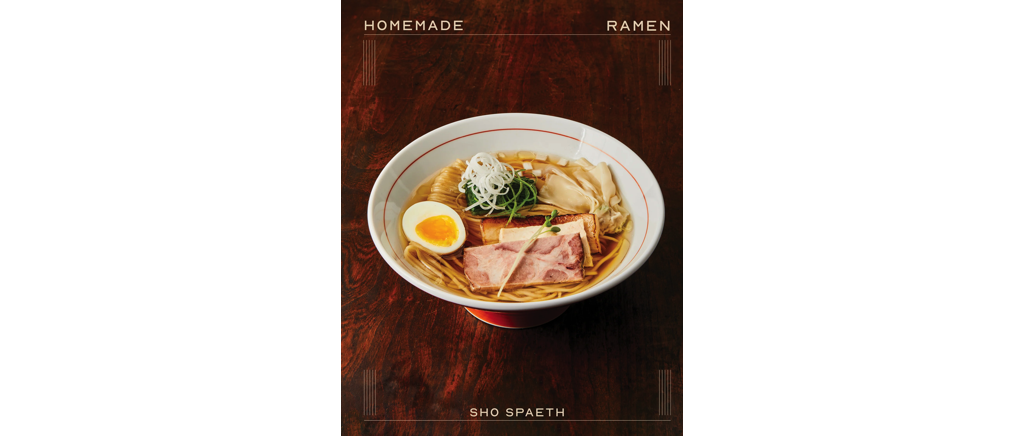
Excerpted with permission from Homemade Ramen, by Sho Spaeth, courtesy of W. W. Norton & Company. Photographs by Linda Xiao. Copyright © 2025.

wordloaf Newsletter
Join the newsletter to receive the latest updates in your inbox.