Artisan Bread
From 'American Bread: A History,' by Andrew Coe
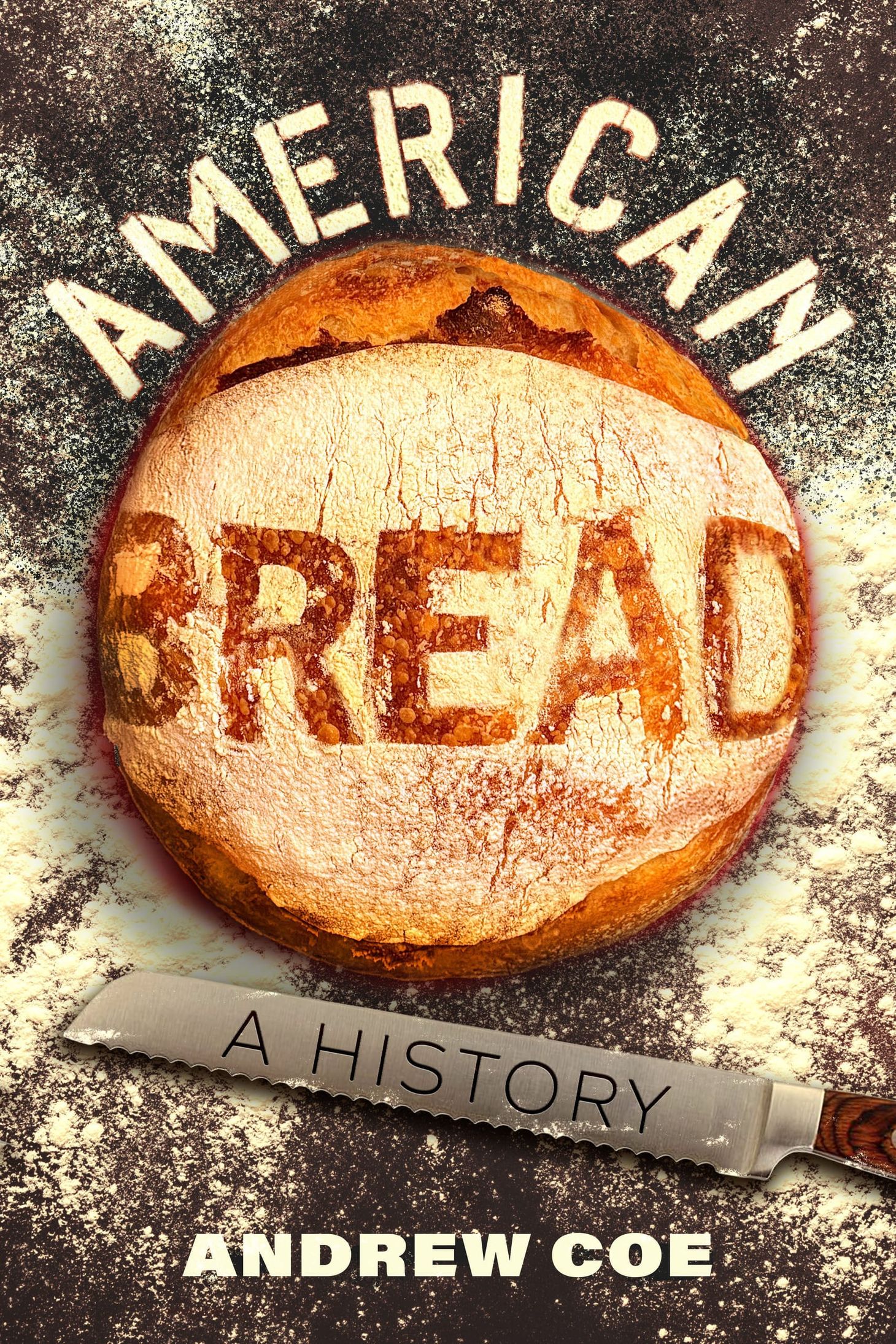
Table of Contents
One summer at the end of the 1970s, Steven Sullivan, a busboy at Chez Panisse, spent his vacation bicycling around France, traveling light, and sleeping in ditches. He had begun his journey in London, where Alice Waters suggested he meet up with Chez Panisse chef Jeremiah Tower, who was helping Richard Olney compile his The Good Cook series of Time-Life cookbooks. On the shelf at Olney's office, Sullivan saw a title that intrigued him: English Bread and Yeast Cookery by Elizabeth David. He bought his own copy and carried it with him to France, reading it in cafés and in the odd ditch until daylight failed. The more he delved into it, the more he became intrigued and enthused about the idea of baking bread. Not necessarily English bread but more like what he ate in Paris every morning—a fresh, crisp-crusted baguette with a soft but flavorful crumb spread with apricot jam.
Sullivan was one of the small group of bakers who came of age during the heyday of counterculture, whole grain breads yet who aspired to produce something different. Daniel Leader baked his first loaf, from the Tassajara Bread Book, as a student at the University of Wisconsin, and then decided to attend the Culinary Institute of America. His first chef jobs were at classic New York French restaurants like Le Veau D'Or and La Grenouille. During the August break Leader traveled to France with a list from his fellow chefs of restaurants and bakeries to try. One day he stopped off for a late lunch at an empty small-town restaurant:
Feeling a little uncomfortable, I seated myself at a small table at the edge of the room. Then a woman came from the kitchen carrying a harvest basket full of fresh loaves of all kinds of breads. There was seeded rye, levain, wheat loaves studded with hazelnuts, golden loaves of raisins and sesame seed, black breads, herbed rolls, and baguettes. She offered me my choice of breads for the meal, and from that moment on all my discomfort melted. I was home.
Leader was growing disenchanted with the relentless pressures of working in high-end New York restaurants, yet he still wanted to stay in the food world. Maybe the answer was to open a bakery?
Another young baker, Michael London, had dropped out of academia after deciding, perhaps under the influence of psychedelics, that he wanted to work with his hands. London began baking bread in his tiny New York apartment and bicycling the loaves around the city looking for customers. He finally found a job running the ovens at Ananda East, a Greenwich Village organic bakery, making hippie whole wheat, Jewish rye, and other yeast loaves for the health food crowd and fell in love with Wendy, the pastry cook. They married between batches of cheesecake and decided to open a bakery in Saratoga Springs. Mrs. London's bakery opened in 1977, selling loaves a lot like London had produced at Ananda East. During the post-Christmas slack season they traveled Paris to do a little bread tourism, attending the big Europain exposition and visiting well-known bakeries, including a boulangerie named Poilâne at 8 rue du Cherche-Midi.
Poilâne occupied a unique position in the bread world of late twentieth-century Paris. In the difficult years after the end of World War II, many boulangeries had succumbed to pressure to increase production, turning their shops into little factories for mass-producing breads, particularly baguettes. Pierre Poilâne, who opened his bakery back in 1932, refused. His flagship loaf was the rustic, two-kilo Poilâne sourdough, an urban version of the country loaves turned out by prewar village bakeries. Parisians appreciated the quality of his loaves—as did tourists thanks to its location in the heart of the Left Bank—and lines grew outside the door. Whenever young American bakers knocked on his door, Pierre's son Lionel was happy give them a tour of the fournil, or production floor. They walked through the traditional first floor shop, passing through the office whose walls were covered with paintings of breads, and then down to the cellar with its arched brick walls dating back to the seventeenth century. Here one or two workmen, shirtless and dressed in the traditional white shorts and shoes, presided over the baking process. They mixed stone-ground wheat flour, water, Guérande salt, and a piece of mère, or “mother” dough left over from the last batch. The dough was proofed (with one piece reserved as the mère for the next bake), then cut, shaped, and placed in wicker baskets for the final rise before sliding into the century-old wood-fired stone oven. The Americans were entranced by the timelessness and integrity of the process and by the quality of the loaves. London remembers: “The first time I visited Poilâne, I took a piece of leavening and put it in my pocket. I didn’t know what to do with it, I just knew it was something important.”
Back in the United States the young bakers faced a steep learning curve as they tried to replicate crusty, European-style loaves. The only cookbooks that could give them an idea of French bakers methods were Bernard Clayton's The Complete Book of Breads (1973) and The Breads of France (1978). Most of Clayton's doughs, however, are either straight yeast or overnight preferments. The closest he comes to a sourdough is his take on re-creating the Poilâne loaf over a three-day period. (“Poilâne approved it," Clayton claims.) On the East Coast Michael London and Daniel Leader sought guidance at the handful of bakeries that had already uncovered the secrets of making Old World breads. They got advice from Chuck Conway and Carla Kevorkian of O-Bread Bakery in Shelburne, Vermont, and Baldwin Hill Bakery in Massachusetts, where Herman "Hy" Lerner was making sourdoughs using the Belgian desem method. Their biggest influence, however, was Jules Rabin, an ex-anthropology professor who had fallen in love with French bread while visiting a commune in southern France. Back home in Vermont, Rabin and his wife, Helen, built a fieldstone and brick wood-fired oven modeled on French village communal ovens and started to teach themselves how to make sourdough breads using just flour, water, and salt. To support themselves, they began baking—without hired help—two hundred loaves four times a week using flour they ground themselves, a pace they kept up for thirty-six years before retiring. What Leader and London admired was their knowledge and devotion to their craft (though their work/life balance may have been a bit too ascetic for their own lives).
For Steven Sullivan a pivotal experience was a visit he made (on Richard Olney's recommendation) to the Domaine Temper vineyard in southern France. As he and Lucien Peyraud, the vineyard owner, enjoyed some bread and wine, they discussed how fermentation was crucial to the production of both. Peyraud revealed that many bakers used grape skins, which are covered with yeasts and lactic acid bacteria, as the seed for their sourdough starters. Back home in California, Sullivan collected some grapes from his father's backyard, crushed them in cheesecloth, and mixed the juice with flour and water. His prevous attempts at sourdough starters had turned into rank messes, but after a few days his grape starter smelled fresh and lovely, with a fruity, almost apple-y aroma. This became the nucleus of the starter he has used ever since. Now he could make sourdough bread. The only problem was that Chez Panisse, where he had taken on the job of making yeast-raised baguettes, pain d'épi, and boules, didn't have room for his starters or a full-scale bread operation.
Sullivan and Leader opened their own bakeries within weeks of each other in 1983. Sullivan's Acme Bread Company was located in Berkeley, right next to Chez Panisse's Cafe Fanny, while Leader's Bread Alone opened in Boiceville, a hamlet up in New York State's Catskill Mountains. Acme sold its bread to retail customers at the bakery shop, but from the beginning, it was also producing baguettes, both yeast-leavened and sourdough, as well as pain au levain and multigrain boules for Chez Panisse and other restaurants. Leader received a precious ball of sourdough from his friend Basil Kamir of Paris's Le Moulin de la Vierge bakery and brought it back to Boiceville as the seed of his first sourdough, a pain au levain. Kamir introduced Leader to the mason André Lefort, who came to Boiceville to build its two wood-fired ovens (still in operation). In addition to the pain au levain, Leader formulated recipes for peasant, Jewish rye, pumpernickel, and walnut breads that remain Bread Alone staples today. He sold locally at first but soon acquired a couple of trucks to ship his loaves to New York City's restaurants, gourmet stores, and greenmarkets.
Michael London obtained his sourdough after his parents told him that a bakery near their home in Monterey, California, was making a better sourdough loaf than anything in San Francisco. Until then, London's sourdough experiments had been unsuccessful; he needed expert advice. On a 1981 trip to Monterey, he asked the baker for some tips, but the man refused until London offered to swap it for his knowledge of making Danishes and brioches. One of the employees had spent years on the floor at Boudin Bakery and revealed the secrets of the San Francisco treat, sending him home with a twelve-pound bucket of prime “mother.” Soon, Mrs. London's was selling “absolutely authentic San Francisco sourdough bread” (leading to a cease-and-desist letter from Boudin Bakery). However, Michael and Wendy didn't expand their line of naturally leavened loaves until they left Mrs. London's in 1985. The duo spent a year developing their sourdough breads and then opened Rock Hill Bakehouse out of their 1805 farmhouse. With the help of three young partners, they began sending van loads of bread down to New York City.
Excerpted from AMERICAN BREAD: A HISTORY by Andrew Coe, courtesy of the University of California Press. Copyright © 2026.
wordloaf Newsletter
Join the newsletter to receive the latest updates in your inbox.