Recipe: Pkhali Two Ways / Georgian Vegetable pâté
From Polina Chesnakova's 'Chesnok'
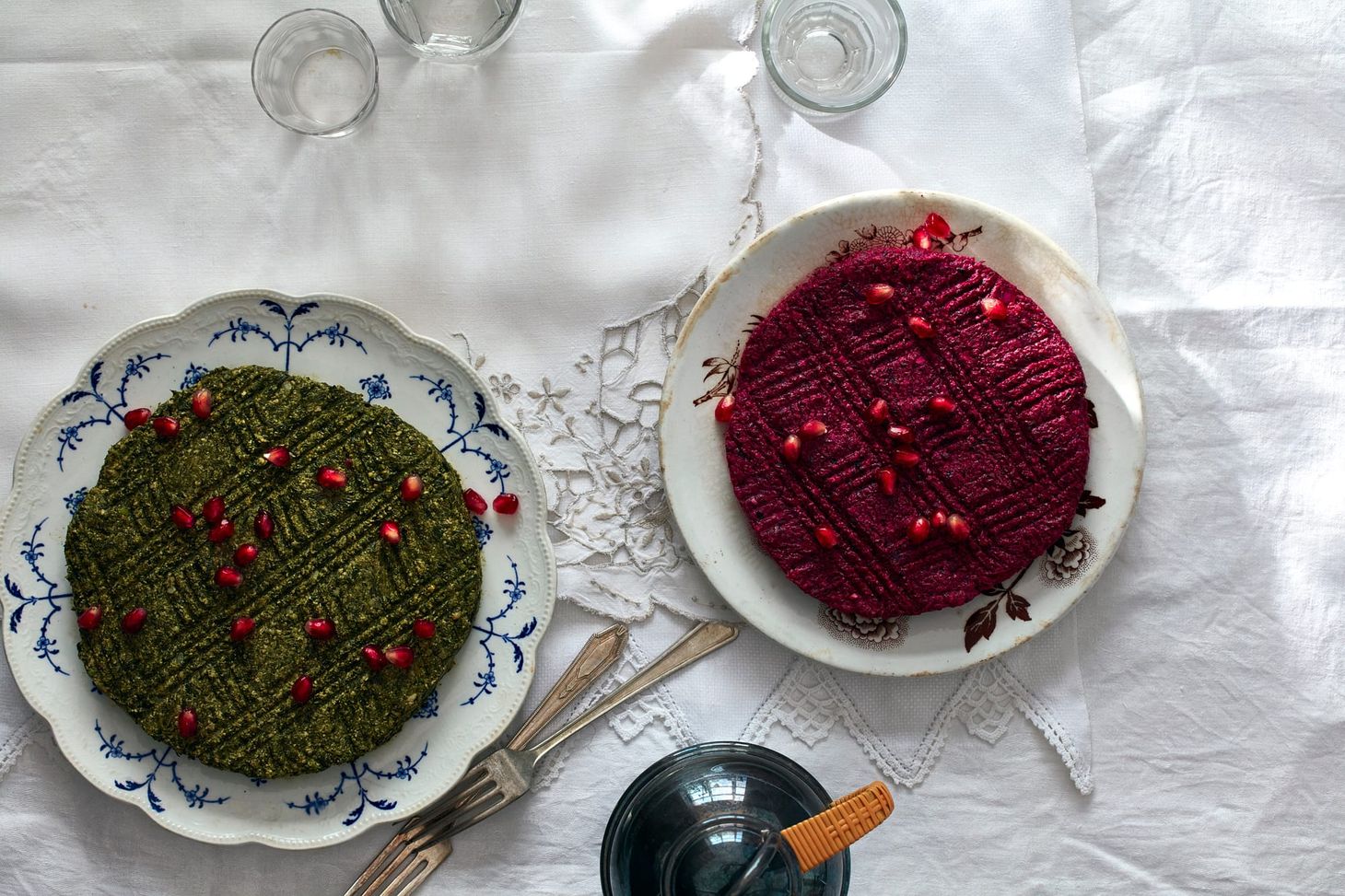
Table of Contents
After decades of throwing big, boisterous dinner parties together, our family is a fine-tuned machine when it comes to menu planning. That’s because we often stick to the same cast of dishes, which are assigned to the same person each year. For instance, my mom is tasked with bringing, in addition to her beloved Ideal Torte, the pkhali. A kind of vegetable pâté, Georgian pkhali can be made cooked with vegetables or greens that are then mixed with a paste of walnuts, cilantro, garlic, and spices. You’ll see at least two or three different kinds at a good table—ours always features spinach and beet. The Beet Pkhali here includes mayonnaise, which is not traditional but rather something my mom learned from a coworker; I think it adds richness and a welcome tang. Preparing pkhali is simple but best done in advance (perfect for entertaining purposes) to allow the raw garlic to mellow out. Pair pkhali with hearty, crusty bread or lavash—crackers or pita will also work in a pinch.
Beet Pkhali
SERVES 6 TO 8 AS AN APPETIZER
2 pounds (900 g) medium-small beets, scrubbed
¾ cup (25 g) roughly chopped cilantro leaves and stems
4 garlic cloves, peeled but whole
⅔ cup (75 g) walnuts
½ small yellow onion, finely diced
¼ cup (60 g) mayonnaise
1 tablespoon kosher salt
1 teaspoon ground blue fenugreek
½ teaspoon ground marigold
¼ teaspoon cayenne pepper, plus more to taste
Pomegranate seeds, for garnish
In a large pot, combine the beets with enough water to fully submerge. Bring to a boil, cover, and adjust the heat to maintain a steady rolling boil. Cook until the beets are fork-tender, 1 hour 15 minutes to 1½ hours, depending on size. Drain and set aside for 20 to 30 minutes, or until cool enough to handle. While the beets are still warm, hold a beet in one hand with a paper towel or clean kitchen towel, trim the top, and use the paper towel to rub the skin off—it should slip right off.
Grate the beets on the second to smallest holes of a box grater into a large bowl. Squeeze out the juice from the beets in one of two ways: Squeeze the beets, a handful at a time, over a medium bowl, or wrap the beets in a large piece of cheesecloth or clean muslin cloth and wring out about 90% of the liquid. It’s always amazing to see how much juice this produces! Return the squeezed beets to the large bowl and save the juice (my mom would always force me to drink this, claiming it was “good for the blood”) or discard it.
In a food processor, combine the cilantro and garlic and process until finely chopped. Add the walnuts and pulse until finely chopped. Add this to the beets in the large bowl. Add the onion, mayonnaise, salt, blue fenugreek, marigold, and cayenne, and mix until fully incorporated. Taste and season with more cayenne if needed—you’re looking for a nice kick. Cover and refrigerate for 4 to 6 hours or ideally overnight.
To serve, heap about half of the pkhali onto a small plate. Using a fork, press it down to form a flat puck about 1 inch (2.5 cm) high. Use the back of a spoon or knife to smooth out the edges. With the tines of a fork, make a crisscross pattern on the top and garnish with pomegranate seeds. Depending on how hungry your crowd is, repeat with the other half of the pkhali as needed, or store in the fridge for up to 4 days.
Spinach Pkhali
SERVES 6 TO 8 AS AN APPETIZER
Kosher salt
2 pounds (900 g) fresh mature spinach, rinsed (avoid baby spinach, which will turn gummy)
1 ⅓ cups (150 g) walnuts
Generous ¾ cup (30 g) roughly chopped cilantro
3 garlic cloves, peeled but whole
¼ small yellow onion, minced
2 tablespoons red wine vinegar
1 teaspoon ground blue fenugreek
½ teaspoon ground marigold
¼ teaspoon cayenne pepper, plus more to taste
Pomegranate seeds, for garnish
Bring a large pot of salted water to a boil. Add the spinach a huge handful at a time. It won’t seem like it will all fit, but keep pushing the spinach down into the water with a wooden spoon after each addition, and it will. Cook until the spinach is tender and bright green, 1 to 2 minutes. Drain and allow to cool completely.
Squeeze out the liquid from the spinach in one of two ways: Squeeze the spinach, a handful at a time, over the sink (or a small bowl if you want to save it!), or wrap the spinach in a large piece of cheesecloth or clean muslin cloth and wring out 90% of the liquid.
Roughly chop the wrung-out spinach. Pulse a few times in a food processor until the spinach is finely chopped. (Alternatively, very finely chop the spinach by hand.) Transfer to a large bowl.
In the same food processor, combine the walnuts, cilantro, and garlic and process until a paste forms. Transfer to the bowl with the spinach. Add the onion, vinegar, 1 tablespoon of salt, blue fenugreek, marigold, and cayenne, and mix until everything is fully incorporated. Taste and season with salt or more cayenne—you’re looking for a kick of heat and bright sharpness from the vinegar. The garlic will be potent as well, but it’ll mellow as the pkhali sits. Cover and refrigerate for 4 to 6 hours or ideally overnight.
To serve, heap about half of the pkhali onto a small plate. Using a fork, press it down to form a flat puck about 1 inch (2.5 cm) high. Use the back of a spoon or knife to smooth out the edges. With the tines of a fork, make a crisscross pattern on the top and garnish with pomegranate seeds. Depending on how hungry your crowd is, repeat with the other half of the pkhali as needed, or store in the fridge for up to 4 days.
Excerpted with permission from Chesnok: Cooking From My Corner of the Diaspora: Recipes from Eastern Europe, The Caucasus, and Central Asia by: Polina Chesnakova, published by Hardie Grant North America, September 2025, RRP $35.00 Hardcover.

wordloaf Newsletter
Join the newsletter to receive the latest updates in your inbox.