Recipe: Imeruli Khachapuri
From Polina Chesnakova's 'Chesnok'
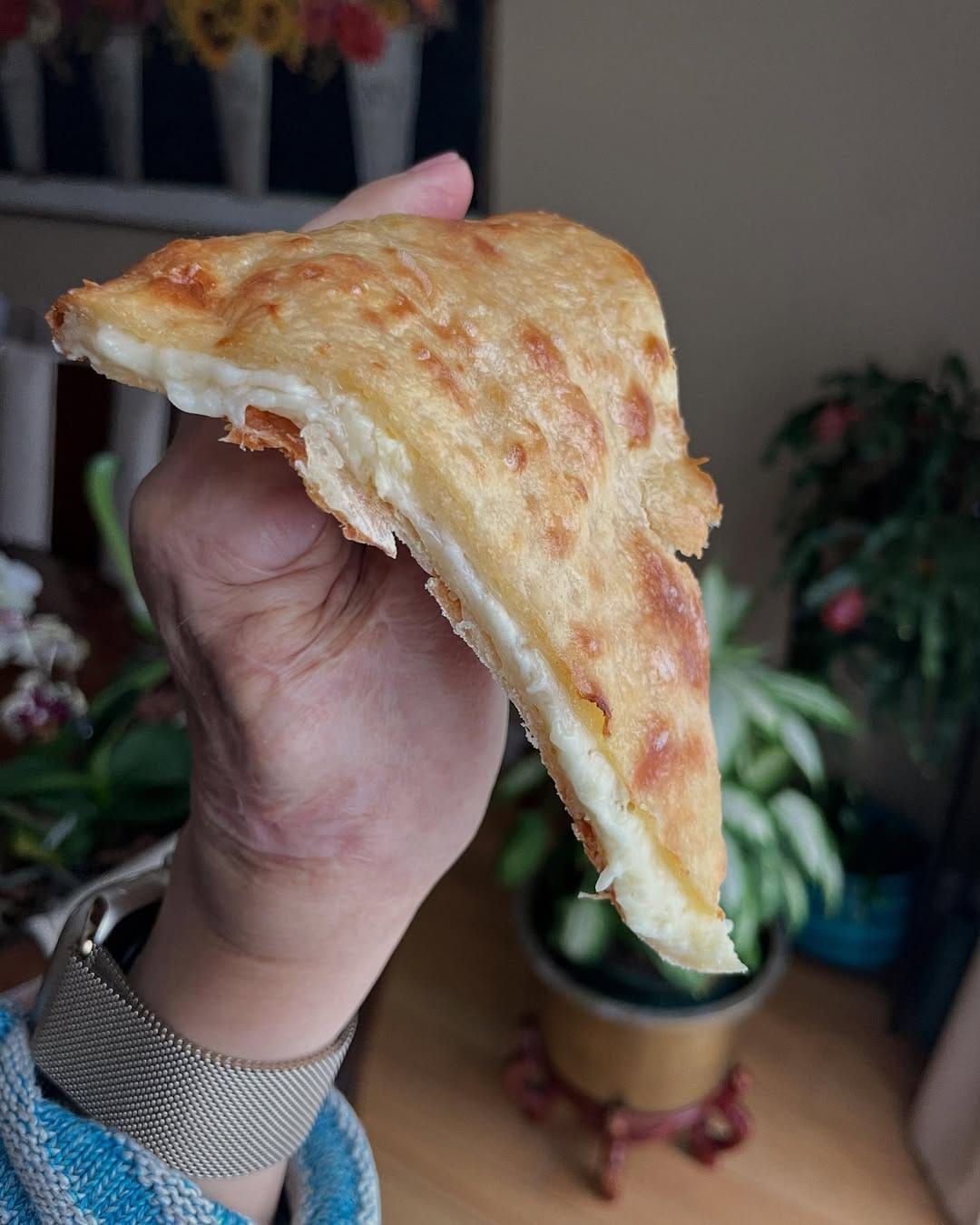
Table of Contents
While boat-shaped Adjaruli khachapuri gets all the attention, Imeruli khachapuri is, by far, the one most often consumed in Georgia. A melt-in-your-mouth flat round of dough encasing a melty, gooey cheese filling that is perfectly balanced with tangy, briny curds. It’s so popular that Georgian economists have even created a Khachapuri Index—using the cost of its ingredients and resources to gauge inflation and the strength of the economy. It’s our favorite at home, too. We’ll serve it for lunch or dinner as part of a larger spread, as a snack, and even as leftovers for breakfast. Khachapuri all day, baby.
Imeruli Khachapuri (Georgian cheese bread)
MAKES FOUR 8- TO 10-INCH (20 TO 25 CM) ROUNDS
DOUGH
1 cup (240 g) whole milk, lukewarm
½ cup (120 g) sour cream, at room temperature
2 tablespoons sunflower oil, plus more for greasing
1 ¼ teaspoons instant yeast
1 teaspoon sugar
3 ¼ cups (425 g) all-purpose flour, plus more for dusting
1 ½ teaspoons kosher salt
FILLING
1 pound (450 g) low-moisture whole-milk mozzarella, shredded, at room temperature
5 ounces (140 g) feta cheese, grated, at room temperature
5 ounces (140 g) whole-milk ricotta cheese, at room temperature
1 egg, at room temperature
1 teaspoon all-purpose flour
A cold stick of unsalted butter
Make the dough: In a large bowl, whisk together the milk, sour cream, 1 tablespoon of the oil, yeast, and sugar to combine. Switch over to a wooden spoon and gradually begin to add the flour, along with the salt, a bit at a time, mixing to incorporate after each addition. Once the spoon becomes cumbersome to work with, switch over to your hands and knead until all the flour has been incorporated and you have a cohesive dough. The dough will be shaggy and slightly sticky. Resist the urge to add more flour! Cover with a clean kitchen towel and allow the dough to rest for 15 minutes.
Transfer the dough to a lightly greased surface. Pour a little of the remaining 1 tablespoon oil on your hands and begin to knead the oil into the dough. If needed, use a dough or bench scraper to release the dough when it sticks to the surface so you can keep kneading. Once no oil remains, continue to knead for 4 to 5 minutes. By the end, the dough will still be tacky, but when handled with greased hands it will be soft and supple with a satiny sheen. When you pull on it, it will feel strong but will still tear after 3 to 4 seconds.
With lightly greased hands, form the dough into a ball and transfer to an oiled bowl. Cover the bowl with a slightly damp kitchen towel and set aside to proof in a warm place for 1 hour.
Turn the dough by taking one edge and gently stretching it up and over toward the center. Repeat until you’ve stretched all the edges.
Cover again and proof for another 1 hour. Turn the dough again.
Turn the dough out onto a lightly floured surface. Pat the dough into a rectangle and cut the dough into 4 equal portions (about 200 g each). Form into even balls and place on a generously floured surface, cover with the kitchen towel, and let rest until the balls are soft and slightly puffy, 15 to 30 minutes.
Make the filling: In a medium bowl, stir together the mozzarella, feta, ricotta, egg, and flour until thoroughly combined. Divide into 4 sturdy balls and set aside.
Assemble the khachapuri: Take one piece of dough, keeping the others covered, and pat it out gently with your fingers into a 6-inch (15 cm) round with the center a little thicker than the edges. Place one ball of filling in the middle. Carefully grab two opposite sides of the dough, bring them up over the filling, and pinch them together. Hold them securely together with one hand as you bring up the remaining edges over the filling, pleating as you go and pinching the ends together tightly at the top to secure like a drawstring purse.
Gently start flattening out the filled dough with your fingers. Sprinkle a little flour and flip it over. Continue to flatten the dough with your fingers and palms (you can also use a rolling pin), gently working from the center out to the edges to spread the filling out evenly, until you have a 9- to 10-inch (23 to 25 cm) round. If there are any tears, try to lightly pinch the dough together or nip a piece of dough from one of the other balls and patch up the hole.
Heat a 12-inch (30 cm) nonstick skillet over medium heat. Once hot, carefully transfer the khachapuri to the pan. If you have space in the pan to do so, press down on the outer edge of the khachapuri to further widen the round. Cook until the bottom begins to firm up and brown spots develop all over, 4 to 5 minutes. Carefully flip over and glide the stick of butter over the top like a glue stick to coat the khachapuri evenly. Cook for another few minutes until the bottom is browned—if the khachapuri begins to inflate, pierce it with the end of a sharp knife to release steam. Flip the khachapuri over onto a serving plate—the unbuttered side should be facing up—and give the second side a light coating of butter. Repeat the process with the remaining pieces of dough, stacking the khachapuri on top of each other as they come out of the pan.
Let cool a bit for the cheese to set before cutting the stack into eighths. Serve immediately. (Store well wrapped at room temperature for 1 day and then in the refrigerator for 2 to 3 more days.)
Excerpted with permission from Chesnok: Cooking From My Corner of the Diaspora: Recipes from Eastern Europe, The Caucasus, and Central Asia by: Polina Chesnakova, published by Hardie Grant North America, September 2025, RRP $35.00 Hardcover.
wordloaf Newsletter
Join the newsletter to receive the latest updates in your inbox.