Frollini al Farro (Crispy Farro Cookies)
From Domenica Marchetti's 'Italian Cookies'
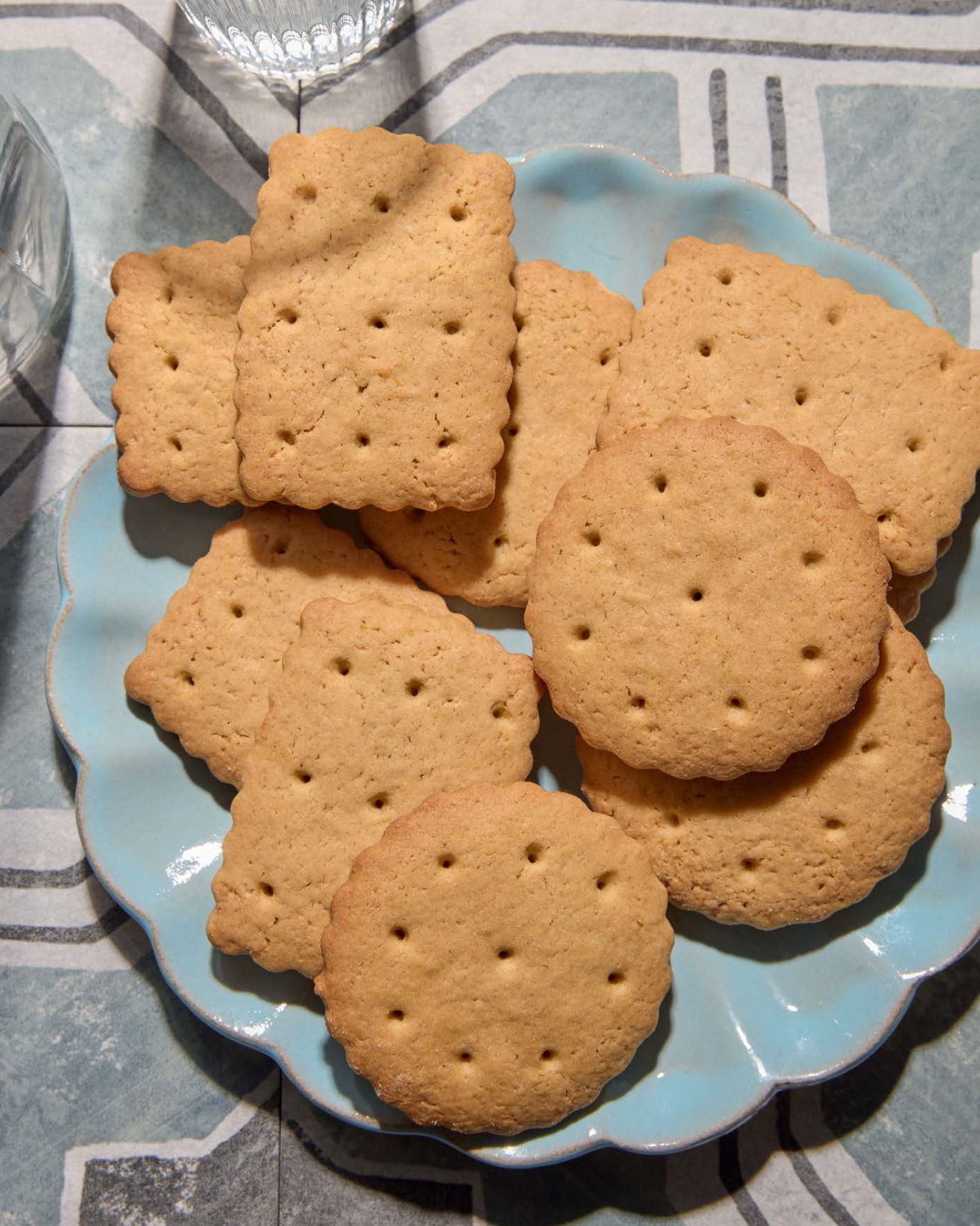
Table of Contents
Grocery stores and bakeries across Italy sell packages of frollini cookies. The word is a catchall term for crumbly cookies made with pasta frolla—they can be tender, crispy, or crunchy, but they should also leave a little trail of crumbs when you bite into them. There are all sorts of frollini in the world of Italian cookies, some made with all-purpose flour, others with whole wheat or heirloom wheat, and others with cornmeal.
In Umbria, there is a mill and bakery in the Valle d'Assisi that makes some of the best frollini cookies I've ever had. Granarium is a "zero kilometer" family-run operation, in which the grains that produce the bakery's bread, pizza, cookies, and pastries, are all grown and stone-milled right on the property. Everything is made on-site, in a low-slung building flanked by a row of silos painted forest green.
This recipe is my homemade take on Granarium's wonderfully rustic farro cookies. They crunch heartily when you bite into them and, yes, they leave a telltale trail of crumbs. You'll need a thin wooden dowel, such as a kebab skewer, to poke holes into the surface of the cookies before baking. This keeps them from puffing up too much. If you don't have a skewer, use the tines of a fork.
Frollini Al Farro (Umbria and other regions)
Crispy Farro Cookies
MAKES ABOUT 24 COOKIES
5 ounces (11 tablespoons; 150 g) unsalted butter, cut into ½-inch (12-mm) cubes, at cool room temperature
2/3 cup (130 g) granulated sugar
2 large eggs, at room temperature
Zest of 1 small lemon
1 teaspoon pure vanilla extract
¼ teaspoon fine salt
2 cups (240 g) unbleached all-purpose flour, plus more for rolling
Scant 1 cup (110 g) farro flour*
1 teaspoon baking powder
- Place the butter and sugar in the bowl of a stand mixer fitted with the paddle attachment and beat, first on medium and then on high, until well combined and fluffy. Drop in the eggs, one at a time, beating well after each addition. Beat in the lemon zest, vanilla extract, and salt. Pour in the flours and baking powder and mix on mediumlow just until the flour is incorporated. Pat the dough into a disk, wrap it in reusable wrap or plastic wrap, and refrigerate it until thoroughly chilled for at least 2 hours—overnight is best.
- Remove the dough from the refrigerator and let it sit out for about 30 minutes to warm up. Preheat the oven to 375° F (190° C). Line two rimmed baking sheets with parchment.
- Lightly flour a work surface. Roll the dough out to a large circle about ¼ inch (6 mm) thick. Use a 2 x 3-inch (5 x 8-cm) rectangular cookie cutter, or a 3-inch (8-cm) round cookie cutter to stamp out cookies. If you have cutters with scalloped edges, all the prettier. Arrange the cookies on the baking sheets, 12 per sheet. With the blunt end of a wooden skewer, such as a kebab skewer, prick a series of holes into each cookie, taking care not to poke all the way through. Docking the dough in this way will keep it from puffing up unevenly during baking.
- Bake the cookies, one sheet at a time, in the middle of the oven for about 18 minutes, until they are honey brown and set. Set the baking sheets on wire racks to cool for 20 minutes; then transfer the cookies from the baking sheet to the racks to cool completely. Store the cookies in an airtight container for up to 1 month—they really keep well.
*[AJ note: 'Farro' in Italy can mean emmer, spelt, or einkorn, and any one of these flours should work well here. If none are available, use whole-wheat.]

Excerpted from Italian Cookies, by Domenica Marchetti (Gibbs Smith). Copyright © 2026. Photograph by Lauren Volo.
wordloaf Newsletter
Join the newsletter to receive the latest updates in your inbox.

)