Well-equipped
Some new tools & appliances in the Wordloaf test bakery
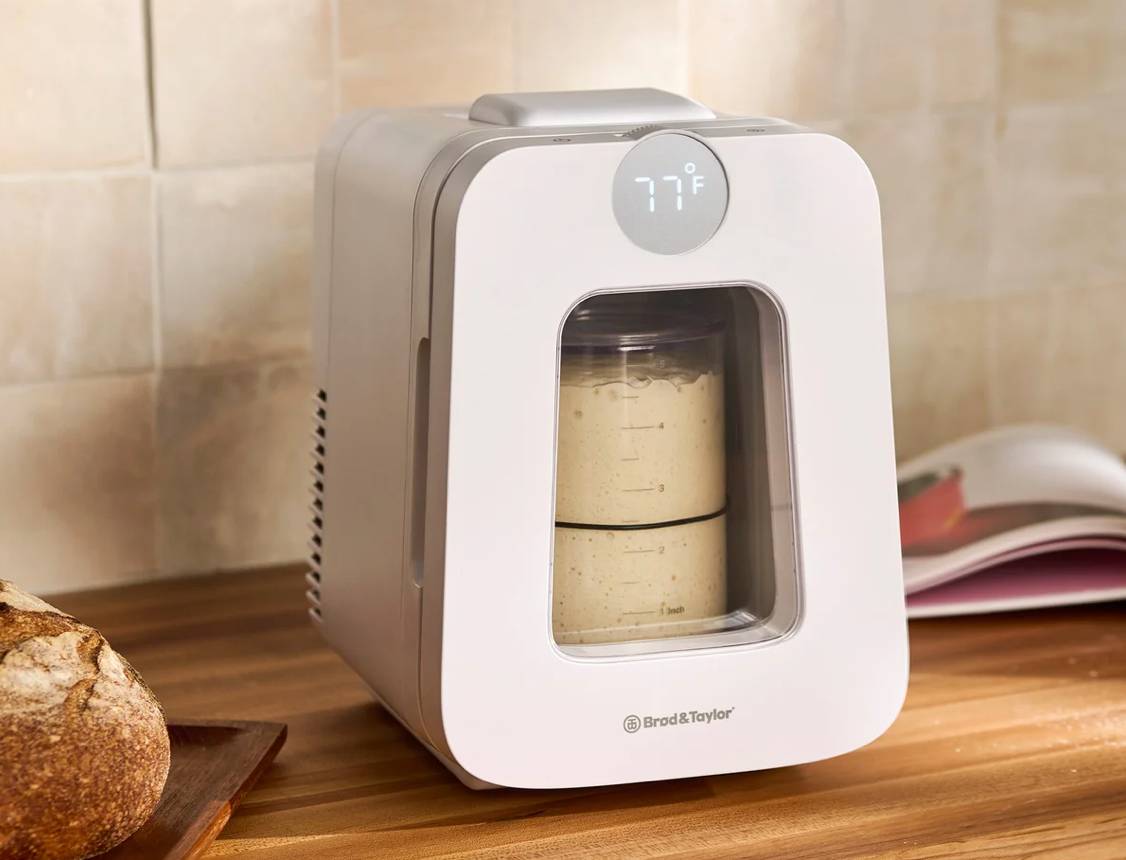
Table of Contents
Over the last six months or so I have been sent a bunch of new baking tools and appliances to test out. While I haven't had any of them long enough to file an official review (except for one, which was easy to assess almost right away), I wanted to share some initial thoughts on them this week, because all of them have worked well so far and might be of interest to you all.
Full disclosure: All of these items were sent to me for free to evaluate. Other than affiliate links—which I've included below as options, should you want to purchase one of them and support Wordloaf at the same time—I receive no compensation for testing and writing about them. I am a fan of the tools both companies produce, though I don't hesitate to speak up when they don't work exactly as advertised or if I think there might be ways they could be improved in future versions.
The Sourdough Home Plus (Brod & Taylor)
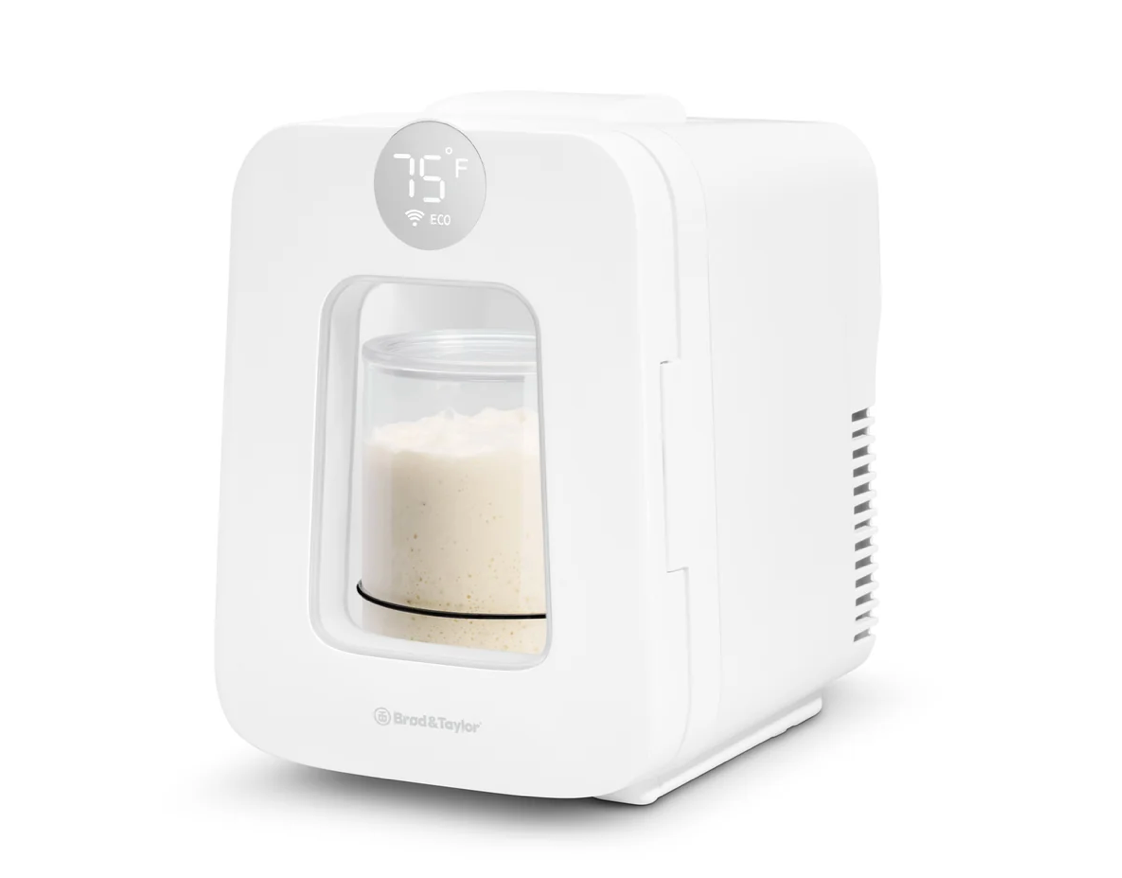
I've had a Brod & Taylor Sourdough Home for a few years now, during which it has seen near-daily use. It's essentially a mini proofer-retarder that sits on your countertop: it can hold any temperature from 41 to 122˚F (5 to 50˚C), within 1˚C of accuracy, and hold a one-quart/liter container comfortably (or several smaller ones). I mostly use mine to hold my maintenance starter, either at ~78˚F (24˚C) if I am actively using and refreshing it twice a day, or at 65˚F (18˚C) if not, refreshing once daily. (The only time of year I do not use my Home much is in the summer, when I set my kitchen air conditioning to an energy-saving 78˚F, making the entire room a proofing box.) I also use it to proof levains and yeasted preferments at a range of warm temperatures (75 to 85˚F; 24 to 29˚C).
The original Sourdough Home retails for $149US. Now, for an additional $30, there is the identically sized Sourdough Home Plus, with several additional features:
- An internal light and a viewing window in the door, so you can keep an eye on your preferments without needing to open it.
- A redesigned control panel, with a rotating dial for setting the temperature.
- Bluetooth/Wifi connectivity, allowing the device to be controlled from a free 3rd-party iOS app.
I haven't really used the iOS app other than to test it out, but it does work as it should. I do love the door window; I don't think opening or closing the door to peer inside lets in or out a whole lot of heat, but it is very nice to be able to keep an eye on your starter or levain from across the room at a glance.
None of these features make the Sourdough Home Plus an essential upgrade if you already have the Home—either one is an excellent option for keeping your starter at precise temperatures year-round, something that will improve your bakes immensely. So whether the new features are worth the extra $30 is something you'll have to decide.
 Brod & Taylor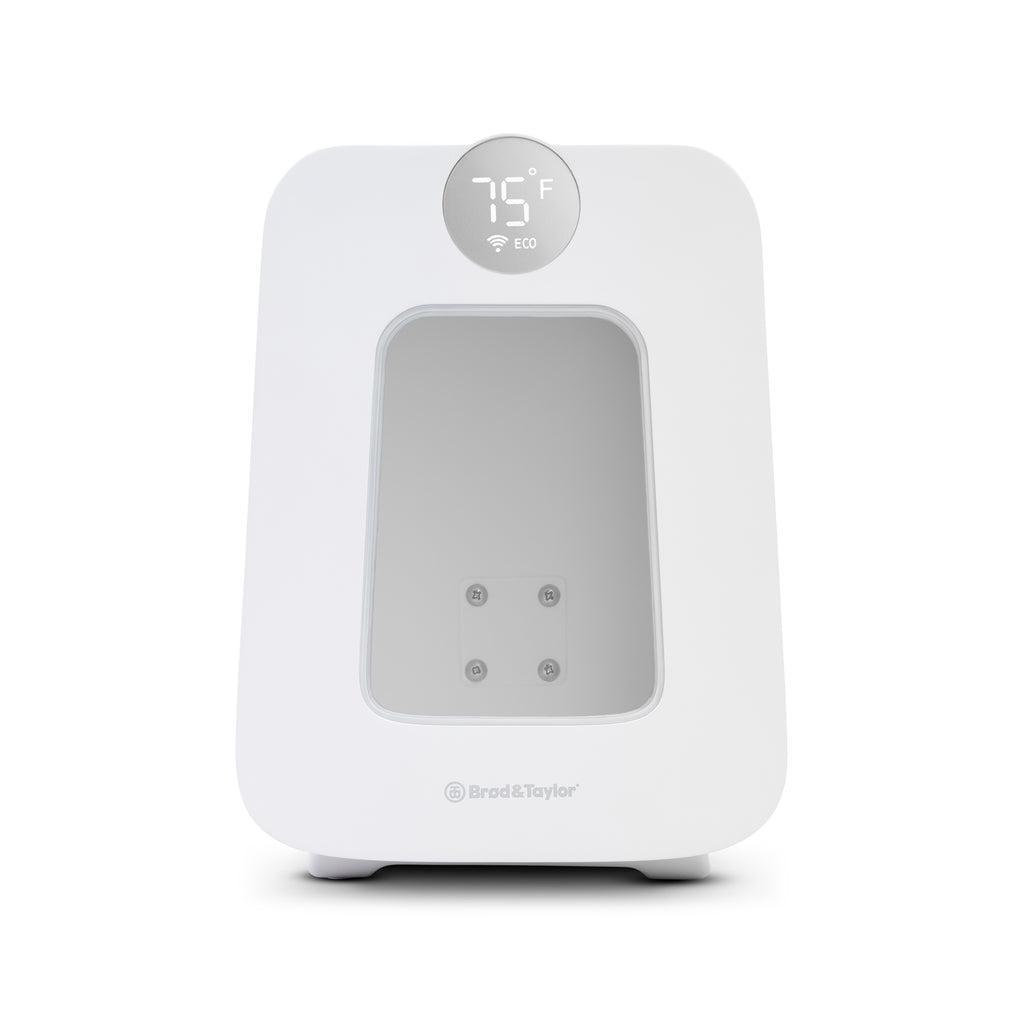
Also, a hot tip: It's not easy to find, but you can buy refurbished Sourdough Homes for a steal at $88:
 Brod & Taylor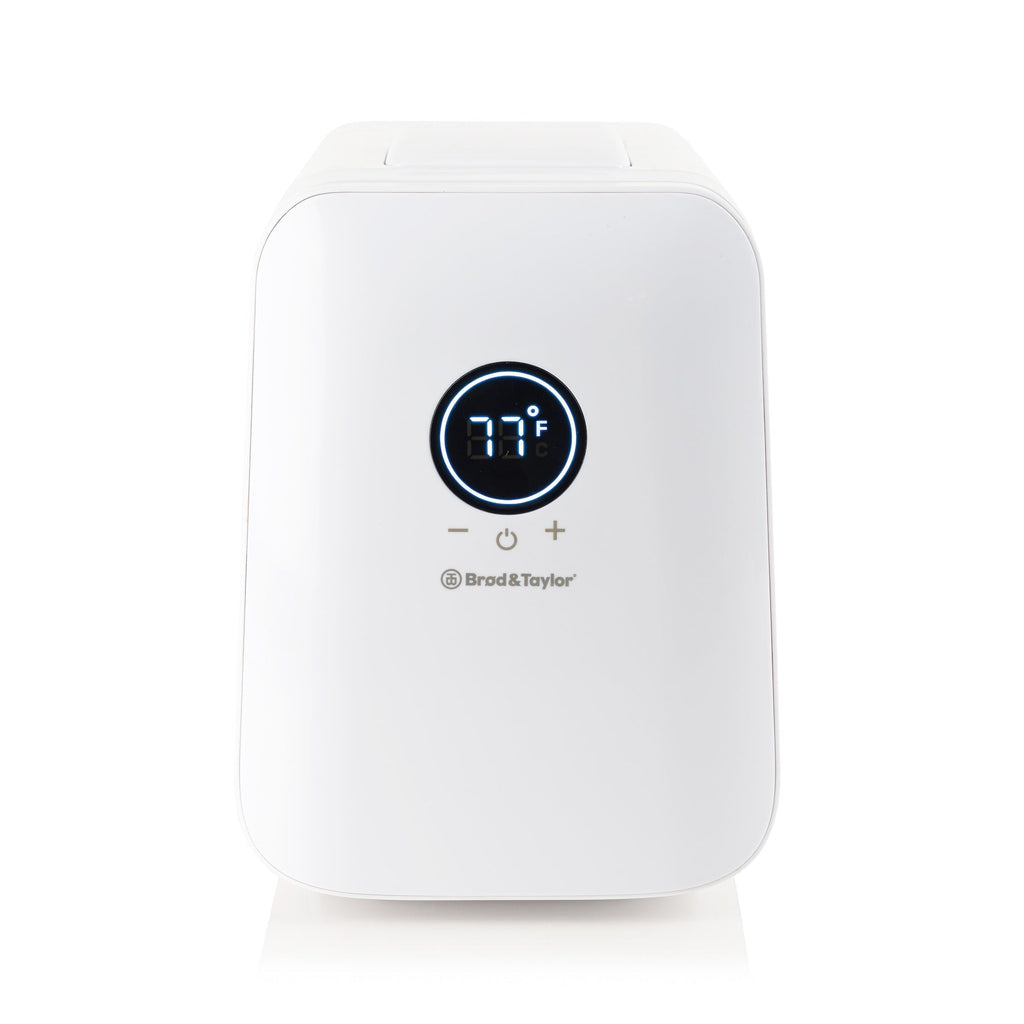
The Proofer Pro (Brod & Taylor)
Many of you might be familiar with the Brod & Taylor Folding Proofer, a folding bread proofer/fermentation chamber that can hold temperatures from 70 to 195˚F (21 to 90˚C). I have had one for years, though I find it too small for my needs and instead use my DIY proofing box, made up of a seedling heating mat, a temperature controller, and a large insulated food container.
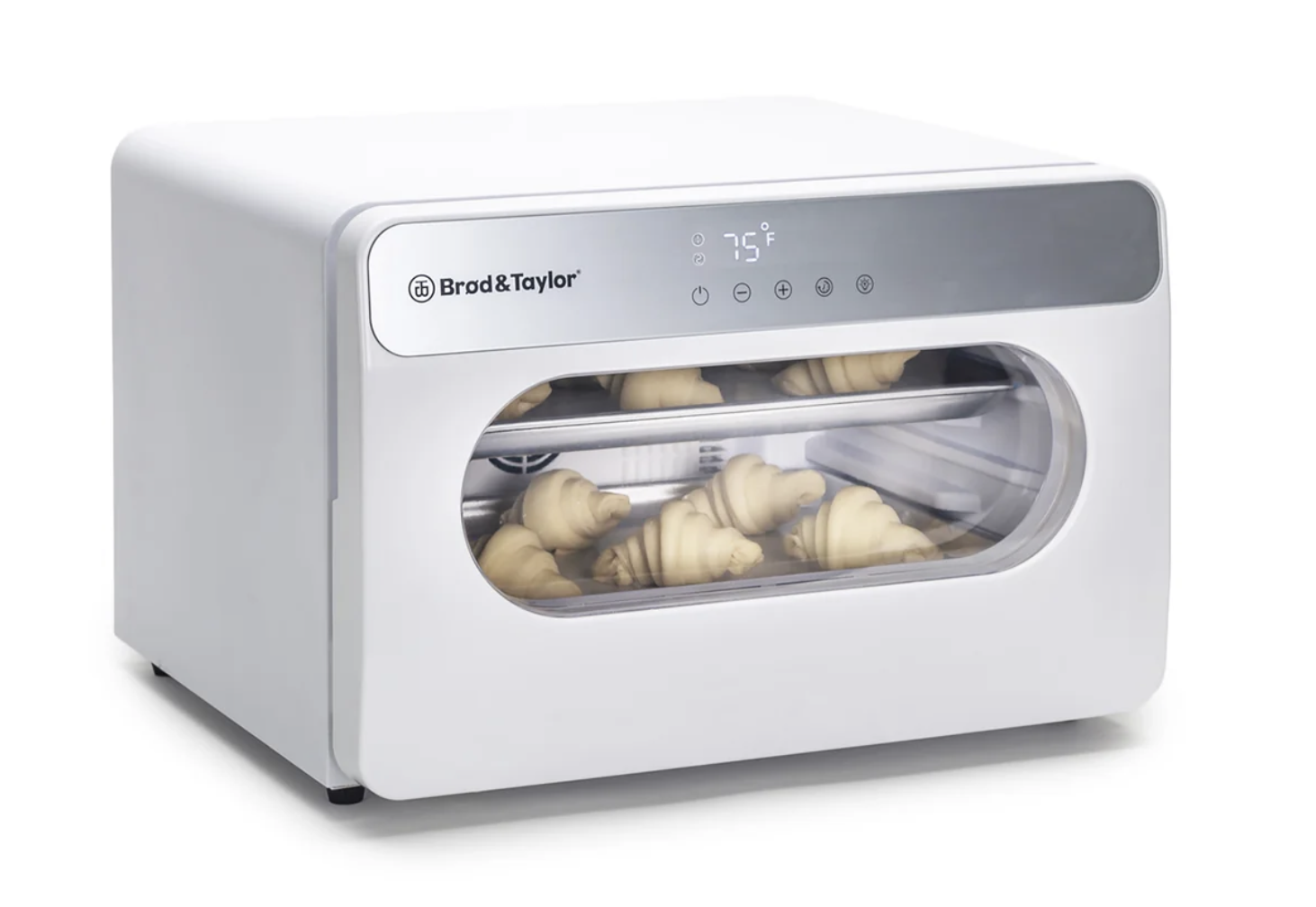
The Brod & Taylor Proofer Pro is a larger, much more versatile version of the Folding Proofer, about the size of a large microwave or smart oven (22" x 22" x 14.6" / 55.9cm x 55.9cm x 37.15cm). Unlike the folding proofer (and exactly like both of the Sourdough Homes), it can both heat and cool your loaves or other ferments, from 41 to 122˚F (5 to 50˚C). And like the Sourdough Home Plus, the Proofer Pro has a viewing window in its door and an internal light, allowing you to keep tabs on what is inside it without opening the door, and Bluetooth and Wifi connectivity, allowing it to be controlled from the same app as the Home Plus. Like the Folding Proofer, it has a water tray for creating humidity within the chamber; because the internal chamber is tightly enclosed, it holds humidity quite well. And it seems to hold temperature well, though I've yet to try proofing things for long durations. (Something like a sweet starter brioche, for example.)
On the inside, the Proofer Pro is maybe a little on the snug side; it has sets of rails on either end that can hold up to eight half-sheet pans, but they sit pretty close to one another, so, in practical terms, it can comfortably hold:
- four half-sheet pans with minimal headroom between them (say for focaccias);
- two half-sheet pans with ample headroom (croissants or baguettes);
- two round bannetons on two half-sheet pans;
- four long batârd bannetons on two half-sheet pans, or six shorter ones;
- two 2-inch deep square or rectangular cake pans on two half sheet pans (for things like buns and cinnamon rolls);
- or three 2-inch deep half-sheet sized cake pans (for many buns and cinnamon rolls, or deep focaccias or pan pizzas).
The Proofer Pro also has a "dual time/temperature" mode that lets you proof at one temperature for a desired duration and then have it automatically switch to another temperature for a second duration. In other words, you can start the proof high and automatically cool down your products, or, conversely, proof them cold and then warm them up (say to bake baguettes or croissants early in the morning). I haven't put this function to the test yet, but assuming it works as advertised it is a nice feature to have; I will report back once I have had time to make a batch of croissants.
Here's the thing about the Proofer Pro: It retails for $999, which is a lot, considering its somewhat limited capacity and large footprint. It's probably too small for a cottage baker to make use of, and on the pricey side for a home baker to absolutely need. That said, it does work as advertised and is certainly something some people might want to own.
Also: I haven't put it to the test yet, but the Proofer Pro should make a decent substitute for the much more expensive Waring PlanitPOD Fermentation Chamber ($3,499.99), for growing ferments like koji and tempeh. (This is on my list to test soon.) If so, and you bake bread and grow your own koji at home, the $999 price starts to seem much more reasonable.
 Brod & Taylor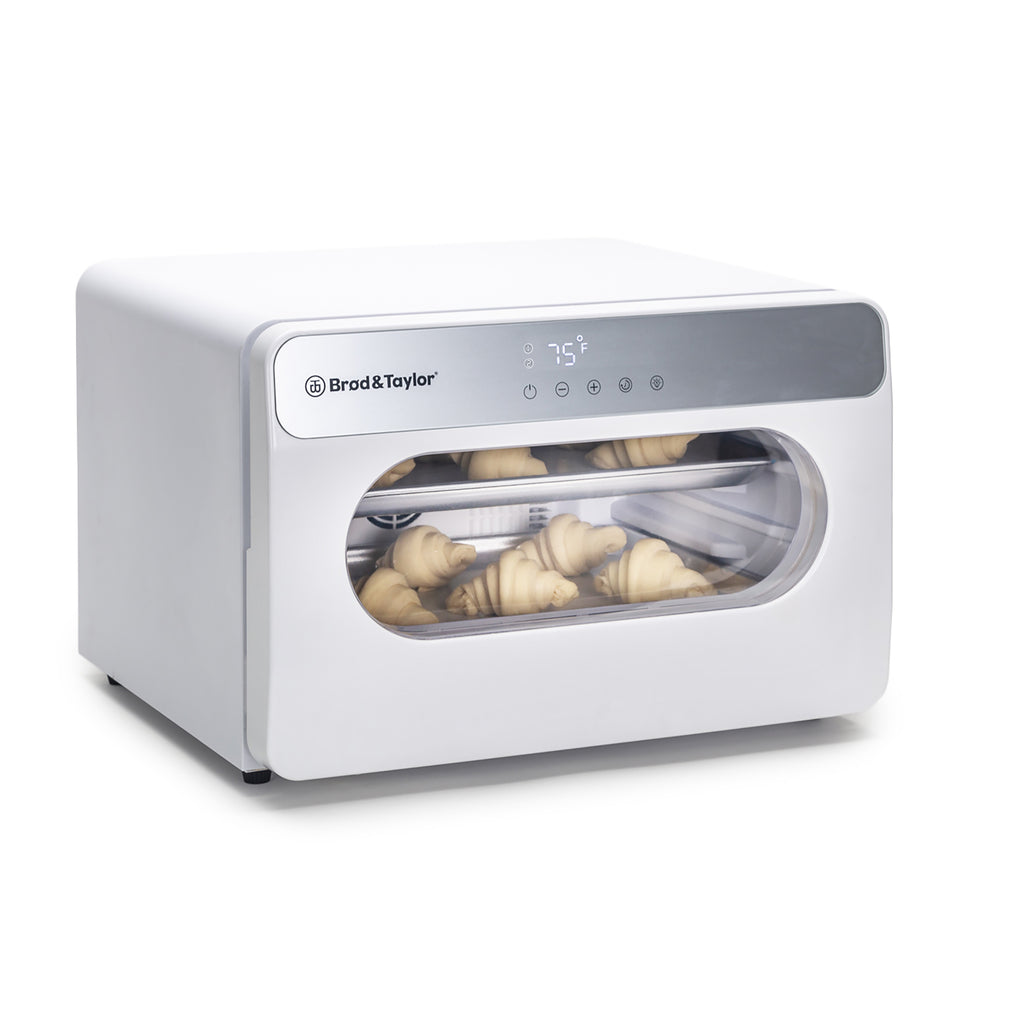
Bread Steel Duo (Brod & Taylor)
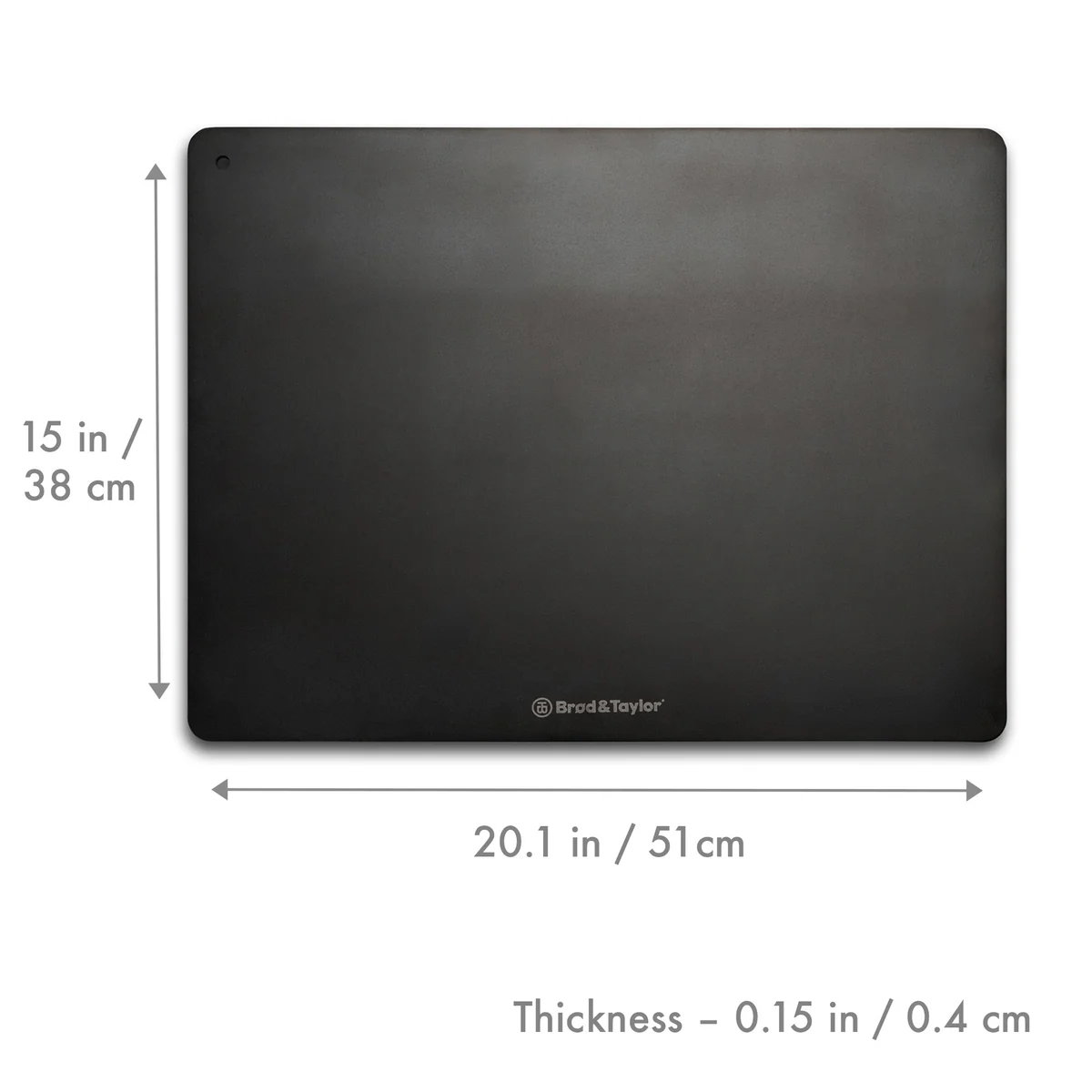
Most of you probably know that I am a fan of the Brod & Taylor Baking Shell/Steel combination for baking hearth loaves in a home oven. It's pretty much the only system I use for baking loaves under a cloche these days; the steel heats up in a flash, and the thin shells transmit heat to the loaf quickly while trapping steam to yield a crisp, crackly crust and excellent oven spring.
These days I set my shells on the Bread Steel Duo, an extra-large version of the Bread Steel Max, wide enough to hold two batard Baking Shells side-by-side (it isn't large enough for two round ones, though). I almost always bake two loaves at a time, and I have a wide-enough oven, so having the extra real estate is nice. That extra space comes at a cost, however: it's 12.3lb (5.56kg), nearly twice as heavy as the Max (8.6lb /4kg). And it'll set you back $119 (plus $85 for an extra Baking Shell).
(I'm waiting for Brod & Taylor to make a baguette-sized baking shell, which would pair perfectly with the Bread Steel Duo.)
 Brod & Taylor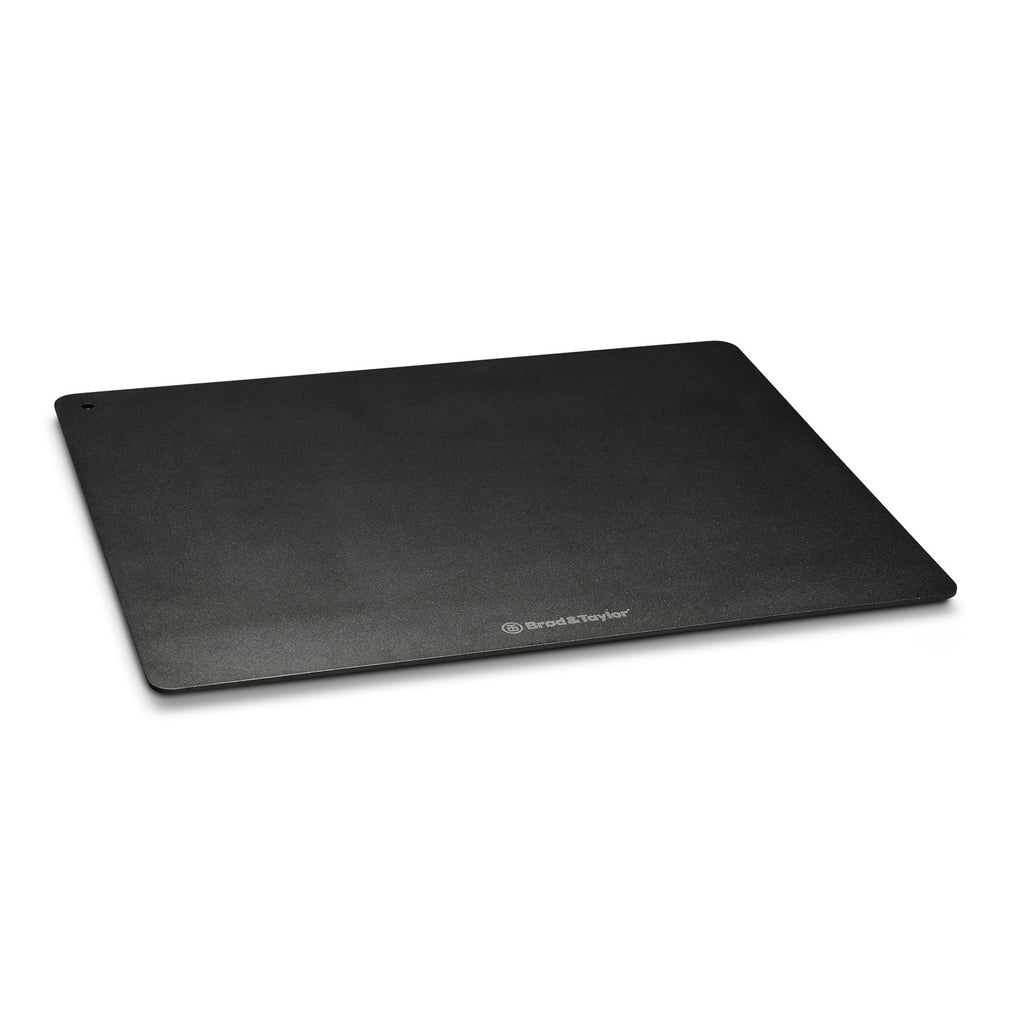
Halo Core Spiral Mixer (Ooni)
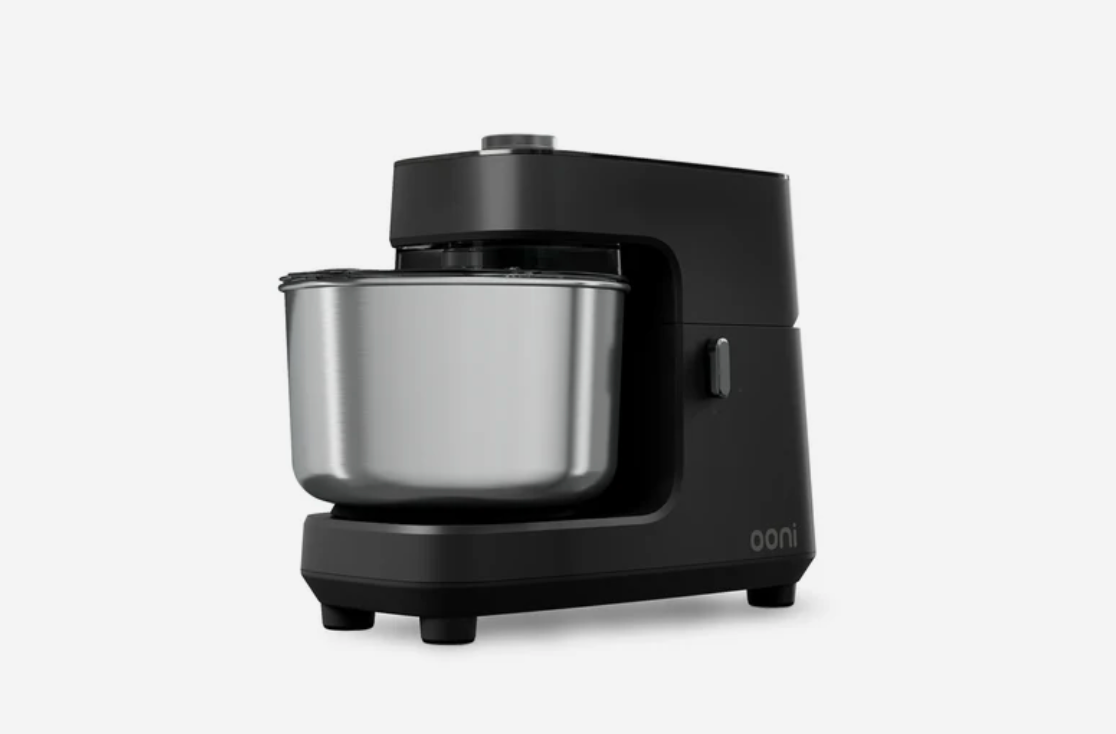
You probably also know that I am a fan of the Ooni Halo Pro 7.3 quart spiral mixer, which has been my main mixer since it was first launched last year. My main (minor, to me at least) complaint about the Halo Pro was its large capacity. It works great for 1 to 5 kilograms of dough; anything less than 1kg and the Halo Pro is too large, which means it isn't ideally sized for the average home baker making just one loaf at a time. (Or, when using the beater and whipping attachments, making one cake at a time.)
Now there is the Halo Core, a 4.8 quart, $599 baby version of the Pro. It looks and functions more-or-less identically to the Pro, with three major differences:
- It holds 500g to 2.5kg dough (i.e., half as much);
- It does not include a built-in timer, so you'll have to time your mixes separately;
- And it doesn't display RPMs (at all) or mixing speed percentages numerically; instead, LEDs around the dial light up to indicate the speed percentages.
I've only had the Core for a few months, though during that time I used it exclusively in order to get a sense of how well it works compared to its larger sibling. (I have not used the whisk or beater attachments yet, so I can't say whether it does as good or a better job when using it for cakes, frosting, etc. Another thing for the testing to-do list.)
As for how it works for kneading dough, the jury is still out. I think it works pretty well, but at least in certain circumstances, its efficiency at mixing seems not quite up to par relative to the Pro. Doughs that are on the sticky side—like white flour doughs at 70% hydration and up—tend to get stuck on the bottom of the bowl and don't get taken up by the hook completely; as a result, I've found they've needed as much as 50% more time to achieve the same level of development compared to the Pro. I don't know if there are similar differences with doughs of stiffer hydrations, or if the issue goes away when you scale up beyond a certain amount. Someday soon I plan to do a side-by-side test of identical doughs of various hydrations in each machine (scaled appropriately for each), just to be sure that what I am seeing is real.
 Ooni
Ooni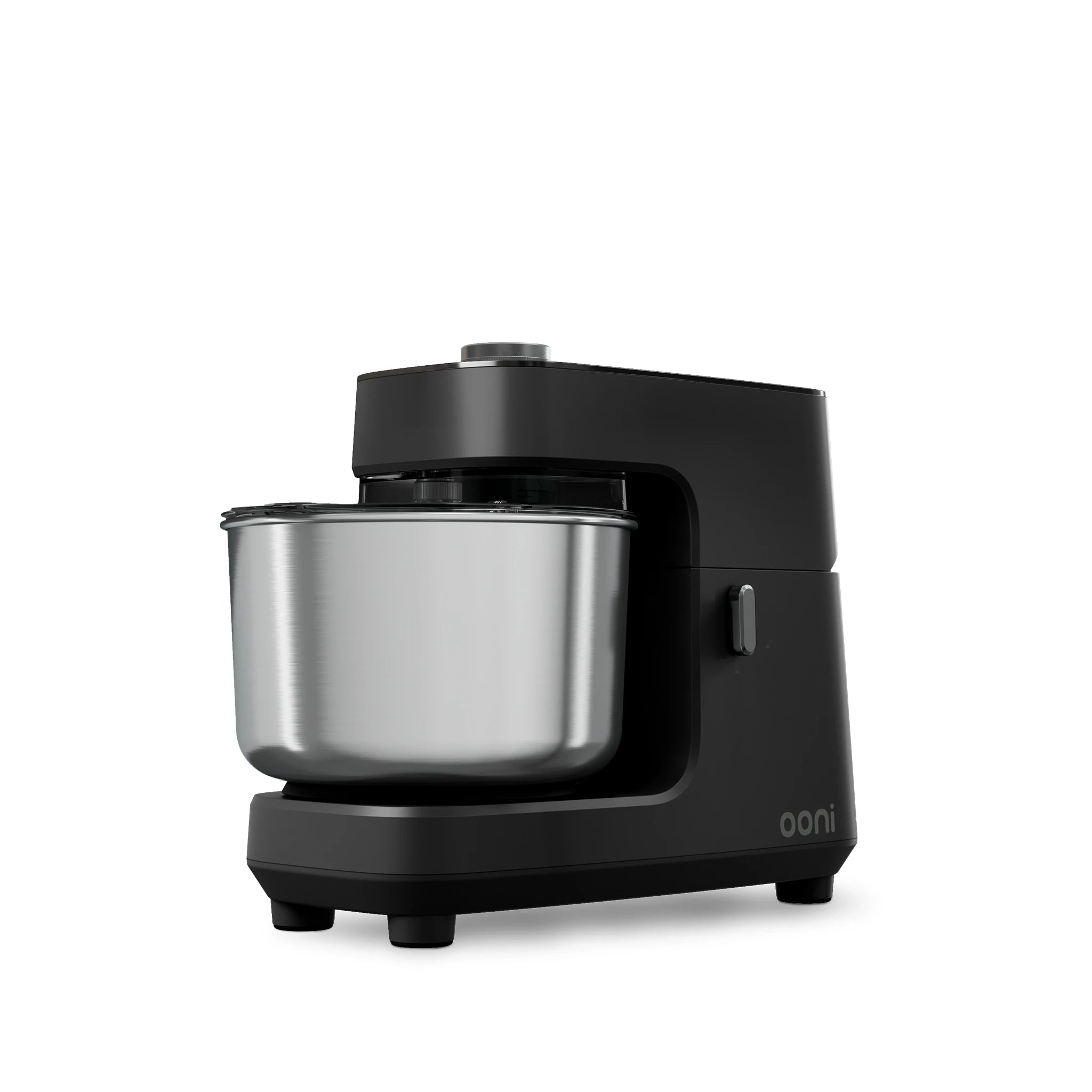
Volt 2 Electric Pizza Oven (Ooni)
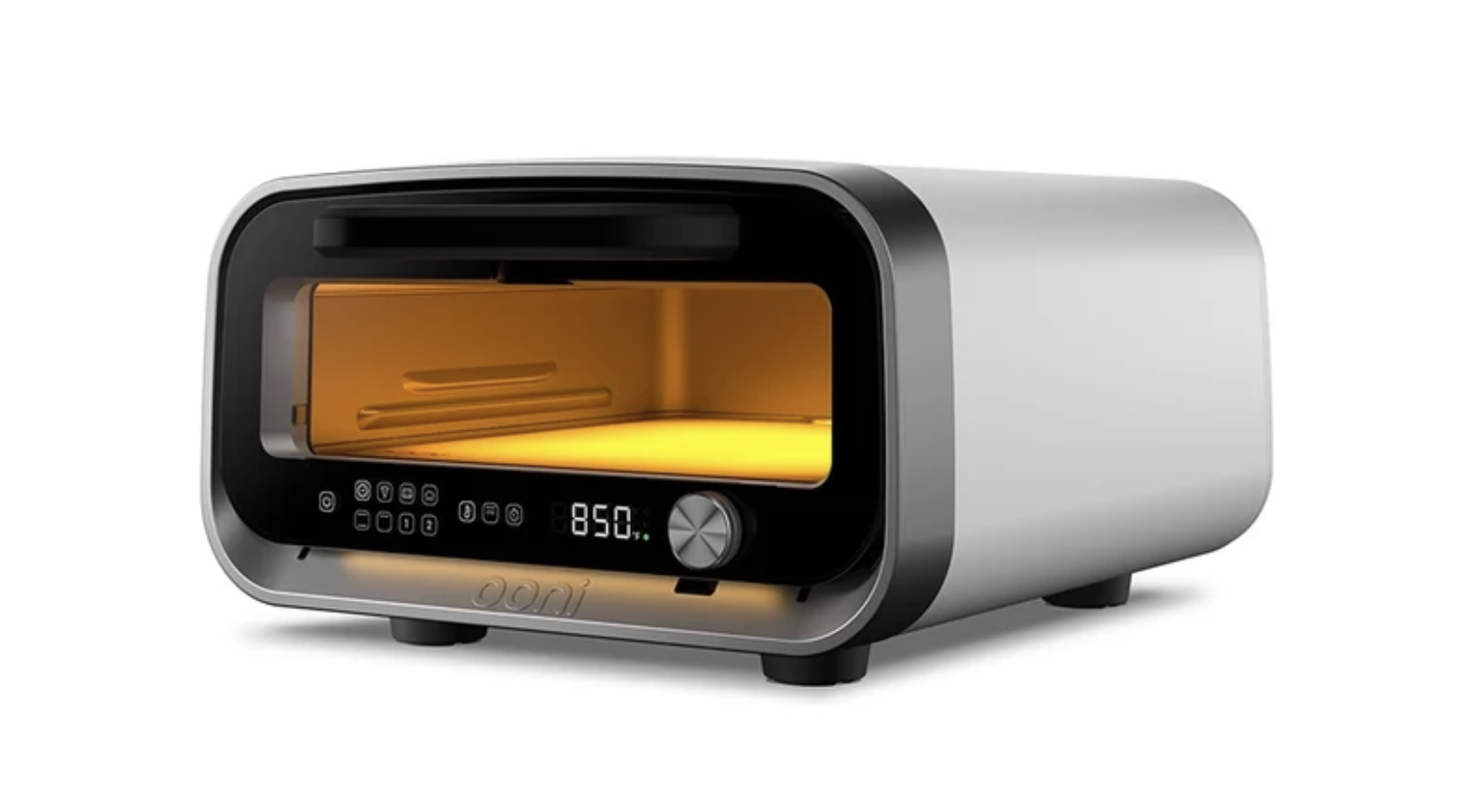
Finally, there is the Ooni Volt 2 Electric Pizza oven. Of all the items in this post, this is the one that has seen the least amount of use. (I've yet to really ramp up my pizza-making practice since finishing my pizza-free bread book last spring, though I do have a new and much-improved Detroit-style pizza formula in the works.)
That said, the handful of times I have used it, it has worked wonderfully. It heats up to a max of 850˚F (455˚C) in about 30 minutes, and bakes pies beautifully. My one (minor) complaint is that it doesn't have a full "manual" pizza mode, one that allows you to simply turn it on and set a top and bottom temperature. Instead, you need to first choose from one of three pizza modes—Neapolitan (810°F /430°C), thin & crispy (660°F / 350°C), and pan (530°F /275°C)—each of which heats at a specific temperature; you can then adjust the temperature up or down within a limited but appropriate range, as well as tweak the "crisping intensity" (i.e., upper element intensity). You can, however, create up to two "user presets" with your own temperature and crisping intensity settings. There is a built-in timer that indicates when I pie is likely to be done, depending on the style, or than can be overridden to function manually.
The Volt 2 also has proofing, oven, and grill/broil modes, none of which I have used yet. Nor have I used the "boost" mode, which is a brief, high-intensity "rolling flame" setting used to increase top browning, which only works when in Neapolitan mode. All things I'll try to test in the future. (2027 is going to be "Back to Pizza" year around here.)
 Ooni
Ooni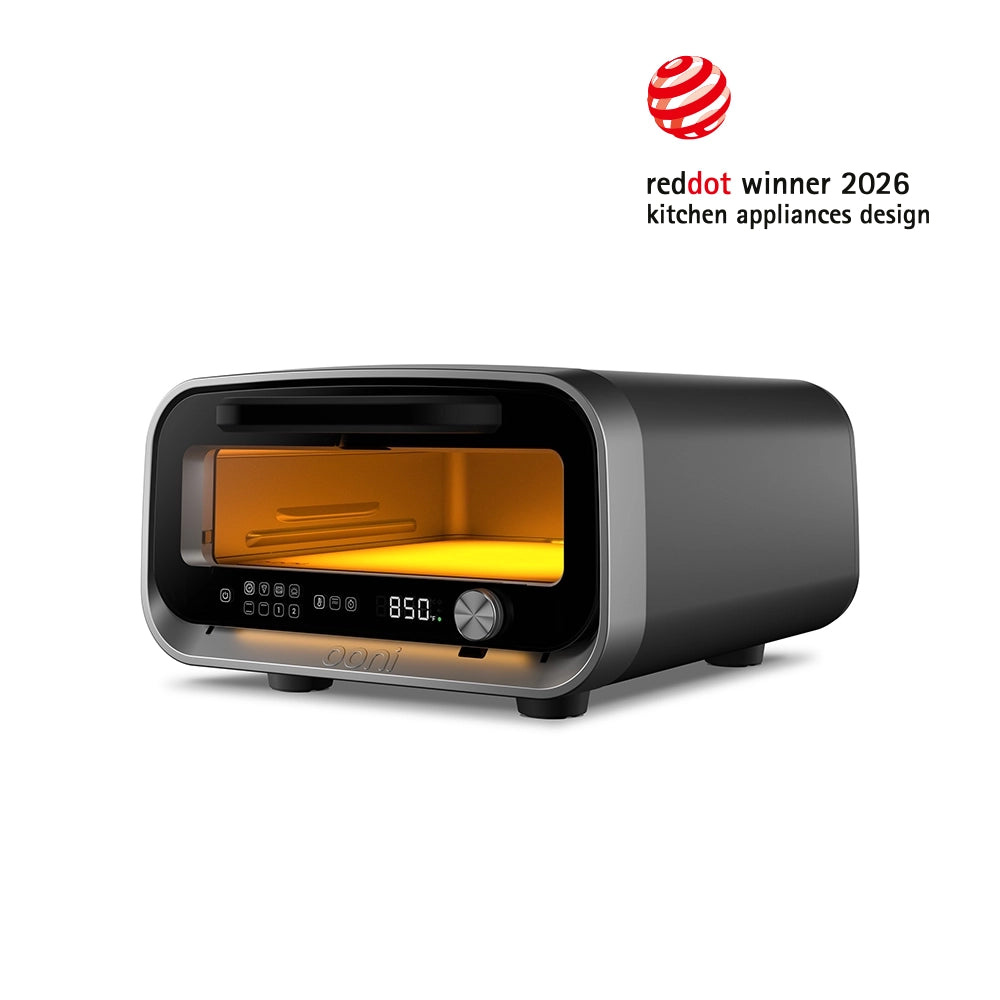
Who has one or more of these items and has opinions of their own to share? Chime in in the comments below, I'd love to hear them, and I know others would too.
—Andrew
wordloaf Newsletter
Join the newsletter to receive the latest updates in your inbox.