Slow proofing
This is clearly going to take awhile
Table of Contents
I'm not going to lie, I am finding it hard to get back into the swing of things around here, post-book. Partly I am burned out from the long slog to get it done, and partly I am overwhelmed in the face of all the possible things I could write and post about here. It's clear that the previous cadence I'd developed here was the result of years of regular posting, and the long break I took this winter has put me off my game. All of which is to say that I'm hoping you'll bear with me as I get back up to full speed. With that in mind, this week I want to discuss a few smaller, but not necessarily less important things.
One: Comments and likes over emails
I want to reiterate that, while I do appreciate getting emails in response to my posts—positive or (respectfully) negative ones—I would much prefer you responded in a comment instead whenever possible, please. Others here would like to know what you think too, and sharing publicly helps develop community and encourages others to do the same. I'm also slightly more likely to respond to you, knowing that the time and effort it requires will provide a benefit for all Wordloaf readers and not just you.
I'm happy with the move I made to Ghost last year, but one way it is lacking relative to Substack is a default sense of community (real or purported) built into it. Without the app/website where all newsletters and readers are crammed into one space, we have to work a little harder to remain connected with one another. It's in the comment section (and the paid subscriber Discord server) that it happens.
Two: Ask the Breaditor
Speaking engendering conversation around here, I am starting a new regular item that I am calling "Ask the Breaditor," wherein I answer burning questions that readers have about issues they are having with their breads, recipes they are interested in, or anything else related to bread, baking, or grains. I have no idea how this will play out, demand-wise, and I cannot promise to answer all questions that come my way, but I will do my best, particularly when I have the intel at hand, or it's something interesting enough for me to experiment and/or dig more deeply on. (If you've asked a question of me in the past that has gone unanswered, now's your chance to try me again.)
If you have questions, send them my way via email using this link, indicating whether or not you are a paid subscriber (questions from paid subscribers get higher priority) and what name if any I should use when I post my response.
Three: The Baker's Larder—'Estrattu and Maine Garum
Finally, I wanted to start a new, occasional item here covering some of the lesser-known pantry items I consider essential in my kitchen. While most of these items would not be something I'd use in breads directly, they are things I'd use in dishes that would go well with breads in many cases. (Full disclosure: I'm promoting these items only because I love them, and receive nothing in return for doing so other than getting to list them on my taxes as a business expense.)
Today I want to feature two products that I use all the time when making soups, stews, beans, and pasta.
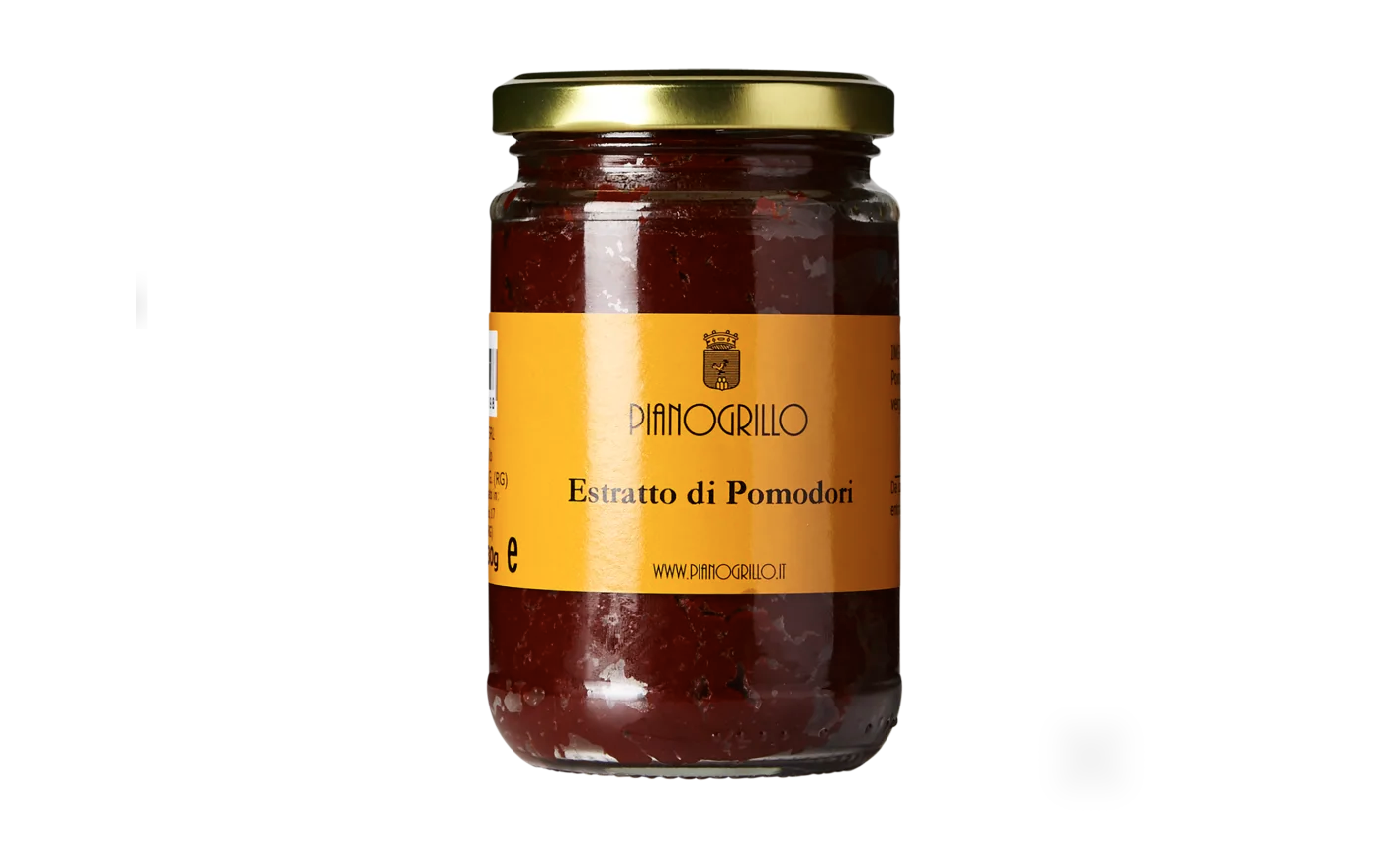
The first is this 'strattu from Pianogrillo, which you can purchase here. I've lost track whether I first heard about 'strattu (aka tomato conserva, estratto, or estrattu) from my friend Sho Spaeth, who posted about it online somewhere, or via writer Mary Taylor Simeti, from her book Pomp and Sustenance, which I picked up on a whim in a used bookstore and devoured last year:
Purists require that [pasta with anchovies and breadcrumbs] be prepared using 'u'strattu, tomato extract that is obtained from enormous expanses of bright red tomato purée salted and spread out on boards to dry in the sun until it hardens into a very dark red paste with the consistency of clay. The 'strattu gleaming in the bright summer sunlight, together with the pennuli, a sort of thick-skinned cherry tomato hung up in bunches on the wall to keep until December, make bright splotches of red pigment along the whitewashed streets of Sicilian villages, but it is rarer and rarer that you see it nowadays. As far as I know the 'strattu produced today is marketed only on a very small and very local scale: most Palermo groceries have bowls of it on their counters and weigh it out by the spoonful.
Given the success that sun-dried tomatoes are currently enjoying in the United States, I can't believe that it will be long before 'strattu crosses the ocean. Until its moment comes, however, those who are curious, and can count on two days of very hot sun, can try making their own.
Pomp and Sustenance was published in 1991, and it is safe to say that 'strattu, even 35 years on, has yet to achieve the status that sun-dried tomatoes once held here, despite it being a more-useful ingredient that would never go out of style were it to. Think of 'strattu as ultra-concentrated tomato paste, with something unique to it owing to its method of preparation. It has an intensity of flavor and umaminess that—according to Harold McGee via Hank Shaw—is the result of its transformation under the heat and UV rays of the sun, something that most tomato pastes never encounter. (I am going to try to make my own 'strattu this summer, so stay tuned for that.)
Using 'strattu is simple: you either fry it in oil along with other aromatics, or simply stir it into dishes at the start of cooking along with enough liquid to help it dissolve. (As Simeti mentions, it does have the consistency of clay; if you want to get it to distribute into a dish quickly, it's a good idea to thin it out with water first.) It's expensive stuff, but thankfully a little bit goes a long way; for most dishes I start with a tablespoon or two.
I've tried a bunch of different 'strattu since I first learned about it, and the Pianogrillo version is the best one I've found and also the least expensive.
 Chef Mike Anthony at Gramercy Tavern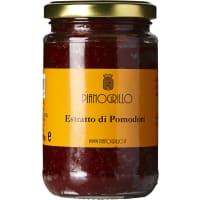
And then there is Maine Garum's Upcycled Fish Sauce. I'm a vegetarian, but I make an exception for this stuff, because a) it is made from the waste stream from fish processing, and b) it is incredible stuff.
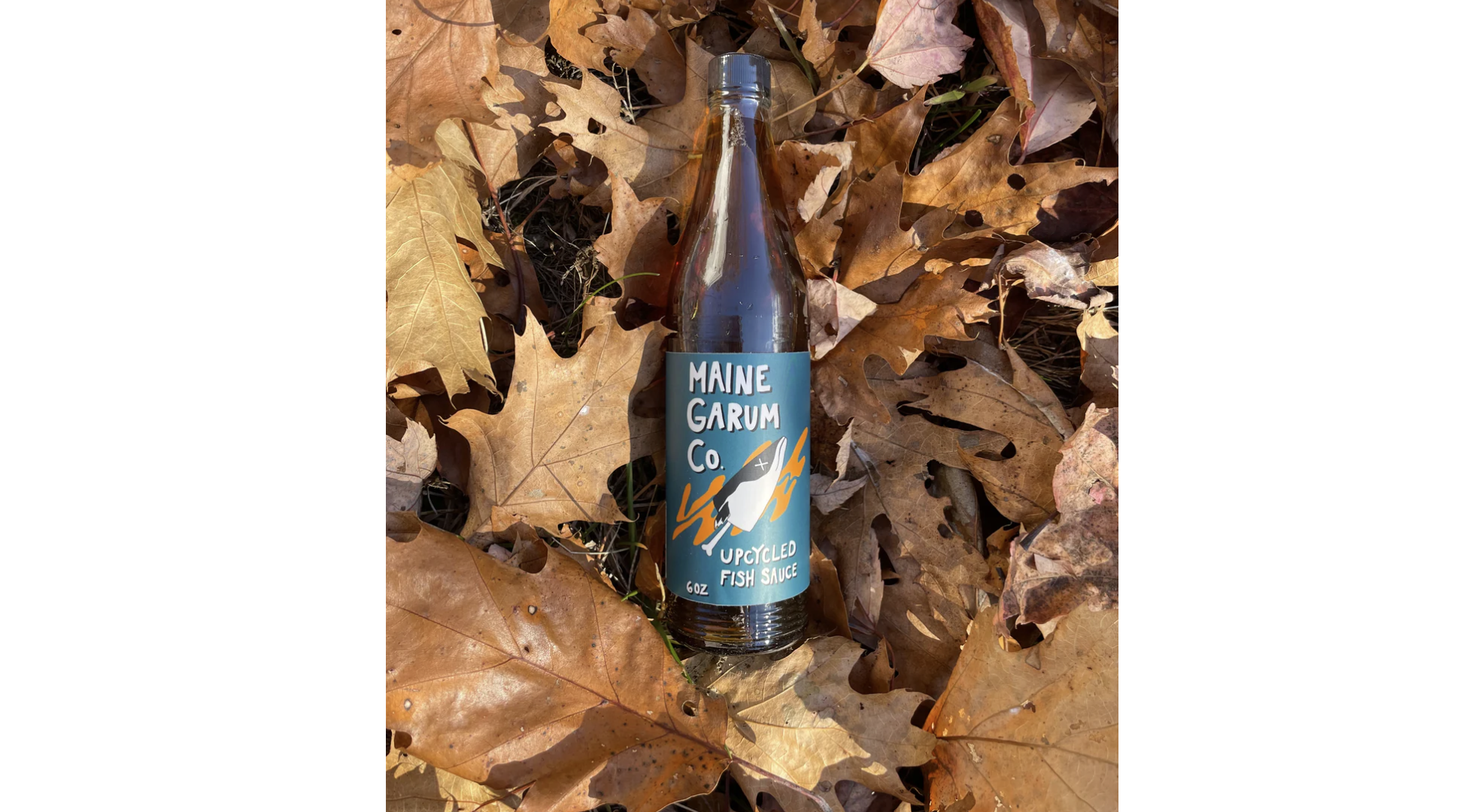
Unlike Asian-style fish sauces, Maine Garum's has a more straightforward, "pure" umami flavor that to me tastes exactly like cured anchovies in liquid form. (Since going veg, I have missed eating anchovies very much.) As a result, it is the perfect finishing sauce for European/Mediterranean dishes (like pasta, soups, stews, and beans), especially in combination with 'strattu; in fact, this combination is my goo-to umami one-two punch. Like 'strattu, the Upcycled Fish Sauce is not cheap, but a) a little goes a long way (add it to dishes a teaspoon at a time), and b) you can save a little by buying it in bulk and refilling your bottle once it runs low.
Maine Garum also makes another delicious garum out of green crabs which has more of a complex, Asian-fish-sauce flavor, perfect for use on noodles or in fried rice or curries. (It's not upcycled, but it does take advantage of a nasty invasive species here in the Northeast, so I make another exception to my vegetarianism with it.)
My Store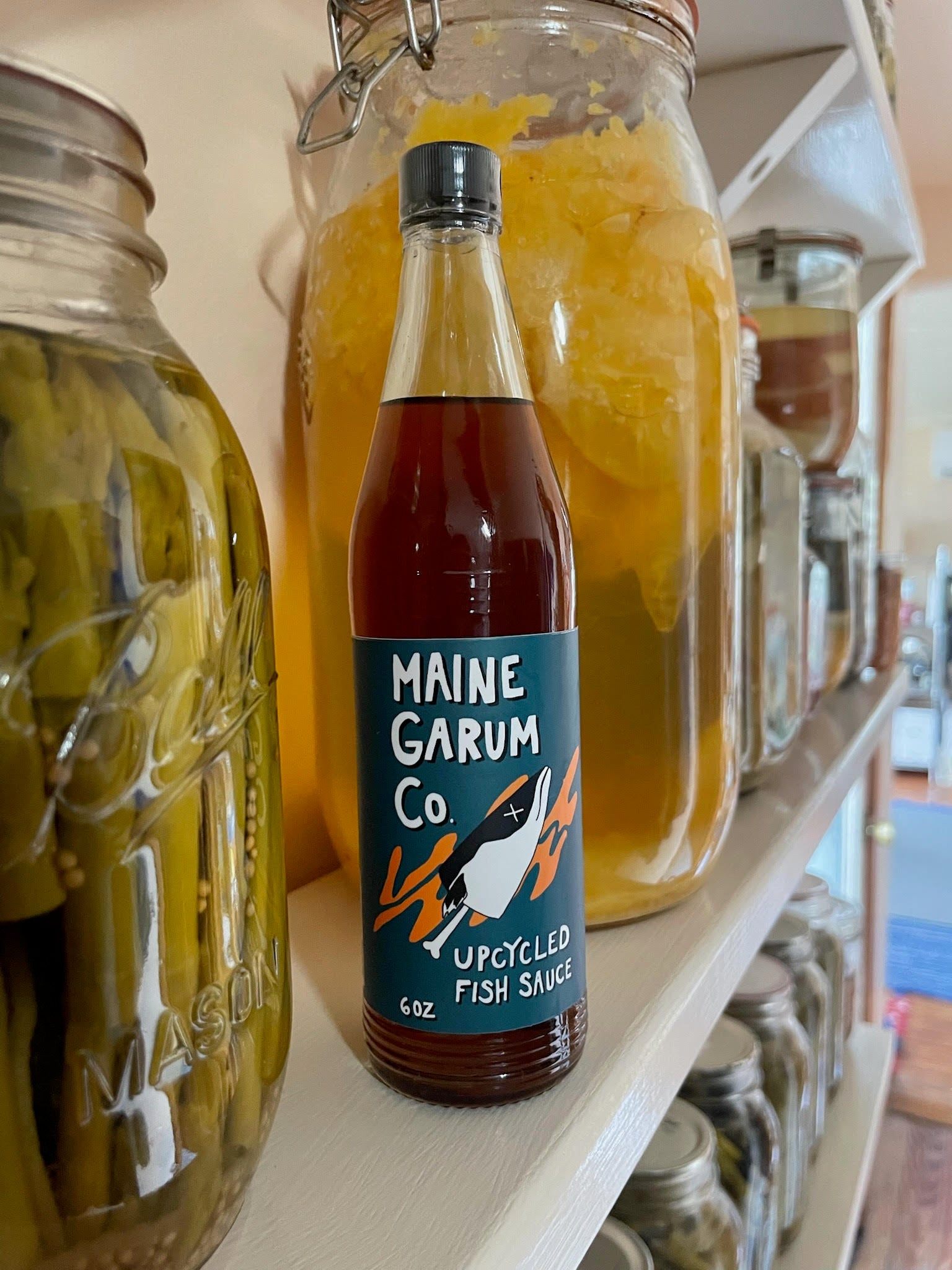
 Maine Garum Co. - American Made Fish Sauce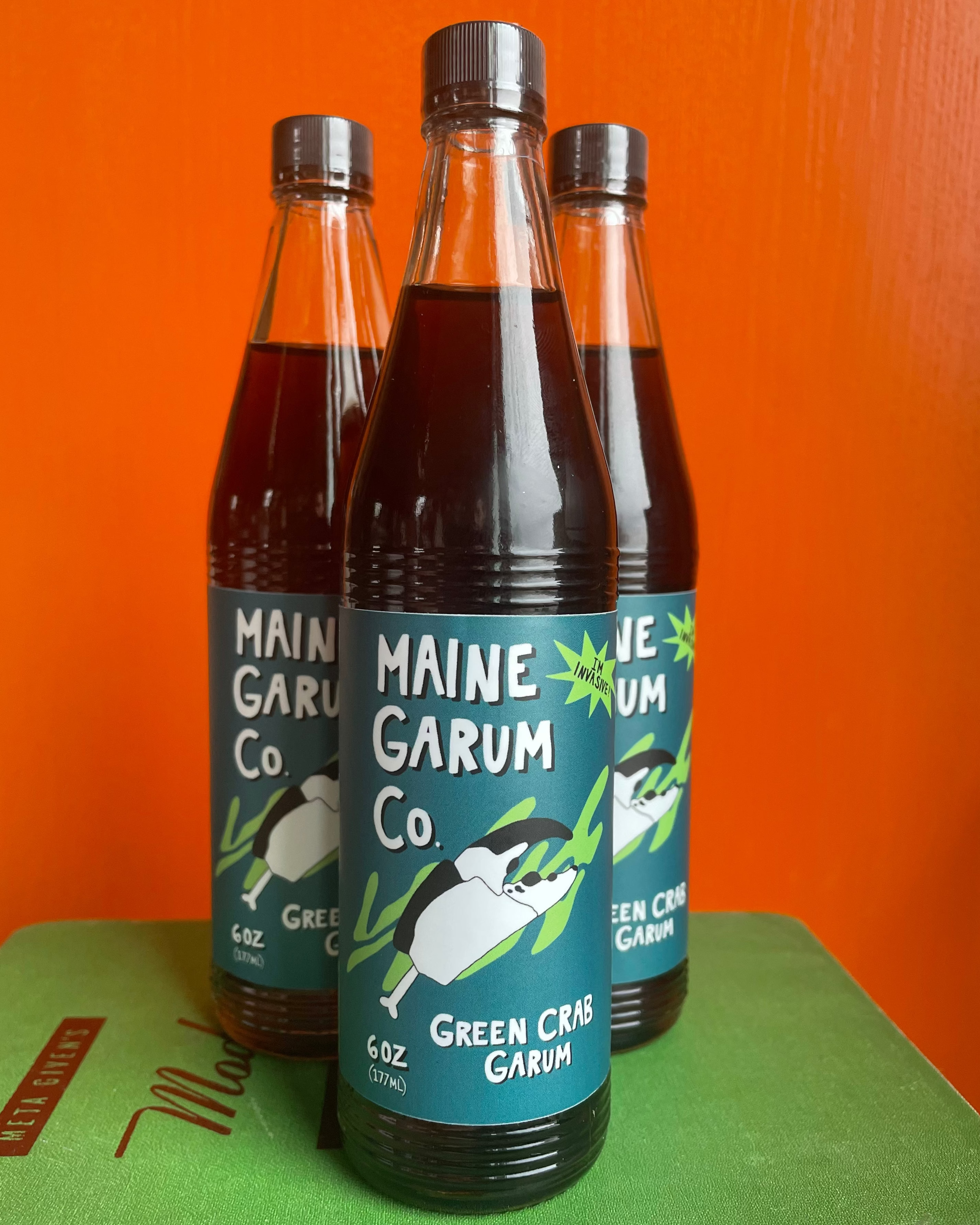
What are some of your favorite lesser-known pantry items?
—Andrew

wordloaf Newsletter
Join the newsletter to receive the latest updates in your inbox.