Pod Save Bread
An interview with Allison White, from the "Saving Bread" podcast
Table of Contents
A few weeks back, I pointed you all to a great interview with Josh Fairbanks on the newly-launched podcast, Saving Bread, created by CA baker Allison White and her friend Leah Smith. They've only released seven episodes so far, but it's already becoming one of my favorite podcasts, bread or otherwise. Which is why I wanted to speak to Allison herself for Wordloaf, to learn more about her work, her teaching, and what she has in store for the pod going forward. After our chat, I'm even more enthusiastic about Saving Bread, and I suspect you will be too.
—Andrew
Andrew: Before we get into the podcast itself, I want to talk about you, how you got into baking, and how that led to your connections with so many other bakers.
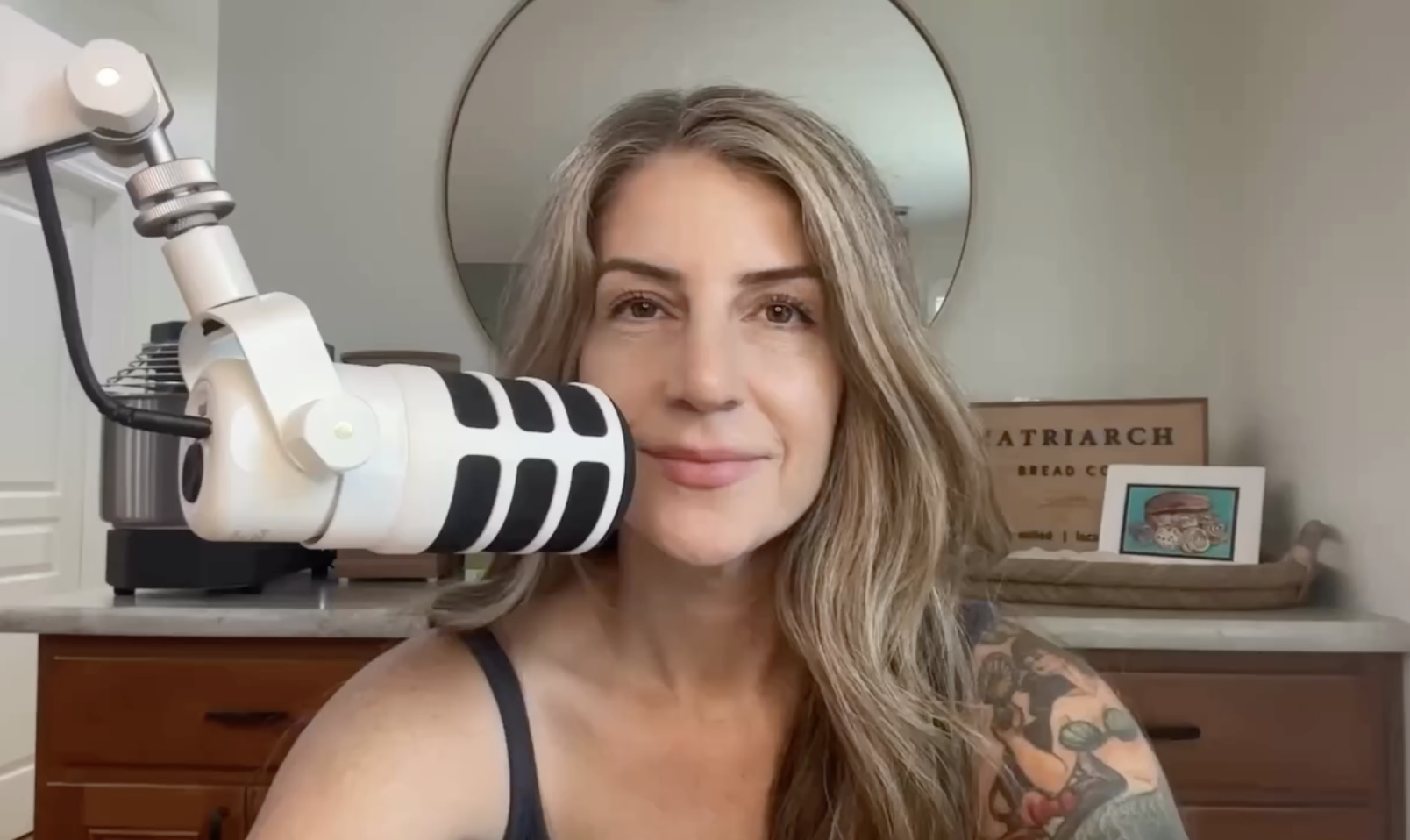
Allison White: So I went to school for food science and I wanted to be a dietitian. And then when I worked in a hospital, I quickly realized that was not where I wanted to be. So I went into the fitness space. I've been an athlete since 2005, I guess, when I graduated high school.
And I taught every format you could ever imagine, in every gym in the area that you could possibly work at. Towards the end of my career I was working for a company called Cyclebar. I would go out and open new studios, [where] I would train all of the instructors the format. I would teach them how to be really confident at the front of the room. At my core, I am a coach. That's what I've done for most of my life, and I've done it really well.
Then during COVID, the gym that I was working at closed and most of the branches closed. And I moved out to Morgan Hill, [California], where I live now. Working in fitness wasn't an option anymore, [since] they don't have cycling studios here.
And someone gave me a sourdough starter, and I made the worst loaf of bread that has ever been made—it was horrible. But at sparked something in me that reminded me a lot of the experiments that I was running when I was in college, in the microbiology lab. And being in fitness for so long, I've always been very cognizant about the food that I'm eating.
I went out and I bought a grain mill; I bought [Jen Lapidus's book] Southern Ground. I went up to Central Milling and bought a bunch of whole grains and I just started milling. I had no idea what I was doing. I was making pancakes, but I was just so determined to figure it out. And I [finally] started making loaves that I was really proud of, just for myself.
Because I was new to my area, I would go to local farms, the yarn store, or people who were selling honey, and I would just bring them a loaf of bread and buy their honey or tomatoes or whatever. And they would share [the bread] with their family at dinner.
The word just got out that someone in town was making really yummy bread with freshly-milled wheat. I was excited to make like twelve loaves a week, that was a really big deal for me. It just organically grew and grew and grew to the point where I had to buy two Rackmaster ovens and a mixer and all of these things.
I do enjoy baking, I really do. I love baking for my community. But at my core, I'm an educator and I'm a coach. I'm very good at baking, but I thrive in an environment where I'm teaching. So that's why I started teaching at Central Milling—to teach other people to do what I've done. I get so many questions in my DMs and classes. I also see a lot of bread on Instagram that isn't necessarily the type of bread that aligns with my personal ideas of what good bread is. And so I think a big part of that is because there's so much information out there. I cannot sleep at night unless I know that I've put something out there that I know is mostly correct.
I'd been thinking about starting the podcast for years. But I just didn't feel it was appropriate because I hadn't accomplished what I wanted to yet and I hadn't achieved that [level of] respect in the community. I'm all about developing relationships with other people and friendships, and that was my long-term goal. It's taken me five years to feel confident enough to start teaching and start the podcast.
Andrew: Well five years was pretty fast, I would say. But I it sounds like you were primed to move quickly to where you had a level of expertise and respect from others to give you the confidence to do something like that. Or to teach at all. And it seems obvious you know what you're talking about.
Allison White: I don't think I'm like the best baker out there by any means, but I really worked hard to understand why certain things happen and the basics—gluten development, fermentation, shaping, etc.; [learning] from a lot of different people and doing [things] over and over and over.
And I thought, "I know this works and there might be a different way, but this is the way that I like and that has worked really well for me, really quickly.” I want to help other people do that too, because it can be frustrating when it doesn't work out, especially when you go from home baking to trying to sell [bread]. I think a lot of people fail when they scale to that level and it's really disappointing. I don't want other people to feel discouraged in that way.
Andrew: One of the things I've noticed, if you scroll Instagram, you see a lot of people that were in a similar position. They started baking and people said, "Hey, your stuff's really good." Then they make the move to cottage baking, and the quality of their breads does just doesn't look great. If their customers are happy then I guess it doesn't matter in the end.
But there's something a little scary as an educator to see people going from zero to teaching others when they clearly haven't mastered the basics—they're not baking the bread long enough, they're not fermenting long enough, they're not mixing long enough, all of the things you can just tell looking at their loaves. It's fine, except when they're being they're being treated as an authority.
Allison White: That's right. I think there are a lot of bread influencers that are making one or two loaves at a time. And that does not translate to cottage level or large-scale production, it just doesn't. So people follow these influencers that make very small batches and they're like, oh, "I want to make bread like that person, so I'm just going to follow what they do." But it's not going to work when you go to scale.
Andrew: That brings me to my question, which is why you've named the podcast "Saving Bread," and what you mean by that?
Allison White: I hear it two different ways. Coming from the fitness community, bread was extremely demonized. People don't eat a lot of carbs, or at least they didn't at the time that I was training. Bread was a no-no; [instead, it would be] gluten-free bread, a grain-free diet, paleo, or whatever. I had to unlearn a lot of that and relearn that bread can be something extremely wholesome, very nourishing, full of vitamins and minerals, if it's made the right way with a lot of whole grains. So in that way, I feel like bread does need saving from this label of being something that carries no nutrition, because it can and it does, if you take the time and care that it deserves.
The other side of that is that—I was reading this book that's part of the [podcast's] book club right now, Sourdough Culture, [by Eric Pallant]—long ago, everyone knew how to make bread. It wasn't even written down, because that would be like writing a book about tying your shoes, [as he says] in the book. Like everyone knows how, so we don't need to write it down.
But as time went along and flour was sifted and you could buy it in a plastic bag at the grocery store, it's become something different and people don't know how to make it [anymore]. They don't know where to source grains—there are not a lot of grain mills locally anymore. And so if we want to save the true art of making bread in its most wholesome form, we all need to participate in this movement, not just bakers, but farmers, millers, educators, people who own restaurants. We all have to work together to keep this craft alive and well. Otherwise it could be lost.
So that's my motivation was for making the podcast—having a meeting place for everyone in the community who's interested in keeping this craft alive, to come together and share information and help each other grow, whether that's as a baker, as a miller, as someone who makes pizza, someone who makes bagels. Someone who's on their first day of baking and someone who's on their tenth year of baking. We all come to the same table, put our egos aside, and learn together, grow together, and have our primary focus be the movement.
Andrew: Can you explain for those who haven't listened to the podcast how you've structured it? It's not just interviews or just instruction, but a mix of both.
Allison White: It's a mix. I knew that for the first probably year of the podcast, I would be continuing to find my voice based off of what people enjoy, what I particularly enjoy, because podcasting is something that's new to me. But the outline for the podcast is three types of episodes: lessons, interviews, and rabbit hole[s]. My bakery is called Matriarch, my logo is a bunny rabbit. I like to go down rabbit holes about baking and to have really long conversations about them that are less structured and less formal. The rabbit hole episodes are just extra content for people who want to hear more, the lessons and the interviews are much more structured.
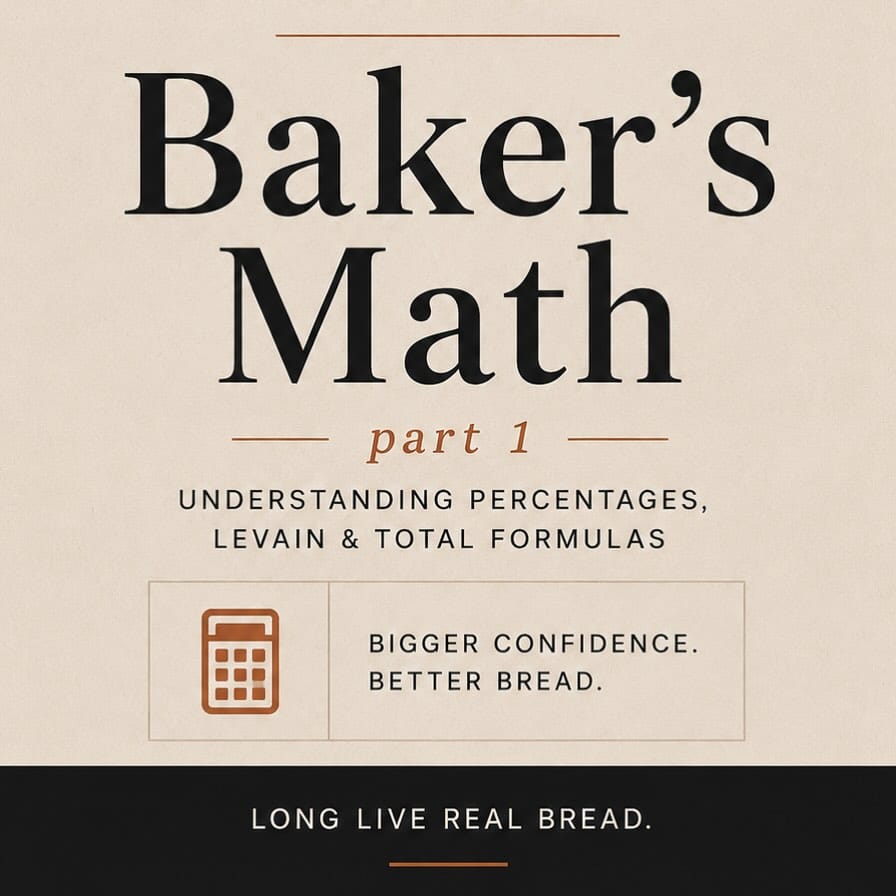
The lessons episodes start on day one. You don't even have a sourdough starter, you've never baked a loaf of bread, what do you do? I wanted to establish a baseline of vocabulary—mechanics, fermentation, [and so on]. Someone can't listen to an episode about pre-fermented flour if they've never [even] kept a sourdough starter, that's not fair. I wanted to start at the very beginning so that I could go through lessons step by step by step until we get to more complex [topics] like freshly-milled flour, whole-wheat, pH, and pushing the boundaries in [other] ways. But starting at step one. The lessons episodes will be sequential. Lessons one, two, three, four, and so on—baby steps along the way.
The interviews episodes are pretty much [what you'd expect]—interviews with people in our community, be it bakers, millers, authors, farmers. I've really tried to be thoughtful about where I'm placing them so that if they bring up a topic like bassinage or pre-fermented flour or something like that, I've already covered that term, so the listener doesn't feel like they don't know what they're talking about. If they do [use] a term that's unfamiliar, I try to define it at the beginning of the interview so that whoever is listening can feel like they understand what that baker is talking about. I'm trying to structure it in a way where everyone feels welcomed, and everyone feels like they know what's going on.
And if they want a little extra content here and there or to join our book club or whatever, they have the rabbit-hole episodes.
Andrew: Where does the book club take place?
Allison White: That's kind of just a bonus. I've posted it on the podcast's Instagram account that my friend Leah Smith and I run together. (Leah is a local close friend who encouraged me to start this podcast, and her role is to represent the beginning baker and local food enthusiast.) During our rabbit hole episodes, we will talk about books that we're reading and invite listeners to read along with us and ask questions.
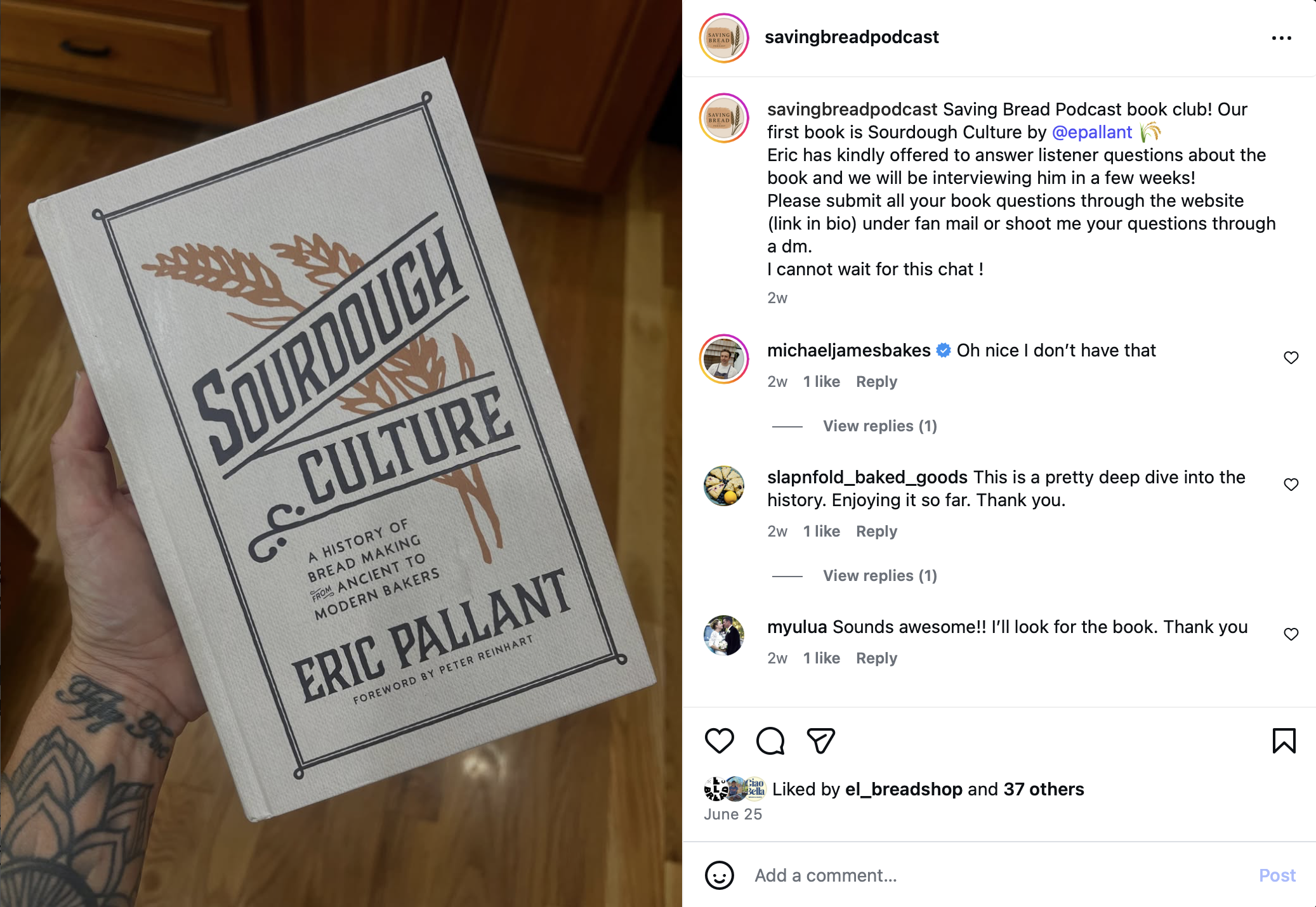
Our first book is Sourdough Culture by Eric Pallant. I have an interview with him [dropping] next Wednesday. We'll talk about the book, answer listener questions, and have a full interview with him.
Andrew: I take it you've done a lot of interviews already and you're rolling them out over time.
Allison White: Yeah. I probably scheduled too many because I was being ambitious and I didn’t want [interviewees] to have to wait a very long time for their interview to come out. Now that I have many backlogged, I can start to slowly add more so the person who's done it doesn't have to wait. But I really wanted to create a nice archive so I could just breathe a little bit and play with placement. So now I'm ready to start spacing them out a bit more.
Andrew: I just listened to your interview with Alexandra Allen, which was great and totally eye-opening. I've been a fan of hers for a long time and a friend, but I had no idea about her sourdough cookie game.
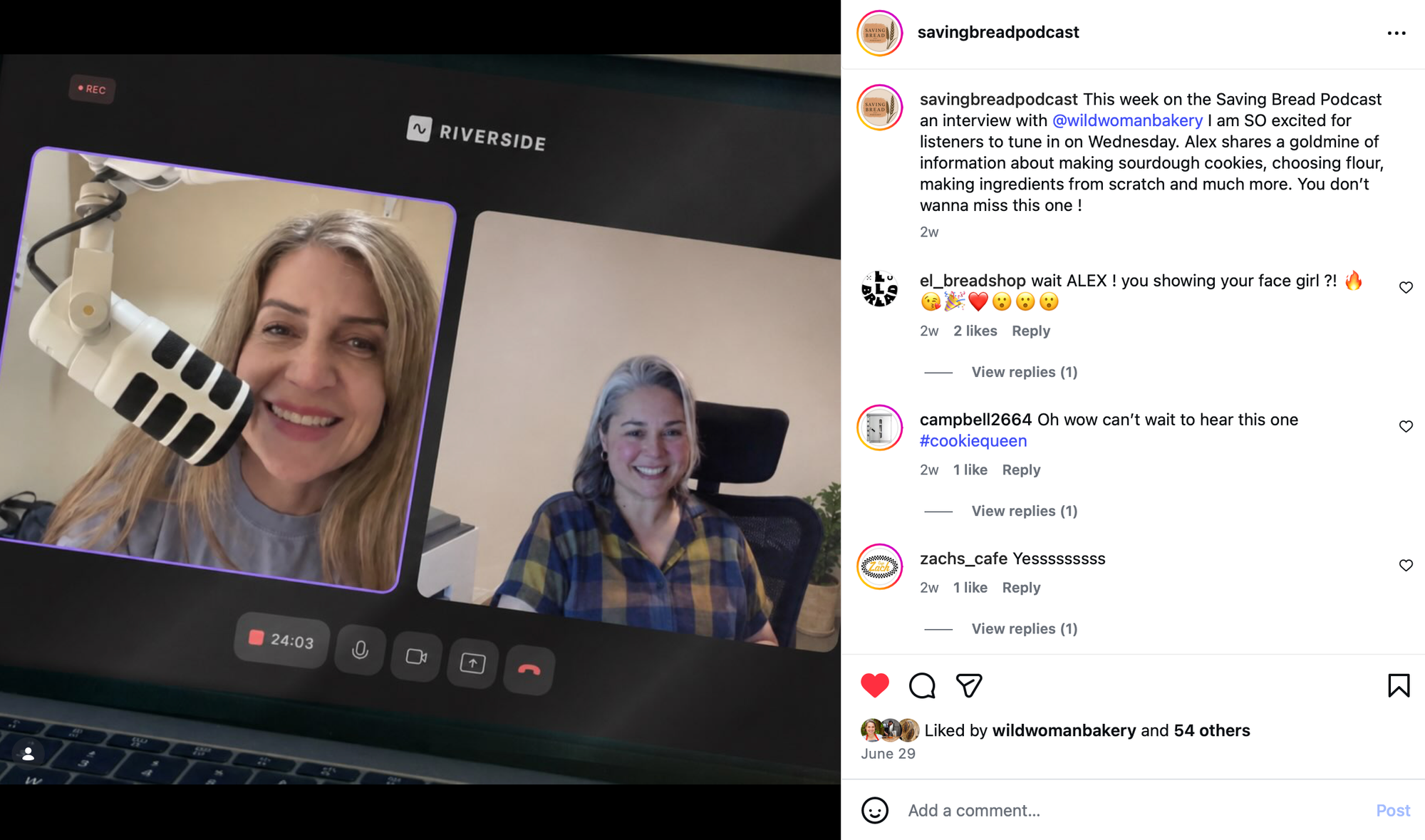
Allison White: Yeah. Her food and baking is something that someone could only dream of—it's unique to her, and that's what makes her so special.
Andrew: I don't know if this was planned or whatnot, but I only recently noticed her enthusiasm for Campbell Macfarlane and his products. I've been using his loaf pans for years and I'm always plugging them. She's always talking about him and his products, and now you have an interview with him coming out this week.
Allison White: That's right, that was on purpose. They have a great rapport. I wanted to be thoughtful and have their interviews be one after another.
Andrew: You and I taught together at the West Coast Bread Fest, which was the first time I became aware of your teaching practice. What kind of classes do you teach and where do you do them?
Allison White: I [teach] a three-day course mostly focused on pH and how we can use that in our baking for consistency about twice a year at Central Milling, although I'm sure they'd like it to be more than that. In that class we do a dough that has 10% whole-wheat, [then] 20%, 50%, and 100%. We talk about what we're looking for in our levain, when to use it, what pH is optimal for what type of dough, [etc.]. Everything's very hands-on. We don't make a lot, but we explain deeply each type of dough and each step so that everyone leaves there feeling like they understood what happened. I've been teaching that for about two years now, twice a year. I am starting to get invitations to come out to other places in the US to teach the same course, which I'm very open to as long as it fits and aligns with my schedule and my boundaries for my life.
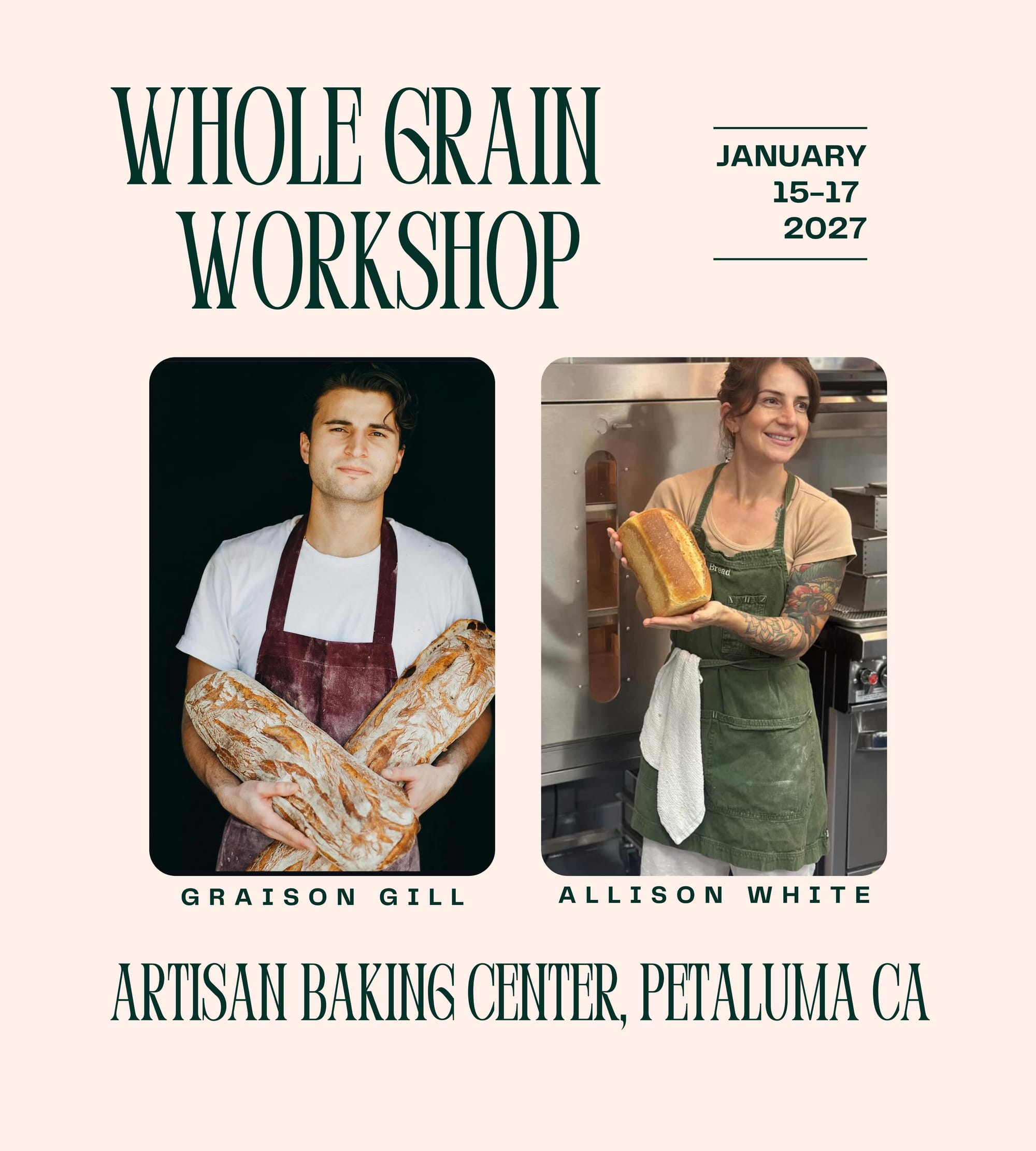
I'm also co-teaching with Grayson [Gill] in January at Central Milling. Most of my classes are there because it's only two hours away from where I live and they have such a wonderful facility and an endless supply of flours and whole grains to choose from. So it's been a really good fit for me. But I'm of course open to going other places as long as you know it aligns with what I'm trying to do.
Andrew: Tell me again where you live and where it is relative to Petaluma and Central Milling?
Allison White: I live in Morgan Hill, about 30 minutes south of San Jose. It's a little over a two-hour drive up to Petaluma.
Andrew: What's the baking scene like in Morgan Hill?
Allison White: There are no bakeries in my town that make fresh bread. They have maybe focaccia or sandwich loaves or things like that, but most of the bakeries that we have make scones, cookies, and cinnamon rolls and that kind of thing. But I wouldn't say that there is a bread movement happening here in Morgan Hill. I'm probably one of three cottage bakers in the area, and we all have really great relationships with one another. If I can't do a job, I send them to the other person. It's very everyone lifting each other up.
But there was a lot of education involved in starting Matriarch and teaching the community why these things are great and what they are receiving as a consumer, and it definitely did take time. But because I live in an area where most people are growing their own food or buying things locally or at the farmer's market, people were very open and receptive to it.
Andrew: Tell me more about your cottage baking—is that a very regular thing for you?
Allison White: When I first started, I was very dedicated to weekly baking. But now that I have established such a strong following, I don't have to do that anymore. A slow month is twice a month and a good month is every single week. So at minimum I'm baking twice a month. During the summer, because my kids are out of school and they're so young, I tend to take off two months. And then I start back in late July, and I go hard all the way through the holidays. I tend to slow down a little bit in January and then I'll bake from end of January through June. [People] pre-order from my website on Sunday, and then they pick up on from my porch Friday. And then the cycle starts over again.
Andrew: Why is it called Matriarch?
Allison White: I was raised by a single mom. She worked many jobs her entire life to provide for me. [She] passed away when I was pregnant with my first daughter, and I'm an only child. I had [one] girl, and then I got pregnant with my second daughter during COVID. That's also when I started the bakery. And so I really felt like this sort of reigning female—like it's all up to me at this point how I'm going to run my life. I don't have someone that I'm checking in with all the time anymore, I'm the one making the decisions about my life and I'm responsible for these girls. And they were going to be watching me and what I do with my life. I really felt like this very powerful woman, raised by a very powerful woman, and that's really at the core of who I am. My work ethic and the way that I treat other people was all because of her. And so I really wanted to represent her and myself in that name.
Andrew: It sounds like a great tribute to your mom.
Allison White: Yeah. She didn't know how to bake or cook or anything. Like she kept sweaters in our stove, so [now] she would be like, "What are you doing?"
Andrew: Before we wrap up, do you want to share some things that are coming up on Saving Bread, as a preview?
Allison White: Yeah. I have some interviews coming up with authors. One of them was the winner of the first season of Great American Baking Show, the American version of the British baking show. He has a bake book coming out, so I'll be covering him and his story and his book.
Andrew: You mean Martin Sorge. Martin's great. I'm excited for that book. I've seen it and it looks really good.
Allison White: It is great. I've been reading it and just devouring it and everything from the design to the content, to the tone, which I really love. So I'm excited for that.
I interviewed Baylin Bresnick, who is the miller and the baker for Chimicum Valley Grainery, up in Washington. And it's a pretty deep dive on her process and the way that she does things. People who are interested in working with freshly milled flour will be really interested in that conversation.
And then the last one that I'll tell you about is with Parker Cook from Eat Basil and Bloom. He is out in Idaho and doing really great things. He's technically an influencer, because he has a lot of followers and does a lot of promotional posts. But it doesn't come across in a way that is forceful or annoying or anything like that. I just really respect his tone and he's just very polite and authentic. And so I really wanted to dig a little bit deeper. I could have asked a million questions about how to become an influencer, but I was more curious about him and his authentic nature and how that kind of comes across through all of his posts. It's a really fun conversation about him and his life and his goals.
I would also love to have you on the podcast when your schedule allows, to hear more about your book, and what you're doing too.
Andrew: Yeah, that would be super fun, I would love that. Thanks, Allison!
Find the Saving Bread podcast here:
 Mush Love Sourdough
—Andrew
wordloaf Newsletter
Join the newsletter to receive the latest updates in your inbox.