Breaking Bread
A conversation between Amy Halloran and David Wright
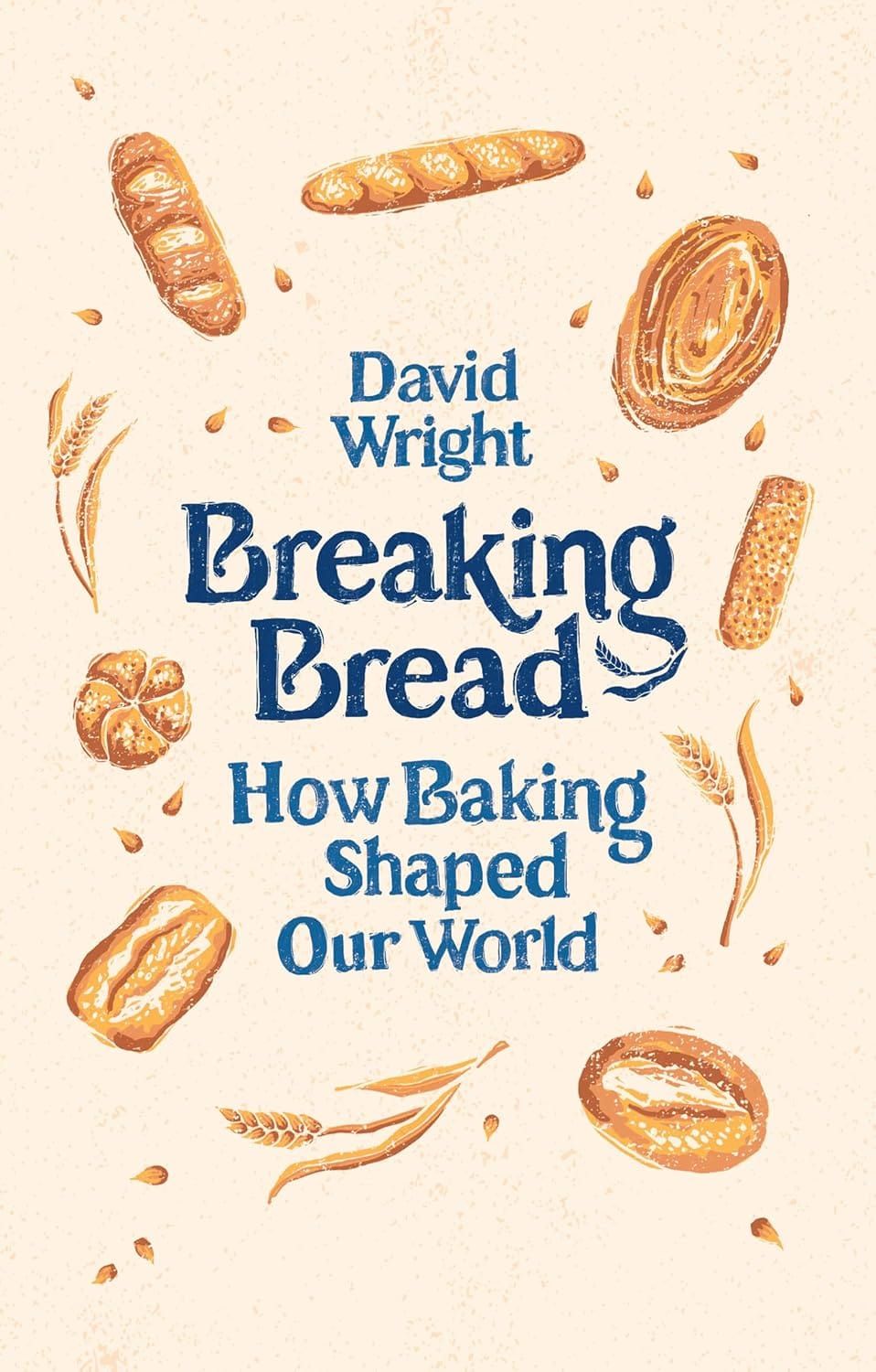
Table of Contents
[Andrew here: David Wright's Breaking Bread is a book I very much enjoyed and one I've been meaning to recommend here for a while. So when my pal Amy reached out about interviewing David for Wordloaf, I said yes, enthusiastically. I think you'll enjoy this chat as much as I did, and if so, you'll want to track down a copy of David's book as well.]
David Wright is a third-generation British baker, and his book Breaking Bread: How Baking Shaped Our World is now out in paperback. This craft-based exploration analyzes how commercial and industrial trends have changed everything about our daily bread: its ingredients, taste, nutrition, reputation, and cost.
Wright and his family ran a bakery in Suffolk for 75 years. The book arose in the wake of its closure, and he studied history to see where his family’s story fits in the long life of bread, and especially, in 20th-century Britain. He learned that there were 35,000 bakeries in the United Kingdom following WWII. By 2000, the number was just 1500. David traces this drastic change to the Chorleywood Process, a 1961 intervention that uses extra yeast and heavy mixing to reduce production time, including baking, to a mere hour.
Also at fault is the collapse of national price supports in the 1970s, when regulations on the price of a loaf of bread vanished. Supermarkets and industrial bakeries teamed up and sold loaves at a rate that small shops couldn’t afford to meet.
David describes the dailiness of a baker’s life—the sleep deprivation, the dough demands—intimately, showing what it feels like to be a part of this work, and taking the gloss off our image-heavy appreciation of its products. David carries us into his many conversations with farmers, bakers and other food folk who are regenerating the agricultural, craft, nutritional—and social—values of bread.
Find David @thebreaducator on Instagram, his website, and IRL at the Pump Street Workshop, where he teaches baking and chocolate making. He also teaches at other venues on occasion, and is working with Acre Bakery, which tends to grains from field to loaf. He’s given us a recipe, which will be at the end of this post.
David Wright and Amy Halloran spoke by picture phone late last year.
Amy Halloran: Tell me about your first book.
David Wright: Backyard Baking was a really fun book to do. I did it with my friends, Christian Stevenson, DJ BBQ, and Chris Taylor, who are both incredibly energetic and fantastic human beings. I was tasked with producing the bread recipes and they would turn them into some delicious feasting with outdoor foods.
AH: I'm always interested in how a book happens. Can you tell me about it?
DW: Well, I'd done a few recipes for some of Christian's other books. One called Fire Feasts included recipes from friends and people that he'd come across over his time cooking in the UK and the US. And having done that, we thought it'd be really fun to do a bread book. I put a proposal together and we sent it off to his publisher, and they ran with it. The book (Backyard Baking) was a collaboration. The three of us would write together on Zoom and it felt like it was our own little project, like we were in Wayne's World, thrashing out some crazy radio station that we were the only ones ever going to listen to it. Then shooting the book had so many other people involved. When the book comes and it's delivered to your home, you realize that you've actually made something that's real. When it gets released, and you start getting feedback from people, it feels quite surreal. Because you never expect it to become part of somebody else's life. It even got translated into German. A German BBQ chef got a hold of it and I was just like, how have I become connected to this amazing BBQ chef in Germany?
AH: When the abstraction becomes real! That’s great. Do you feel like Breaking Bread has done a job you intended? Or does it seem like it's working in some way you couldn't predict?
DW: Backyard Baking set me up to understand the publishing world a little bit. My expectations for this next book, first and foremost, were to make sure that the book was as good as I could make it. I researched it really heavily. And I spoke to some incredible people. I was lucky enough to speak to some of the best bakers on the planet.
I'm proud of the thing that I've produced. I think it's a really good book. Every time I go back and read a part, I'm really pleased. And that's just not down to me, because it's such a team effort. Writing a book is not a—you think of it as being an individual pursuit, but I had such an amazing team at Quarto. I had an amazing copy editor, and she managed to give the book so much more structure, helped me identify where I could deliver points of interest or messages that I thought were important. She taught me how to shape the book to make that more impactful.
When people ask how the book is doing, what they mean is how many I've sold. I've got no idea how many books I've sold. That's not important for me. I'm really pleased with the feedback I've got and the fact that so many people have read it and enjoyed it. Lots of people, lots of bakers have been in touch and said, thanks for writing something which honestly says what it's like to be a baker. Because it's a strange profession that usually goes unseen by the customer. Anyone who's not in that little world doesn't get a view. So, overall, I'm just really pleased to have got it all down. Now I'm excited when people get in touch and want to talk about it. So, you know, thank you.
Lots of people, lots of bakers have been in touch and said, thanks for writing something which honestly says what it's like to be a baker. Because it's a strange profession that usually goes unseen by the customer. Anyone who's not in that little world doesn't get a view.
AH: Of course! Thank you for making time. You have a different backstory than a lot of people with careers in food. In one way, I see your book as an exorcism of the very painful death of the family bakery, and you're trying to find the place of that bakery within the entire history of baking. Does that sound right?
DW: Sure. A big part of the book is an autopsy of my own family bakery, of my own family's experience of working in food. My career has continued past the bakery ending. And there's a huge part of me that had to work out what had happened and where things had gone wrong.
Another subject which interests me is family businesses. If you're part of a family business, you'll get quite a lot out of this book. As a member of a family business, wherever you are in the world, you're sort of public property. So even from the moment of your birth, the community around that business will be wondering when you're going to step into it and when you're going to—for me, the question was, When are you going to run the bakery? And that is strange because it overshadowed me.
As a youngster, I was keen to not go into baking at all. And I tried desperately hard to find careers outside of it. But it's the one thing that I was always drawn to. I think there's a reason why trades have been passed down through families. Because when you're a small child and you're in that super absorbent phase of life, when you see those environments and you see your parents and the people who work for your parents, you see them all going about their work, it all seeps in and becomes really accessible. So, I can remember when I was working in London, pursuing other things, I would just work for bakeries because they would pay me quite a lot of money just to do what I thought was quite easy.
You get people saying, wow, you're really good at this thing. And you're like, yeah, but isn't everybody, isn't this just normal? Then you realize that you have a special connection to it. Over time, I learnt to appreciate it and learnt to not see it as such a negative or toxic thing, but something which is overall very positive.
Through that autopsy of writing, I saw there were some sort of poisonous elements in the bloodstream, whether that was within our own family business, or whether it was actually wider societal things. The book has a deep dive into lots of areas such as politics and religion and, the very foundations of our society and the way those things are built and how that has affected bread and how we got to where we are today with it and how we value it and how we value bakers and bakeries.
So, yes it was a very cathartic experience. And I think there was part of me that thought by writing this that I would no longer have to relive it. But it's still, I think that's just how it's going to be for the rest of my life. I think every day I'll think about it.
I was reading an interview today about a cyclist in the UK called Bradley Wiggins. He won many Olympic gold medals cycling. And after finishing cycling, he really struggled with addiction and things. He said he relives it daily.
AH: I can imagine. So, what are you doing now?
DW: I work for Pump Street Bakery and Pump Street Chocolate, which you can buy in the US. Following the closure of the family bakery, I went on to be head baker at Pump Street Bakery, which is about 20 minutes down the road from here, it's a fantastic place. After working there for a couple of years, I stopped for a couple of months to finish the book. When I stopped, they said, do you want to run a class program? And we started the Pump Street Workshop. We teach bakery and chocolate classes to the general public. And that’s what I'm doing full time now, which is really exciting. I love teaching. I love sharing all the knowledge and stories about bread. So it’s a really good fit. Plus, we've got a young family, and it means I don't have to work nights anymore.
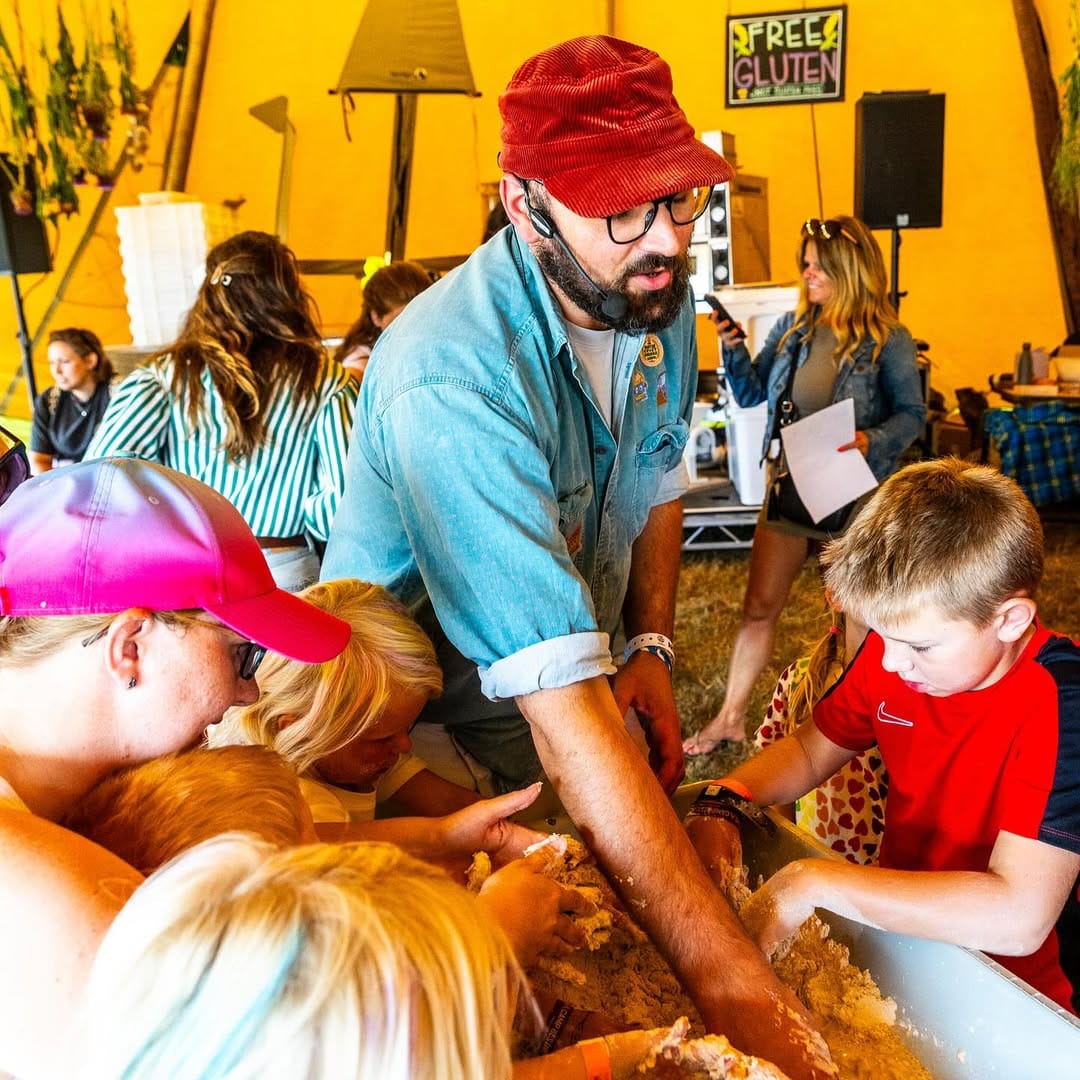
One of the core classes is understanding sourdough. One recipe that we delve into over five hours to understand all of the different processes that are happening. We also have a WhatsApp group, so after you've been on the class, you join the WhatsApp group and then you get after sales care. Once you get home, you can put it all into practice.
We’re trying to get people to understand that sourdough isn't a style of bread or a particular product, a particular loaf. It's a process that you can use for all bread making. Then we've got the doughnut class, a bagel class, a pizza class. The exploring craft chocolate class is a deep dive into the world of craft chocolate, which started around 2005 in the United States, but it's very much a big part of our business.
One of the interesting things about Pump Street is that we're bakers and chocolate makers. When I was head baker, I was very involved with the bakery series chocolate bars. We’d take incredible craft chocolate—we're a bean to bar chocolate maker. So, we get the beans shipped in and roast them and we conch them and we temper them and make them into bars. But then we also add in bakery inclusions. We do a sourdough and sea salt bar, cookie chip. We do Eccles cake, and panettone. We make a four-day sourdough panettone to that goes into the chocolate bar, which seems like a ridiculous thing to do, but it tastes amazing. I think we're probably one of the only people who could do it because we've got the bakery and the chocolate factory.
I had a coffee roasting business, but finding out about cacao, finding out about the way that it's farmed globally, the way that we source it in particular, the way that we do our direct trade with farmers all over the world, and the sort of considered way in which we make it, has been neat. Also, the fact that it's fermented is like bread. The same microbial fermentation that occurs in the cacao boxes, it’s those same kinds of microbes, lactic acid bacteria that are transforming a very basic mixture of flour, salt, and water into a food that can sustain life indefinitely.
The sourdough starter that we have at Pump Street was actually initiated with some juices from a cacao fermentation tub. Our founder, Chris took juices from one of these boxes in the Caribbean and used it to initiate the starter about 20 years ago. So, everything we do is very much founded in a connection between bread and chocolate.
AH: Oh wow, that's so great. Thinking about teaching, what are the differences between teaching someone in a professional environment, and teaching a home baker?
DW: I think the main difference is the consideration for profitability. When you're dealing with a home baker, you can start talking about the absolute ideals for production of an amazing loaf of bread. As somebody who's baking at home, it costs you a fraction of what it would cost you to buy a loaf from the bakery, and you can go into so much more detail with fermentation times and how you treat the bread. How long you autolyse the flour and water before you add the sourdough starter and all the rest of it.
I actually think that the home baker has more of an opportunity than the professional baker to make a perfect loaf. I know perfect doesn't exist, but an ideal loaf. As long as you've got that passion, there really is no limit because you don't have to worry about paying yourself wages.
So, I think that you would immediately think that a professional class might be more in-depth, but I actually think that the home baker has more of an opportunity than the professional baker to make a perfect loaf. I know perfect doesn't exist, but an ideal loaf. As long as you've got that passion, there really is no limit because you don't have to worry about paying yourself wages. You don't have to worry about who's paying for the electricity and you don't have to worry about the profit margin at the end of the day. When we're dealing with professional environments, everything has to fit together and you might have to make compromises in your production schedule just based on necessity. And you don't have to do that as a home baker.
AH: One of the topics in the book is the economics that constrain everything around the bread system. You talk about the necessity for a balance between industrial ideals and artisan ideals or practices. And how to apply those considerations to how we're going to feed ourselves and each other.
DW: If you go back far enough, then all bread would have been made in what we would call like an artisanal way, pre-industrial. But now handmade artisan products are framed in a way where they have to be small. The market is so tiny that we, as soon as anybody starts to be in any way successful or get any market share, we then become very suspicious of them. And we say that they've sold out or that they've had to compromise or they've moved away from this myth of the artisan. It’s almost as if we want them to just be one person shacked up in a very small environment, not getting any bigger and not providing too many people with the amazing bread that they're making. And I think that’s restrictive.
What we desperately need within our food systems now post-globalization, where we've had a myriad of companies owned by a very small number of massive multinational corporations – what we really need now is for those artisanal businesses to be allowed to grow and to be allowed to take up more of the market share.
I'm not sure what it's like in the US, but in the UK, for instance, there's no actual restriction on the use of the word sourdough. So, you can make any product in the UK, and you can call it sourdough, and it doesn't have to follow any rules or anything. We have the same thing with handmade or artisan. Those words have no protection. In the book, I'm arguing that in order for us to give value to these things, we need to start protecting the terminology.
Words are so powerful and the idea of value is such a powerful concept because it is essentially based on trust. When we talk about artisans within any field, I think what we're saying is that they're people who have great skill, but then they're also people in whom we trust to produce something which is of great quality. And without protection over those terms, I think the consumer doesn't have that trust.
AH: Do you think that there's economic room for smaller scale bakeries to scale up and take a larger market share?
DW: Well, I think this is the role of government. As someone who has grown up in a bakery, I've paid enough attention to realize that a lot of people, especially in the UK government, don't understand economics very well at all. Even the sort of more right-wing leaning parties don't seem to have grasped the basics of the economists they seem to revere, such as Adam Smith.
Adam Smith seems to come up a lot as being the father of free market economics. But even he says that in order to have a free market, you have to have tight regulation, and you have to have protection over the intellectual property in order to allow a free market to thrive. Otherwise, you get exploitation of that, which is essentially what we have now.
Having governments protect and foster these parts of society, of the bakery business, I think is really wise. One of the examples which I've been looking at recently is France. France has the same population as the UK, pretty much. It has bigger landmass, but it has the same population. And the bakery market in France is worth about 13 billion pounds. And the UK bakery market is worth about six.
So, we've got the same population, but we've got half the market. Now, when you look at the market distribution in France, it's really interesting because their artisanal sector is accounting for, anywhere between 20 and 30% of the market. In the UK, it's about half a percent.
I love Francis Fukuyama and his books. He talks about political order and political decay. One of the things he notes as an early indicator of political decay is this idea of clientelism. Where governments are basically serving the people who are putting pressure on them or providing them with gifts or financial backing or whatever else. We seem to have arrived at that point, especially with the food industry.
The government is massively neglecting its own interests, because with some careful regulation and some very sensible policies, you could be in a situation where in, 10 to 15 to 20 years, you could double your money on the bakery industry. You know, who's going to turn down another six, seven billion pounds? But that's just bread. And it happens not just with bread, but with all of those industries. You look at cheese and it's the same. You look at wine, it's the same. It’s a fascinating thing. We get tied up with this idea that it has to be these big companies, because somehow these big companies are the ones that are driving the economy. I would actually argue that, especially in the UK, those companies are the ones that are choking the economy because they're holding so much of the market.
Maybe 98% of the market is either factory-made bread or factory-made dough, which is baked off at in-store bakeries, which is pretty much the same thing. Because of that, we're facing a situation where for the first time in history, people are eating less bread because the bread's no good. It’s causing us so many health issues and, instinctively, our bodies are telling us not to eat this stuff. We’re starting to move away from it. I think a big part of that is due to a monopolization of the market.
AH: Do you think that if England adopted the kinds of like baguette and croissant regulations that France did, it would support smaller bakeries scaling up or serving more people?
DW: This isn't a radical idea. This is something which we had in the UK. We had this in the UK. We had it in England. We were probably the first ones to have it in the 13th century, and we had it up until the 1970s. But since then that we've had problems.
Starting in the 1970s and ‘80s, my parents saw all of their friends in bakery businesses go out of business, into the ‘90s. In 1999, you could go into Tesco's, a supermarket in the UK, you could pick up a loaf of bread for seven pence. For seven pence. If you bought the flour that you needed off the shelf that went into that loaf of bread, it would have cost you 35p.
Bread was devalued to the point where they were almost intentionally flushing the market of any competitors. By the time the government cottoned on to it and actually put in some restrictions, the damage had been done. I go into that in the book and talk about how that period of time was massive in the history of UK policy. But it's very closely tied to US policy as well. This was the same time that Margaret Thatcher was cozied up to Ronald Reagan and they shared quite a lot of the same ideas on how to run a country.
AH: Into the ground. Sorry, couldn’t resist.
I've followed the Real Bread Campaign from afar and I can never get a sense how much traction it has. Can you tell me whether it feels like a whisper or a shout?
DW: I think the work that Chris Young done with the Real Bread Campaign is amazing. He's tireless. He's been banging on doors for 15 years and getting pushed away time and time again. He’s been warning everybody of the impending doom with the food system, which is based around the way we produce bread. And sort of no one's been listening to him, but it does feel at the moment like that's starting to change, and that people are starting to take note.
We've got some interesting voices in the UK now. So, people like Jeremy Clarkson, who's been very much aligned towards like right leaning politics, he's got a TV show called Clarkson's Farm demonstrating how hard it is for farmers to produce food, and showing up a lot of the inconsistencies and contradictions within that within that sector. That's been quite helpful for food producers within the UK.
So, there's a bit of movement now. I think that it is coming to the time where we need to make our arguments. That’s why I’m talking about economics. I think that's one of the areas where we really do need to be strong because it's the only one that they'll take seriously. We can talk about the effects on the planet, and we can talk about the effects on the people eating the bread that we're making now, and we can talk about those things – and to be honest with you, the government's not really that interested in it. But when you can tell them that they could give themselves some political security, their ears prick up and they become very much more interested in what you've got to say. Knowing who you're talking to and what they want out of this, I think is a really important step.
AH: Well, David, I've taken a lot of your time and it's getting toward the end of your day. Is there anything else you'd like to share?
DW: For me, the most magical thing about producing bread and about bread culture in general is this idea that you can take such simple ingredients, and with the addition of a human being, you can create a piece of food which tells that person's story. Whether that's a baguette from France, a cob from England, whether it's a taboon from Palestine, matzoh from Israel, injera from Ethiopia, you've got so many different kinds of bread, so many stories.
I was talking to a friend, Vanessa Kimball, about this and saying that I think the reason why bread is such an incredible foodstuff is because it's almost like the parchment on which we can write our life story or our own cultural story. And it doesn't belong to anybody.
Bread is so universal, it predates anyone deciding to own these kinds of things. So, everybody has a right to it. Everybody has a right to its recipe. I think that that's why it's worth fighting for.
...the reason why bread is such an incredible foodstuff is because it's almost like the parchment on which we can write our life story or our own cultural story. And it doesn't belong to anybody.
I think we're seeing our bread culture being eroded globally and there are pockets —readers of this will be definitely part of that pocket. It’s so important that those of us who understand that value stand up for it. Not just the idea of making really great bread, but sharing it as well and sharing that knowledge and sharing that passion. So, I think it's wonderful.
In the book, I describe the solution to lots of this. There's no silver bullet, there's no one thing. It's a series of complex spirographic cycles, which we can all feed into. And if anybody can provide their own voice to that argument, no matter how small it may seem, that is a massive advantage to us and to the humans that want to make sure that we are producing food in a way which is not just good for us, but is good for everything around us. We're lucky, to have this amazing life on a tiny rock which is floating around in space. It would be foolish to let that slip away from us.
wordloaf Newsletter
Join the newsletter to receive the latest updates in your inbox.