Shapeshifters
Some videos from my Instagram "shaping" collection
Table of Contents
Instagram sucks more and every day, but nevertheless it remains a great place to find educational videos of people making bread. I have years of bread shaping videos saved to a private collection that I expect one day will go away without warning, so I thought I'd try periodically saving clips from the best of them here, for posterity. Today's collection involves some unusual ways to shape rustic sourdoughs. Nothing beats practice when it comes to learning to shape bread, but maybe the next best thing to that is watching shaping videos or GIFs on repeat.
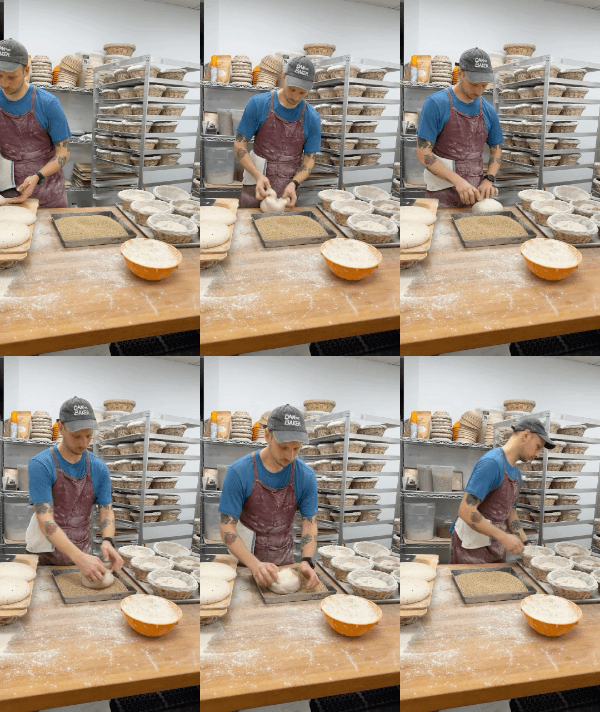
First up are two from Ohio baker Dan Riesenberger, aka Dan the Baker. Dan is famous for both the quality of his beautiful breads, as well as the inspiration for Wayne Caddy's "caddy clasp" shaping method. Where Wayne's method involves clasping the rounded dough into a batârd shape in one go, Dan first gives the dough a set of quick letter-folds to tighten it up. It relies on a well-hydrated and very relaxed dough to make it work. (I suspect he also shapes on the young side, which would let the dough flow as easily as it does.) Like so:
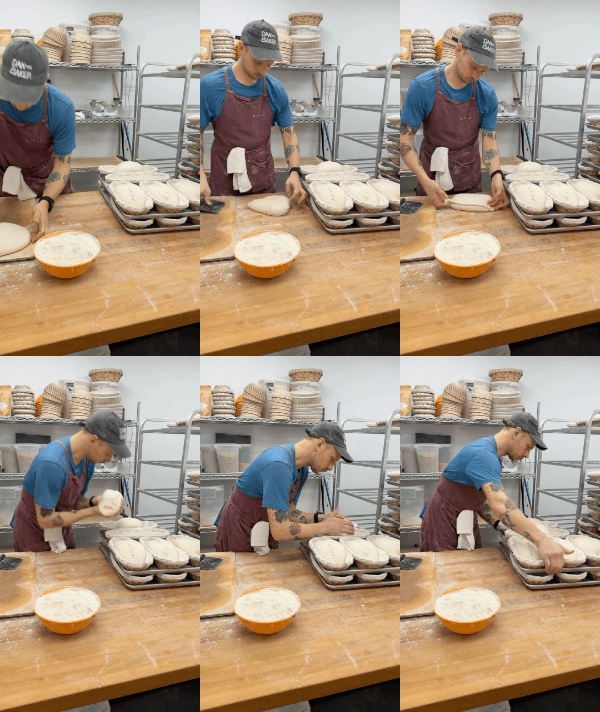
Dan also uses a unique approach to shaping boules, where the action happens almost in the air. He sets the (again, very relaxed, almost liquid) dough down on the bench seam-down and then quickly gives it a set of criss-crossed cinches before moving it to the banetton (or, as in this case, first coating it with seeds):
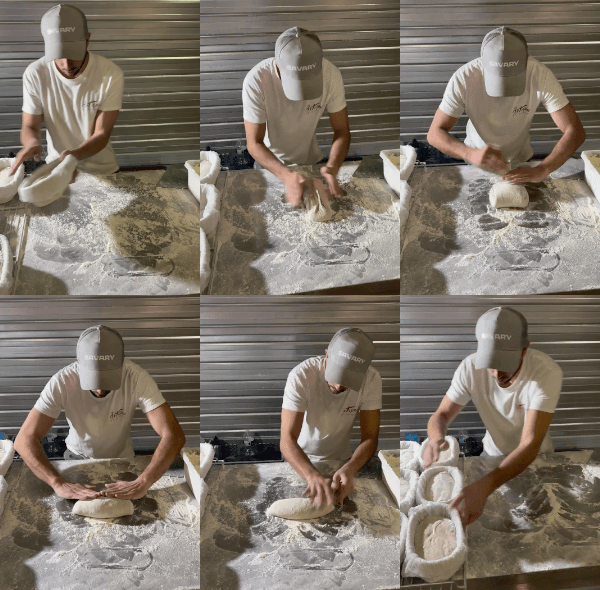
The next one is from French Baker "Tristan," who goes by Nos Pains Nos Gains online, who also tends to work with soft, highly-hydrated doughs. He starts with an oval preshape (which, at least in this video, is bulk-proofed in individual pieces in the same banneton used to proof the final shape). He then moves it to a heavily-floured bench and sorts of squashes and stretches it into a long rectangle. Finally, he folds this nearly in half, then forms it into a batârd by tuck-and-rolling it toward himself and then sealing the long seam like one might seal a baguette:
Speaking of boules, Tristan mentions in this video something I hadn't heard stated before, which is that boules are the most taut shape, which is why he tends to shape them with less tension than other types of loaves. (This explains why my boules always have a constricted, bursting-at-their-seams look.) To seal the seams, he lets them sit on the bench seam-down for a bit before transferring to bannetons, rather than working the dough more fully.
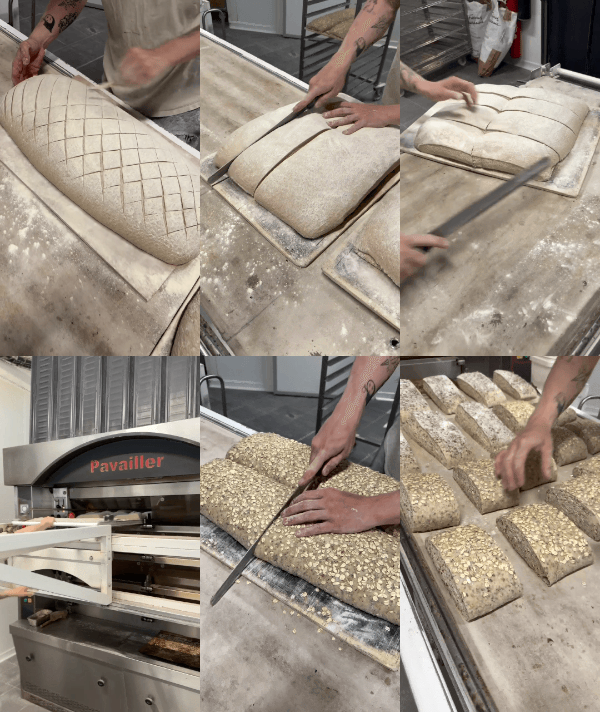
The last two vids involve dividing larger quantities of shaped, fully-proofed slabs of dough (which, in some cases are simply baked as-is) into smaller slabs, like one might cut ciabatta rolls. The first is from another French baker, Laurent Lachenal. From the looks of it, he's working with cold slabs of dough, which make it easy to cut and to move by hand to the loader. In some cases, larger loaves are scored before dividing, in others (smaller ones) after:
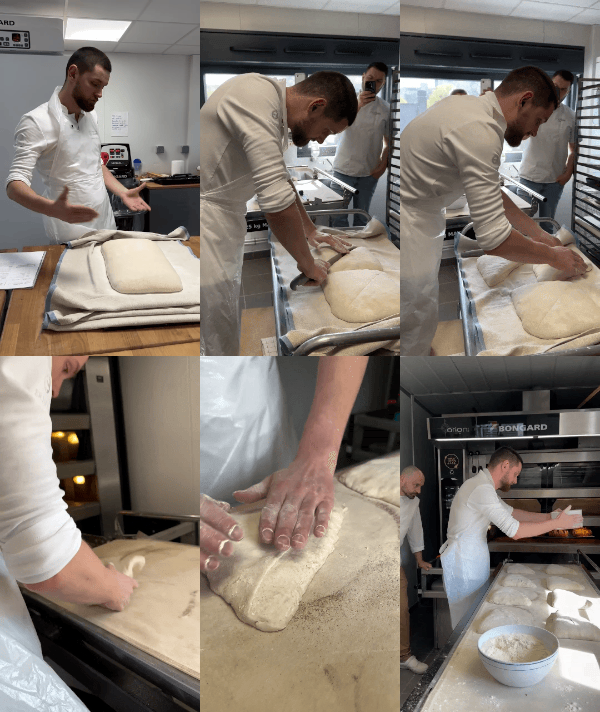
Finally, there's this one, from bakers Erwann Guillois, Simon Lebert, and Matthieu Samzun a trio of bakers who collectively go by Les Boulangers Bourseau. In this case, the baker cuts fully-proofed slabs of dough into triangles that he moves to the loader and cleans up before baking, without a score. It's not entirely clear whether the dough is cold, but it is much softer and liquid, so I suspect it is not:
I hope you find these videos as useful and informative as I do, and that they inspire you to try them out yourself. I plan to do these sorts of posts periodically, so if there are specific sorts of shaping methods you'd like me to cover—or videos you think I'd like to see—let me know in the comments below.
—Andrew

wordloaf Newsletter
Join the newsletter to receive the latest updates in your inbox.