Friday Bread Basket 8/8/25
I like them nice and flat
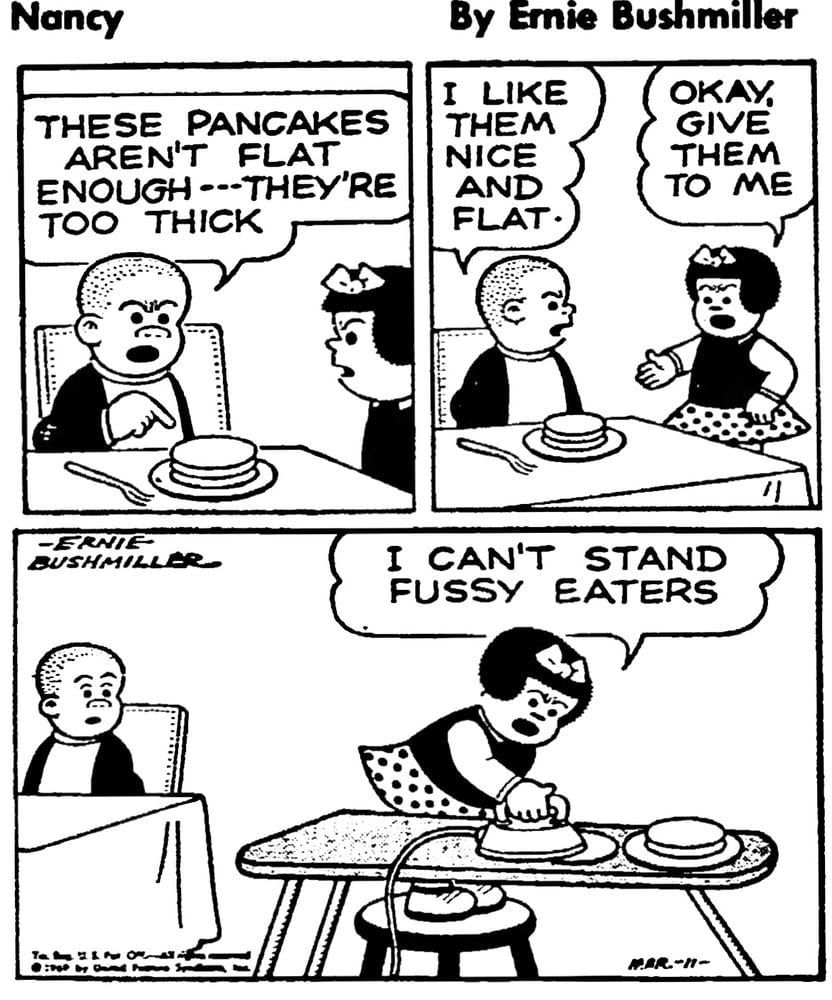
Table of Contents
Hello from the Wordloaf Friday Bread Basket, a weekly roundup of links and items relating to bread, baking, and grain. Just a heads up: Wordloaf is not taking it's usual August hiatus this year, but I am going to be on a foggy Canadian island with limited access to the internet for the next ten days, so my missives will be limited, at best. I'm finishing up an interview with Caddy-clasper baker Wayne Caddy, but I'm not sure when I'll be able to post it.
(Fried) fish evolution
Friend and Wordloaf reader Chris Bulow shared a link to a 2004 Charles Perry LA Times story about the (apparently) singular origins of crumb- & batter-coated fried fish and vegetables, which have their origins in Moorish Iberia. I for one am glad that at some point the recipe dropped the use of hair-tonic aromatics:
You’d think this clever idea would have occurred to lots of people, but it looks as if it was invented just once, in the Iberian Peninsula sometime in or before the 1200s, because the first description appears in a 13th century Moorish cookbook written in Arabic. The recipe for hut mu’affar starts with fillets of fish. (The fish has been lightly poached first to make the fillets easier to separate and bone.) It continues: “Then take ground bread crumbs or wheat flour and add eggs, pepper, coriander, cinnamon and spikenard, beating them all together. Roll the pieces of fish in it over and over, then fry in fresh oil until browned.”
This was served with an oil and vinegar dressing flavored with cumin and soy sauce, which sounds pretty good. The spices in the flour don’t sound bad to our tastes either ... except perhaps for the spikenard, a resinous aromatic mostly used in hair tonics.
The name hut mu’affar means “dusted fish.” So the original technique might have been to dip the fish in eggs and then “dust” it with the bread crumbs, rather than beating the eggs and crumbs together to make a batter. There’s not a huge difference, anyway, between mixing the crumbs and eggs in a bowl or on the surface of the fish. The two techniques are often found side by side.
 Charles Perry
Sun, sand, and sandwiches
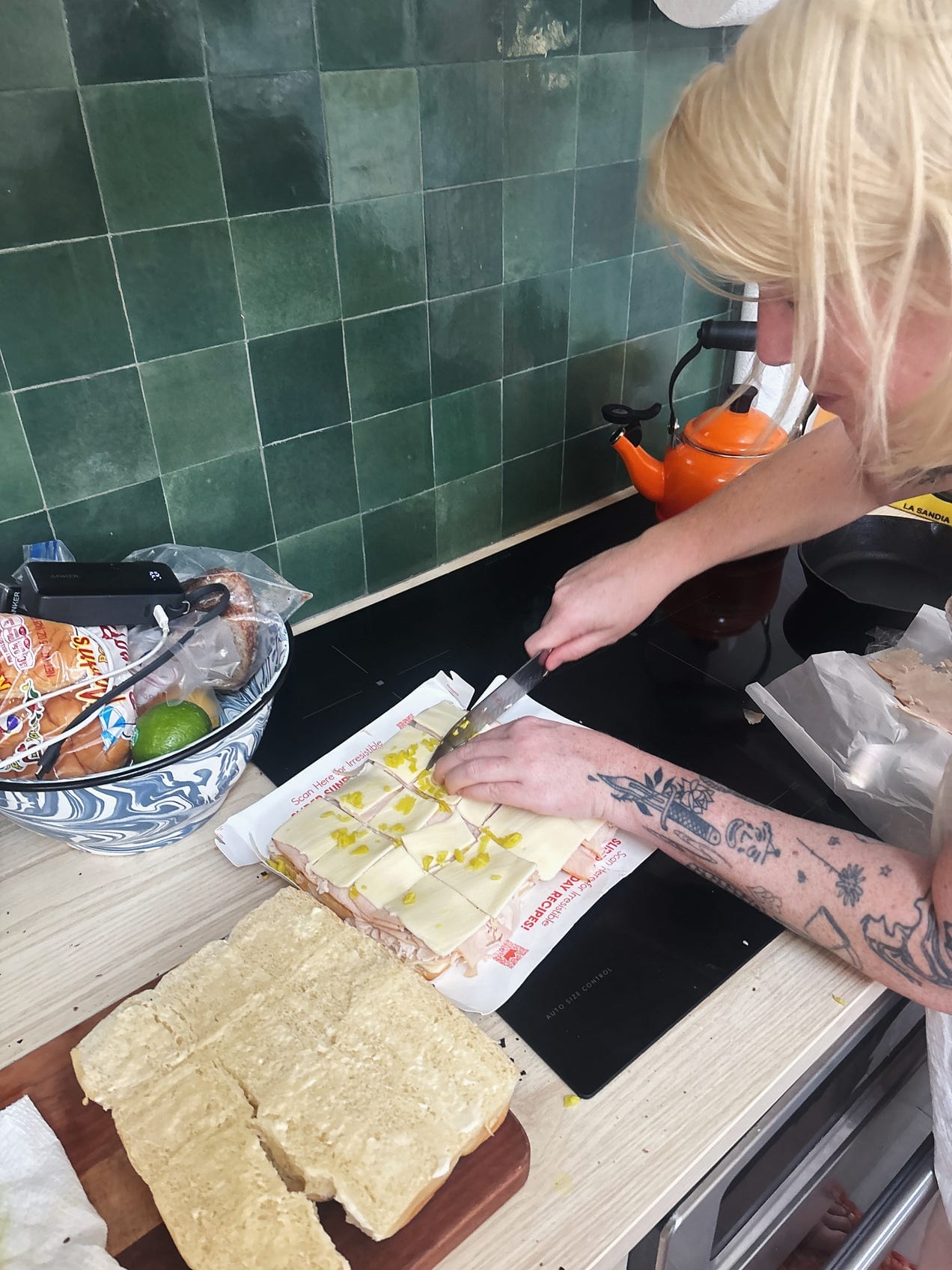
I loved this idea from Marian Bull for making "pull-apart" beach sandwiches from a bag of King's Hawaiian rolls, the secret to which is pre-scoring the fixings before assembling the megawich:
There was something about the turkey sliders, which pulled apart easily with the squeeze of a sand-dusted hand. It may have been the level of mustard, or the sliced parmesan, or the chopped banana peppers, or simply the fact that we were on the beach, but it was likely all of this: the sandwich gestalt. Of course I had to try to recreate them the following weekend—I added a little mayonnaise (couldn’t help myself) and a layer of salami (why not), and again the beachgoers were happy.
One of the great pleasures of not having TikTok or Instagram on my phone (any and all family history of addiction [half WASP/half Irish Catholic] has funneled directly into my relationship with my phone and if I have TikTok on there I will be on it 8 hours a day and fall into an intense depression) is that someone will make a viral recipe and I will have no idea where it came from. I hear that this format of sandwich is popular in short-form videos, but it’s a little more fun to hold on to the ignorant belief that my friends invented this party trick. It is one of the greatest beach snacks I have ever made or consumed: communal, novel, punchy, easy to transport. Add the salami if you want! I wrote a recipe for it.
 Marian Bull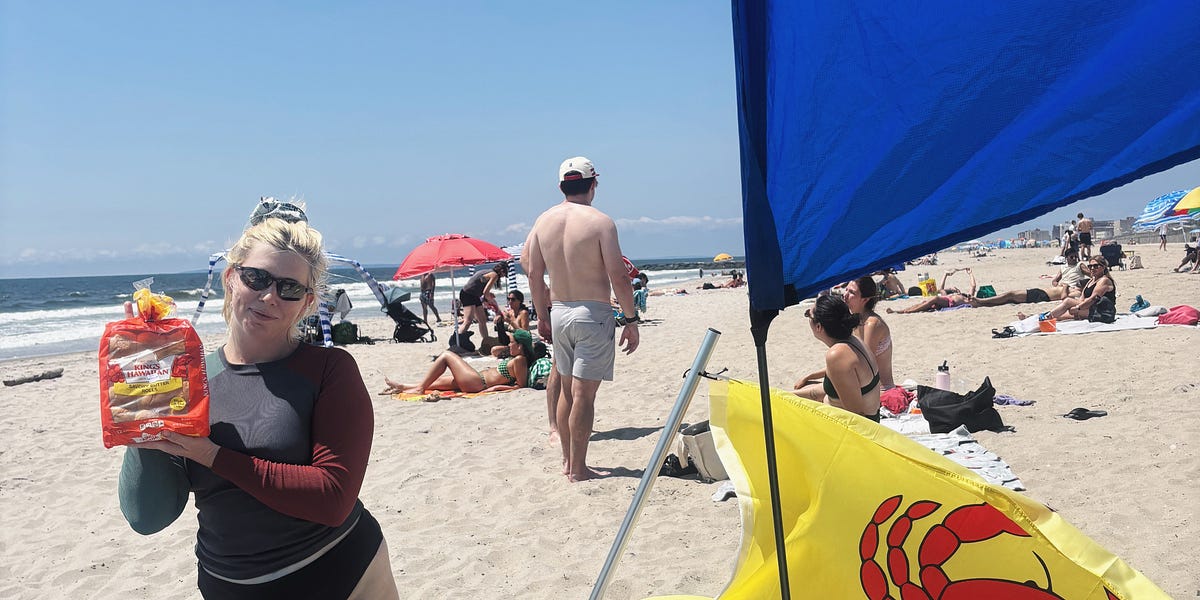
Sun's out, buns out
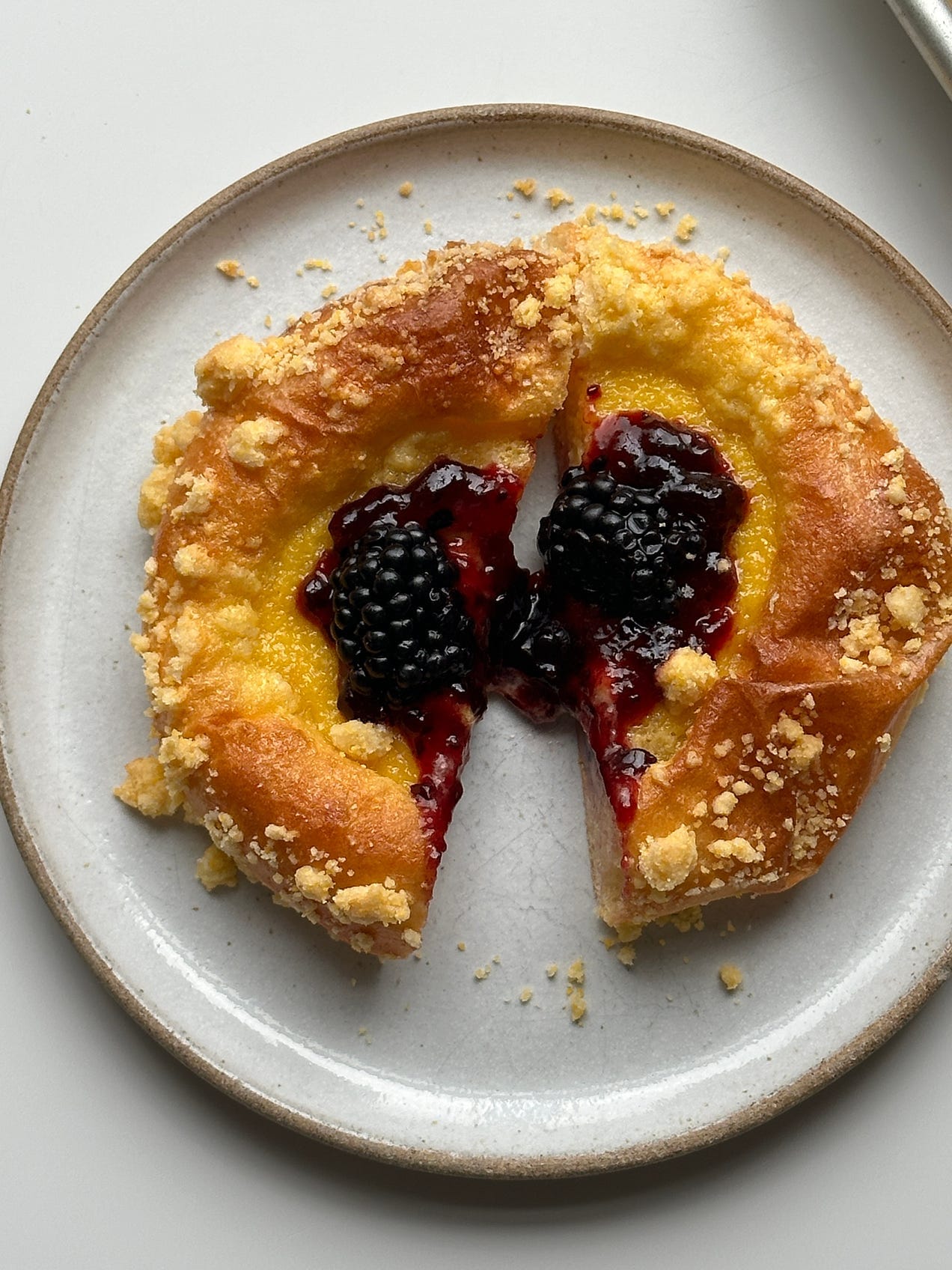
These Golden Corn & Blackberry Brioche buns from Nicola Lamb look very, very good, and the recipe she shared for it received the sort of thorough testing that is her trademark:
The first dough was a classic brioche, swapped to olive oil instead of butter for maximum squish. I cooked the polenta at a 1:5 cornmeal-to-milk ratio, then folded it into the dough with the wet ingredients. The oil was added toward the end, after initial gluten development. On paper, the hydration sat at 72% without including the polenta liquid, but jumped to 104% with it. Sounds like a recipe for soup, right?
In the second dough, I made a super-rich polenta, melting all the recipe’s butter directly into it and seasoning it generously. Here, the hydration was just 40% without the polenta liquid, and 97% with it. Again, potentially risky territory.
Surprisingly, both doughs behaved closer to their “without-polenta-liquid” hydrations. Cooked cornmeal clearly holds onto liquid far more tightly than wheat flour, since a dough with tangzhong at those effective hydration levels would be difficult to work with. That said, both doughs still felt about 10-15% more hydrated than expected, whilst still being manageable to handle.
Once proofed and baked, the same weight of dough made drastically different buns. The buttery polenta dough had a tighter, richer crumb and didn’t rise very much, while the version based on brioche was ultra airy.
 Nicola Lamb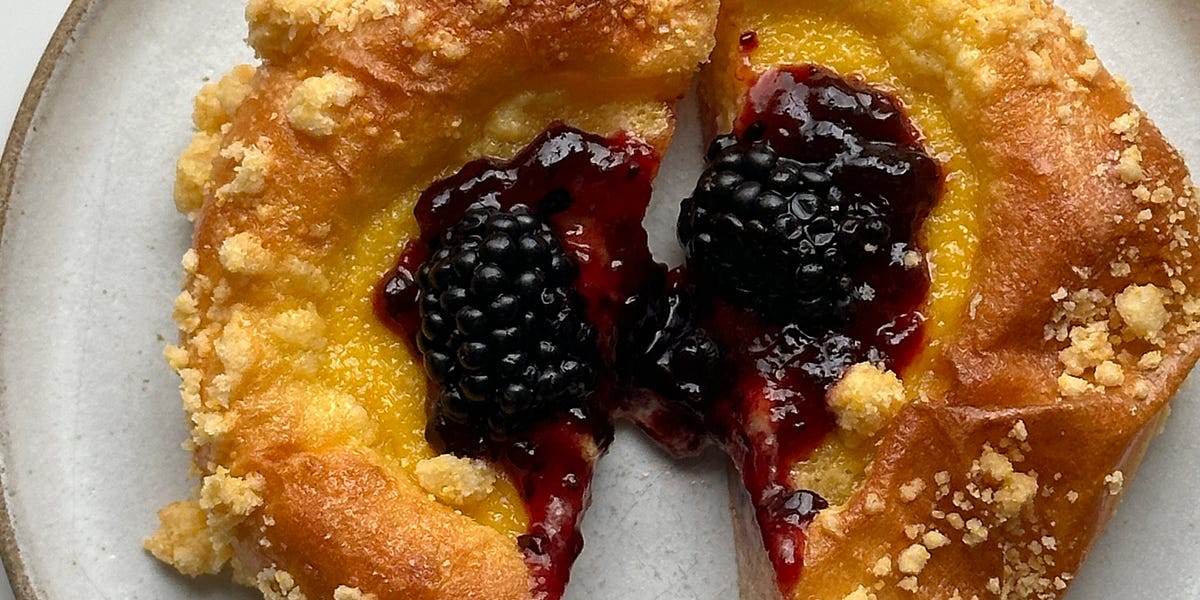

(h/t Peter Barrett)
That’s it for this week’s bread basket. Have a peaceful, restful weekend. See you once I regain reliable internet access.
—Andrew

wordloaf Newsletter
Join the newsletter to receive the latest updates in your inbox.