
Friday Bread Basket 6/5/26
Cairnspring fling

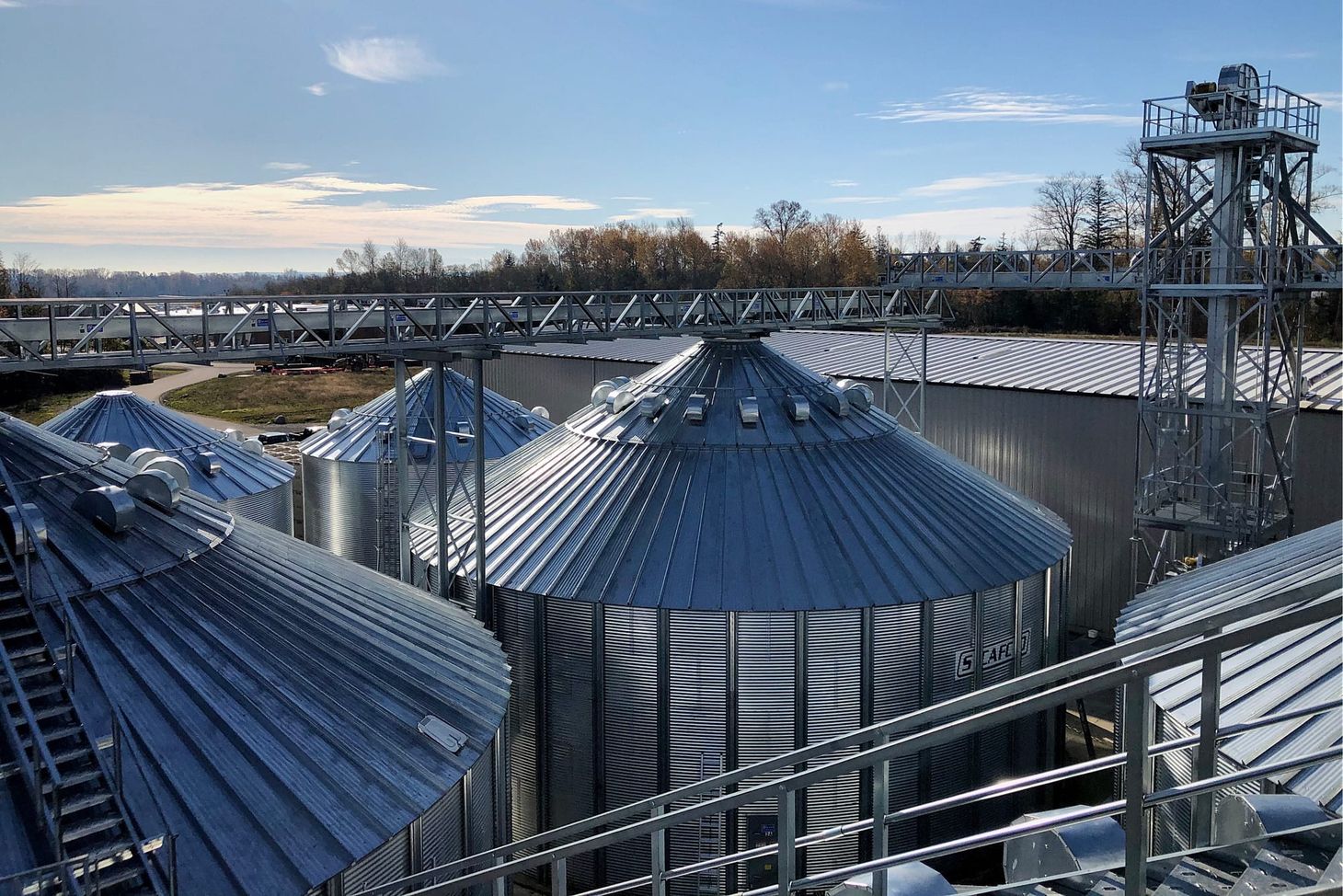
Table of Contents
Hello from the Wordloaf Friday Bread Basket, a weekly roundup of links and items relating to bread, baking, and grain. This week's basket holds three items related to one of my favorite flour millers, Washington State's Cairnspring Mills, which has made appearances in a few different venues recently, including two in the past month alone. I've used Cairnspring Mills flours for years now, and they've been a great supporter of Wordloaf since the early days, so it's great to see them having something of a moment right now.
I visited Cairnspring Mills when I taught at the WSU Breadlab back in 2019, at which point it was only a couple of years old. (I even got to walk the catwalks above their grain silos, as you can see from the photo above.) A January Civil Eats piece by Jason Dove Mark tells the story of how the miller (and the thriving grain economy it is at the center of) came to be, after the demise of the once-dominant pea-farming industry in the area:
Compared to the high plains of Kansas or the rolling fields of eastern Montana, Skagit County, Washington, is something of a backwater when it comes to wheat production. Yet over the past 15 years, the Skagit Valley has emerged as a national hot spot for innovations in grain breeding, artisan-scale milling, and experimental baking.
This broad alluvial plain, graced by the chiseled peaks of the North Cascades to the east and the forested humps of the San Juan Islands to the west, is home to the Breadlab, which develops highly nutritious, climate-adapted varieties of wheat, rye, and other grains. One of the nation’s two King Arthur Baking Schools shares space with the lab. Cairnspring Mills, a favored flour purveyor for bakeries across the Pacific Northwest, is around the corner, and at the nearby Breadfarm bakery, the line of people waiting for baguettes, cookies, and massive miche loaves on summer weekends stretches around the side of building.
“We thought if we could get specialty wheat to grow here, you could get more per bushel. It turns out to be true.”
The seeds of the Skagit’s flourishing grain economy were planted at a time when the community faced a turning point. During most of the 20th century, peas had been a major cash crop here. In December 2009, Twin City Foods, the last remaining pea processor in northwestern Washington, announced it would close.
The sudden news shocked area farmers and left them hustling to fill some 6,000 acres with another crop that would fit into their rotation schedule.
They've come a long way since then, and—as Aimee Rawlins wrote for Offrange last month—they are about to expand big time, as they add a second, much-larger mill in Oregon later this year:
This fall, it will open a new mill near Pendleton, Oregon, which will have 10 to 12 times the capacity, able to process 110 million pounds a year.
The new Blue Mountain Mill is located on Tribal land of the Confederated Tribes of the Umatilla Indian Reservation (CTUIR). When it opens in the fall, it will add around 22 new jobs and more than double the farmers that Cairnspring sources from (going from 12 to about 30).
All of its farmers use regenerative practices, which include things like crop rotations, animal integration, cover crops, and low- or no-till. Cairnspring is also helping farmers reduce chemical inputs. (Regenerative farming limits chemical fertilizers, while organic farming eliminates it entirely; Cairnspring sells both organic and conventional flour.)
“We’re trying to meet the farmers where they are and bring both a market incentive and technical assistance [so they can] drastically reduce chemicals,” Morse said. “We do everything we can to flatten the learning curve, reduce costs, and make it economically viable.”
To promote the new mill, CEO Kevin Morse recently came to NYC, where he visited Bryan Ford's Diljān bakery, which uses Cairnspring Flours in its Afghan breads and pastries. The NY Times' Matthew Kronsberg covered it, and wrote about Morse's goals for the brand:
The new mill should give Morse the economies of scale needed to attract and supply a wider range of retail and wholesale customers. Right now, the retail price of a five-pound sack of Cairnspring Mills Sequoia T85 all-purpose flour is $18, compared with around $5 for a typical retail brand of all-purpose flour.
The ultimate goal for Cairnspring Mills, Morse said, is to “do for flour what Blue Bottle did for coffee.” That is, to create a premium but accessible product tier. Doing so at a national level isn’t just a branding exercise. In a category that has a few jumbo producers at the top, and a sea of tiny independents at the bottom, “establishing the missing middle infrastructure requires meaningful scale to create impact and achieve viable unit economics,” all while supporting regenerative agriculture at scale.
It was nice to see other small-scale millers—Arizona's Hayden Flour Mills and my "local" miller, Massachusetts' Ground Up—get a mention in the NYT story, too.
If Cairnspring Mills does manage to establish itself as a national brand, I hope it will also mean increased demand for flours from millers like them too. I'd love to see Cairnspring Mills flours scale up to the point where they are more affordable and maybe even available in supermarkets, but we need strong and resilient regional grain economies if our breads are going to make it past the challenges that an warming environment poses.
 Jason Dove Mark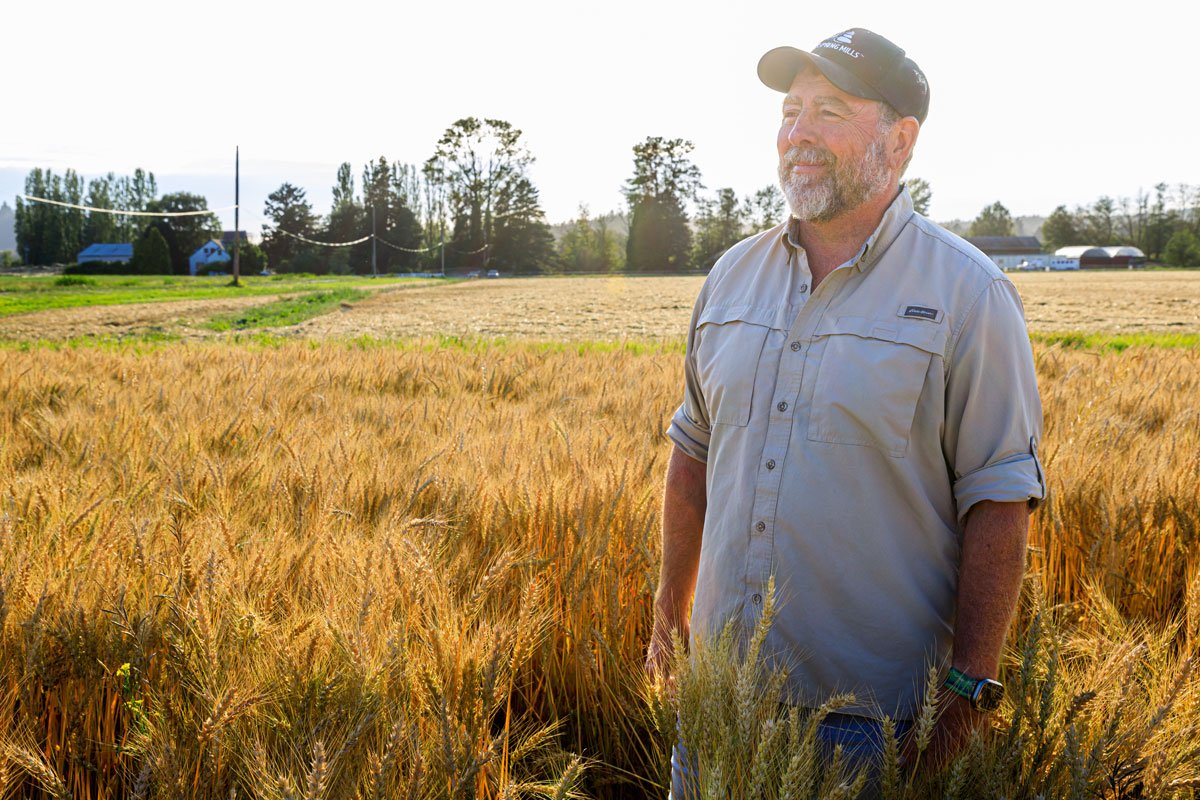
 Aimee Rawlins
(archived version of the NYT piece)
 swirlOsquirrel
Have a peaceful, restful weekend. See you next week.
—Andrew

wordloaf Newsletter
Join the newsletter to receive the latest updates in your inbox.