Black Market Clasp
An interview with baker Wayne Caddy
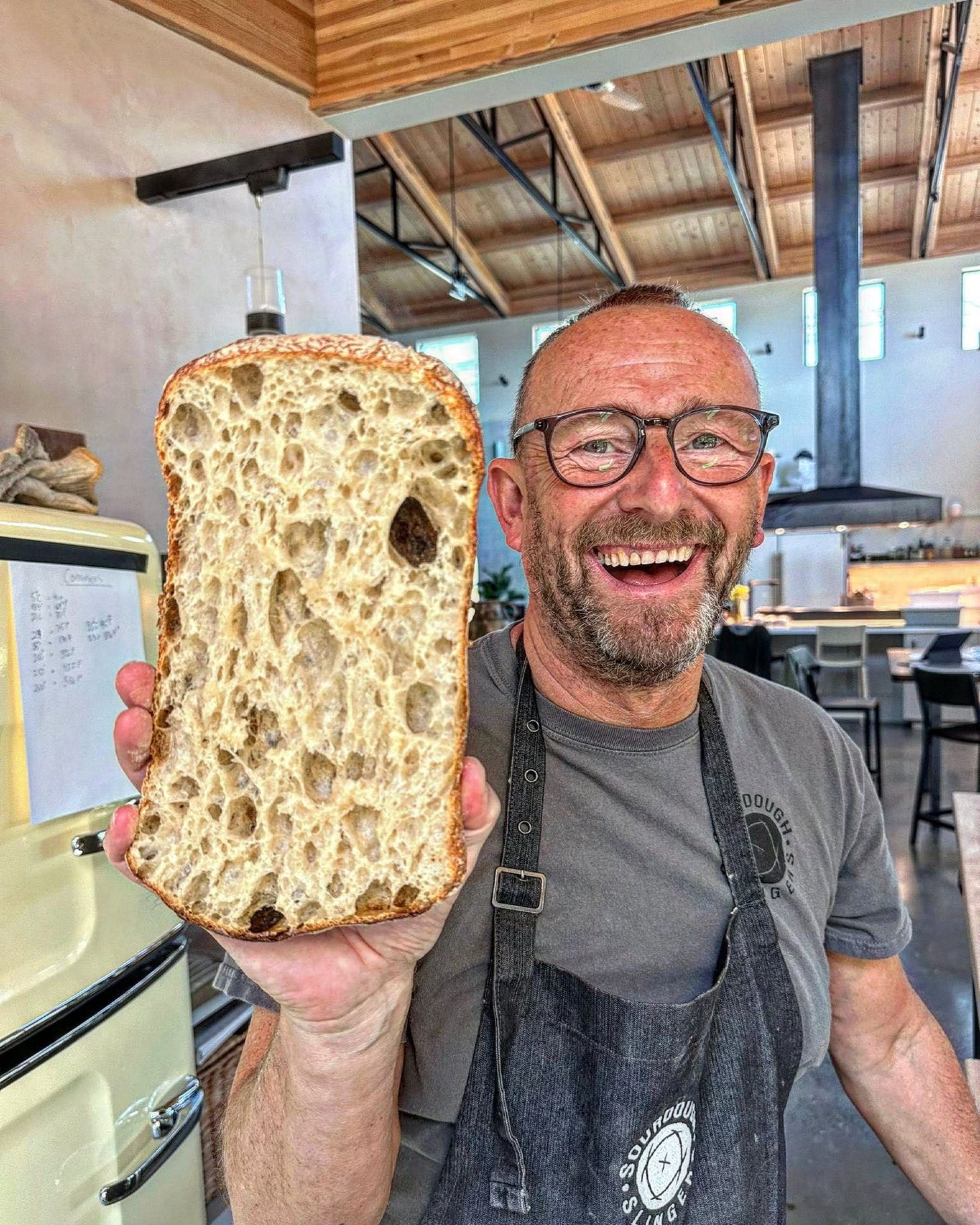
Table of Contents
A few months back I had a great chat with the English baker Wayne Caddy, famed inventor of the Caddy clasp shaping method (which is pretty much the only one I use these days myself), and a wonderful teacher of baking, both online and at his own Sourdough Slingers baking school. He's also a generous and genial guy, as should be clear from our interview.
Wayne and Sourdough Slingers have recently launched their first online workshop, a masterclass in sourdough baguettes. I've had a chance to watch and test it myself, and can highly recommend it for anyone looking to up their sourdough baguette game (it certainly worked for me, see below).
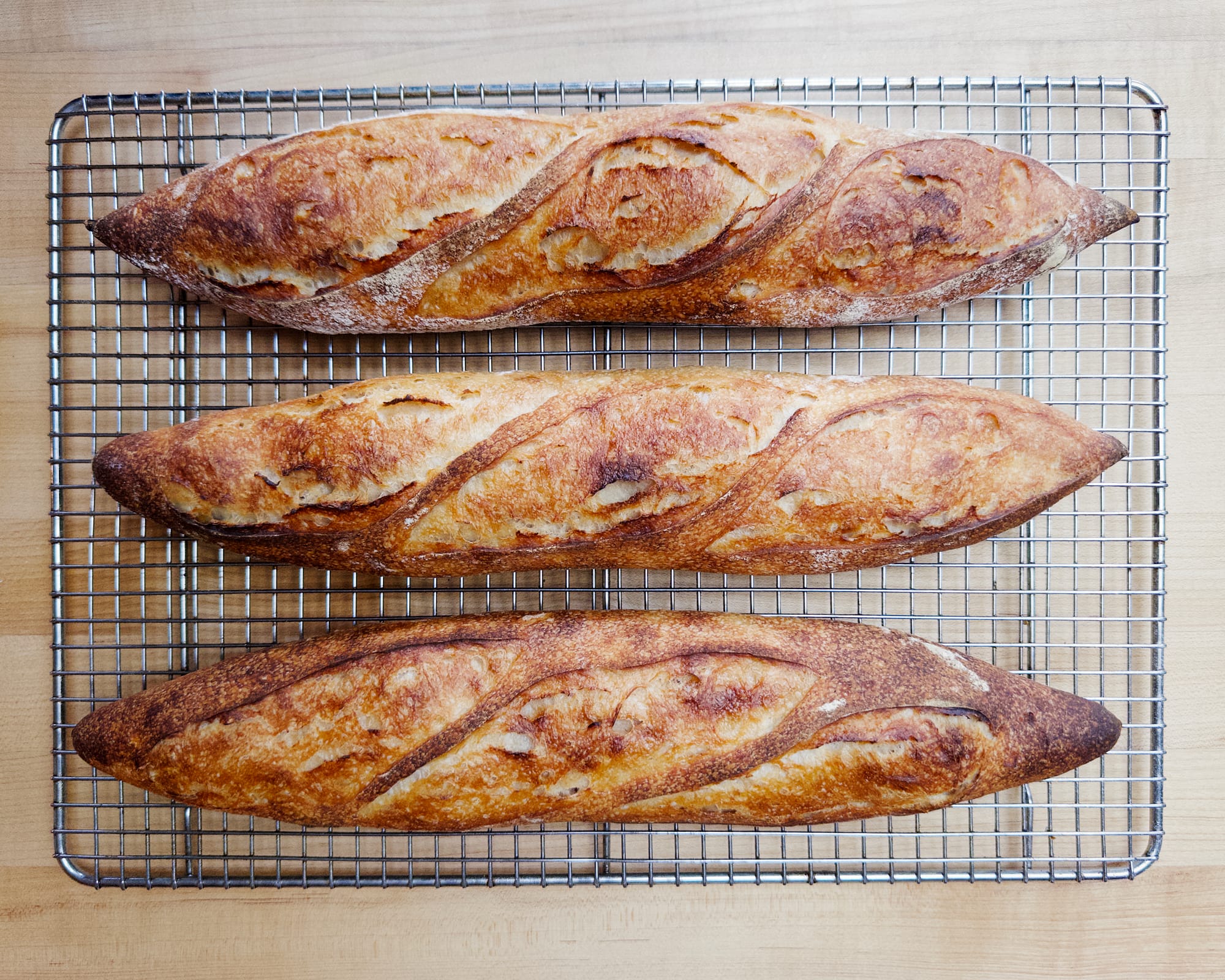
I shot a video demonstrating my new-and-improved baguette "cloche" method for home bakers, which he plans to add to the workshop eventually. In the meantime, I'll send the video directly to anyone who emails me a receipt showing they've purchased Wayne's workshop.
And, just a heads up: I got the edits of Breaducation back last week, and I need to give the manuscript another pass ASAP, so I am going to take the next 10 days or so to focus on that. The newsletter will return on 9/10, see you all then.
—Andrew
Andrew: Thanks so much for taking the time to chat, I know you're a busy guy. There isn't a whole lot of Wayne Caddy on the internet, at least in terms of interviews. [Ed.: Other than this great short film.] I'd love to start by hearing about the world you grew up in and how that led to baking bread and what you're doing now.
Wayne: I've been baking closer to 40 years than 30 [now], which is scary. It doesn't seem two minutes ago that I left school and I wanted to be a musician. I still play a lot of guitar, but I wanted to be a musician [back then]. I never really thought I'd end up in baking at all.
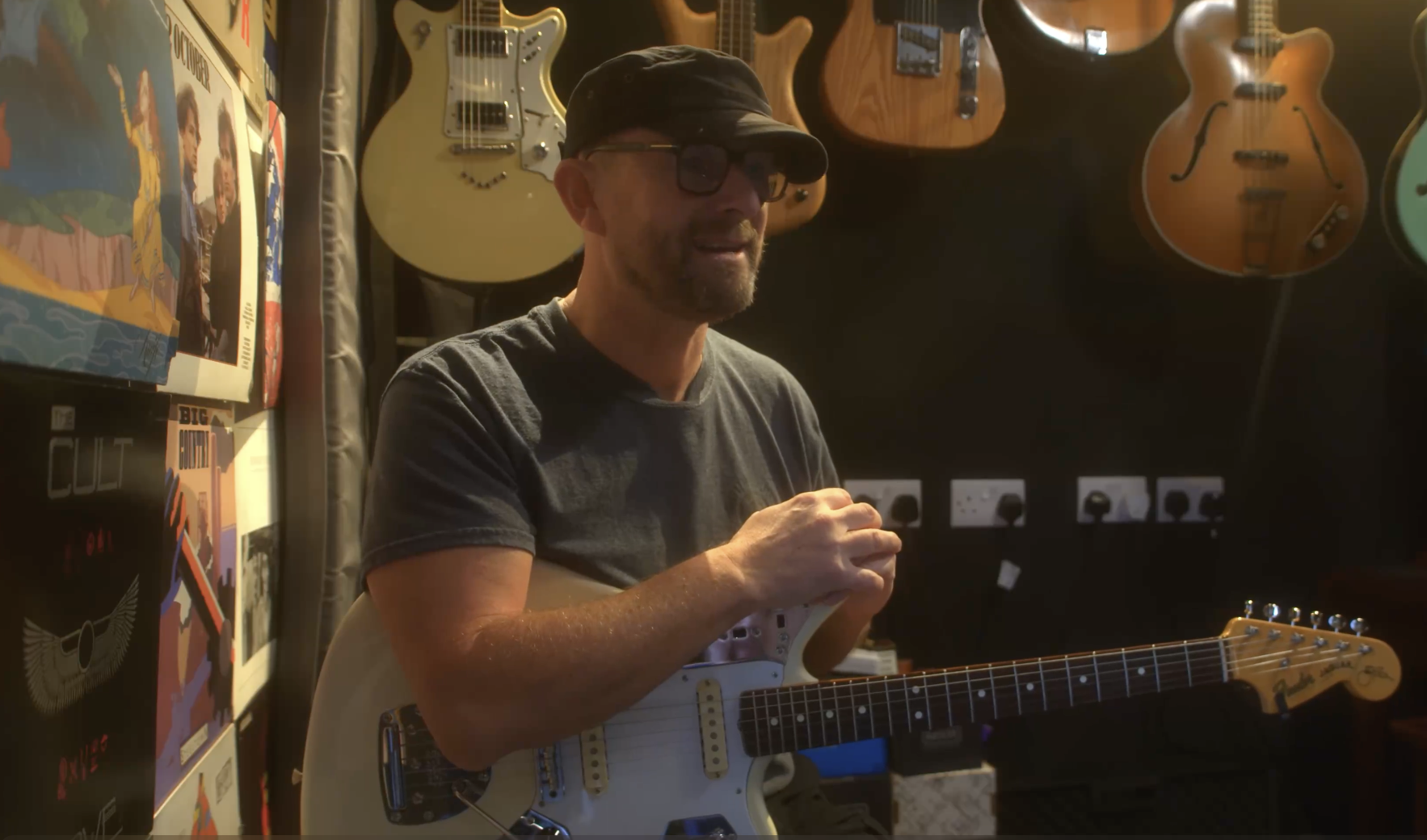
So, it was a happy accident that I went to music college for a bit and didn't get on with that. Then I got a job in a supermarket just stacking shelves. I thought, Oh, the bakery smells nice! Being a musician, I'm geared towards working with my hands, I guess. I pestered the bakery manager there for a job for ages, and luckily a position came up and I started baking. And I absolutely loved it—it just came really natural to me.
I did that for about five years—baking, early starts, night shifts, carrying big sacks of flour. I also pestered the hell out of my bakery manager to go to college on day release, so I was working a lot of hours and going on my day off to college. I studied at Sheffield College and then went to Leeds to study bakery science as well, because I didn't just want to make bread—I wanted to understand what was happening under the surface of it all. It's just naturally the way I'm wired.
Then I applied for a job as a test baker at a big bakery in Sheffield that produced hot cross buns and other types of breads and rolls for Marks and Spencer, a huge supermarket chain in the UK. It was a bakery where they produced 10,000 hot cross buns [at a time], using a huge traveling oven.
I applied for that job because I really like cooking and being creative. As a musician, I was never like, Oh, let's follow the notes—it was always intuition. That followed on into baking intuition and blending a little bit of science and senses into that. Again, it's a musician bit, where you do use a little bit of technical stuff to work things out, but you don't really realize what you're doing on a fretboard. It's the same with baking—once you've got into it, [you don't] actually think about it—it's intuitive, it's muscle memory.
That was my first venture into test baking, involving understanding different types of flours and things like that. But also being creative and saying, Right, here's a new idea for a customer to launch. I spent at least 15 years of my career in new product development and process—coming up with ideas and then launching them big scale. I'm glad I did all of that—I've always thrown myself out of comfort zones.
After about 20 years of doing that, I set up my own consultancy business—troubleshooting, creating new products, and a bit of training. Then an opportunity came along when I saw an advert in a baking trade magazine called The British Baker to compete in the Coupe du Monde, the World Cup of Baking.
So I thought, Oh, that sounds interesting. I always like to push myself out of my comfort zone. There was a national competition at Birmingham National Exhibition Centre where bakers competed over two days to win best baker and get onto the team. There were categories for viennoiserie, bread, and an artistic piece. Long story short, I won that to get onto the team.
I competed against a guy called Emmanuel Hadjiandreou—who has written lots of books now—who was teaching at the School of Artisan Food. And I said, Oh, where's that? He said it's in Nottinghamshire, at Welbeck. I said, Oh, crikey, I only live about half an hour away. And he said, Why don't you come over and do a guest class for us? So I did.
And the managing director said, This is our first year of running the School of Artisan Food, would you like to be part-time head of baking and rewrite the whole curriculum? It was a 10-month artisanal diploma in bread, patisserie, and viennoiserie, but bread was the main discipline.
Again, I thought, Oh, why not? I'd never taught before, but I thought, I've got obviously a lot of knowledge up in the old grey matter there. So I spent nearly 12 years developing an artisan curriculum for the School of Artisan Food. If you'd have asked me when I left school—I was a relatively quiet person and quite introverted—I wouldn't have said I'd have the confidence to stand up in front of people and command a room and those sort of things. I surprise myself when I look back because I know what I used to be like—it really brought me out of my shell.
I've always consulted in industry for huge businesses or one-man shows, and the thing I like about it all is that it's so diverse—I get to work with so many wonderful people. Most of the last decade has been spent with working with artisanal bakeries, and that's where my real happy place is, working for smaller businesses.
Sourdough Slingers
With the emergence of sourdough during the pandemic, we were seeing a new generation of bakers who fell in love with baking and decided, You know what? I don't like what I do in my day job. I want to do something that I really love. So after the pandemic [in 2022], we decided to set up Sourdough Slingers. [The idea] was to address the needs of untrained bakers with a real passion who started baking at home—to give them a good foundation of technical skill but also real hands-on approaches on how to work in a bakery.
We've also got established businesses coming [to us] with bakers that need training—I set up the Sourdough Slingers workshops to cover all different skill sets. We run about seven or eight different four-day workshops throughout the year, anything from a three or four-day panettone workshop, a four-day baguette workshop, to 100% sourdough. Things to help bakers drill down into a particular skill set of baking, because they're all different—rye baking, heritage wheat, fresh-milled flour, panettone, baguettes, or whatever—they've all got different technical abilities and outcomes to understand. And to put a little bit of formal know-how into why is this working, why is this going wrong. It's been an absolute whirlwind of success for us, but we feel very honored to meet everybody in that classroom, because they're such wonderful people that care so much about what they do.
My wife Helen is in with me on the business as well, we both run it together—Helen's front-of-house. The demand for the face-to-face workshops has been really surprising. The ones we're running this year sold out three weeks after advertising them last October, which was mind-blowing.
Originally we were working out of the equipment showroom at Bean Baking in Peterborough, which was fantastic. They were really helpful to us in our journey. Now we're working with Wright's Flour at the Sonata Pizza School in Essex. And they've got an all-singing, all-dancing, purpose-built facility with twin-arm mixers, spiral mixers, and proofer-retarders. They've got a pizza oven, obviously, with a rotating deck. So we feel very blessed, it's an absolutely amazing facility. I think getting [the workshops] closer to London has helped get people more interested in what we're doing.
We don't want any more work—seven workshops a year for us is absolutely fine. We could probably fill them double over. Being a tutor to a group of bakers for four days is quite exhausting physically and mentally, because we treat our workshops like a live bakery. I think we owe it to the students to give them some good technical ability, an understanding of recipes and baker's percentages, what DDTs and FDTs are and how to calculate those.
But we try not to overcomplicate it, because I think there's a lot of misinformation out there. A lot of it has to do with Frankenstein's monster—what I mean by that is that many roads lead to Rome in baking. [O]n social media, there are so many different viewpoints. And some of them are actually 100% right. Some might be a bit misinformed, but within their operational requirements, I think they might all be right. It's dangerous to do this Frankenstein's-monster approach where you think, Oh, so-and-so's doing this, I might use that. But it might not be relevant to what your operational requirements are in a bakery—if you try and bolt on different elements it can end horribly for for the bread.
For me, it's about its forgetting about recipe and process. What do you need within the bakery and what have you got? Without spending any money, what could you do? I try and get to the best bread ever in the least amount of time, with the least amount of touches. That way the baker has quality of life as well, because bakers are well-known for burning the candle at both ends. I always joke, Make it as easy as possible, so we can go down to the pub as quickly as possible.
Of course, baking is all about a balance of science and senses. But I'm not a scientist. I'm applying science on a bench. I'm not expecting a baker to take an hour out to read about enzymatic action and the problems it can cause. I want to train bakers to be problem-solvers. You don't have time in a busy baking day to go and research all those things, so [you] try and identify those problems while you're at the bench.
At the heart of any good bread is starter management. That doesn't mean that you have to feed it 17.5 times a day—it just means keep it regular. I'm use a firm wholemeal levain because I know I can feed it once a day—it's got a rich food source in the wholemeal. And I use a relatively low seed, 1 to 10 percent. And it's a firm levain so that the metabolism slows down a little bit. So I know that I can feed it once a day. If I'm not around, I'll stick it in the fridge for a month.
If you ignore [starter management], ignore it at your own peril, because it's like building a house on sand. If you're building the house on a good solid foundation—that's your starter. If you've got good starter management that means that you've got a healthy levain.
I use what I call the Five Pillars Of Fermentation: time equals temperature, hydration, food source, and seed level (or inoculation level). If you factor all of those things in, then you can begin to manipulate the starter, the levain, and the dough system.
It never tires to me to see how wonderful bread looks in the oven. Or if it doesn't, you think, Oh, that was an absolute disaster, why was it? and learn from those fails. That's the great thing about baking—you think, Wow, yeah I've really cracked this, I'm on top of the world today. And then the next day, it's always just waiting to kick you up the ass to put you in your place. But as long as you think, How did it kick me up the ass? and dig back into why it failed...I think you've got to fail to be a better baker. I know it sounds crazy, but you've got to try things and work them out.
It's always a moving feast, baking. For me that's that's the exciting bit, to try and manage that thing it's not always going to be exactly the same. Baking's not an easy job, but it's even harder if you're baking for a living. If you're a micro bakery and there's a disaster one day, it's a big loss of earnings for you.
That's why we put so much into our workshops—they aren't one of those "let's have a glass of wine in the afternoon" sort of [thing]. We try and make them as realistic as possible and there's not one minute where we're having a rest. We try to give [lots of] information that can help them on the bench and be[come] a thinking baker.
Yes, we give students recipes, and the Sourdough Slingers recipes are also a production calculator so if you love a recipe you can just type in how many you want and the scaling weight you want, and it works all the recipe out for you. Which is fantastic, but it [also] empowers the baker to have the confidence to create their own recipe and be true to their own baking style.
I've always told my ex-students that I'd be honored if you don't change a recipe and you think my recipe is fantastic, but I would really love you to go away and flourish in your own style. I've seen that happen so many times. It's great to see them open up bakeries and be far better bakers than I could ever dream of. I just want to pass on every ounce of information I've got in me. There's no holding back because baking is a beautiful thing. And that's why I don't really hold too much to, Here's a recipe and a process. It's a philosophy of baking, rather than the recipe sheet—that's the thing for me.
The Caddy clasp
Andrew: I can't let you go before we talk about the Caddy clasp, because I know that many of my readers are going to want to hear about how you came up with it, and where you feel like it's an appropriate technique and where it isn't.
Wayne: It came from teaching a lot of people how to shape sourdough and how inconsistent it would be [when] I had a class of 18 students. You put a hundred loaves in the oven and they all look different, because the stitching [technique] is all about lots of touches —you've got to touch it about 20 times. And the more touches you put in—people have different tensions and things like that, so it responds differently. [Also,] it was really difficult for somebody to come in at the start of a 10-month program, to get them stitching would take [a long time.] Some people get it instantly, but some people have to work harder at it.
I saw Dan the Baker in the States doing a clasp, and I thought, that looks like a really nice way of doing it. He was picking up the preshape, putting it back down on the table and folding it. And then he picked it up again to clasp it into the banneton.
The single Caddy clasp
I thought, What if take out one stage of that and add it straight into the basket? I tend to make a bit more like what we call a Cornish pasty. So it's clasped a little bit and then you grab it on the ends like a trophy to lift it to put it in the basket.
My answer is that it works for anything, but the trick is it's not just the Caddy clasp—it's about the dough condition, starter management, levain, how you mix, good folding maintenance, getting the bulk fermentation on point so that the acidity is balanced. If you haven't got those, it won't work because you're not really putting that much tension into the clasp. All of those things matter.
The preshape needs to be a really firm preshape with a scraper on the bench, to get it very bold. And then you rest it for not too long—10 to 15 minutes. Again, it will depend on the hydration—for lower hydrations, maybe 65–70%, you might leave on the bench a little bit longer to relax the gluten so you don't tear it. But generally, if I'm talking about a sourdough that's around about 80 to 85% hydration, that's soft and super hydrated, I'm only going to leave it on the bench for 10 minutes to let it flow out a little bit.
I leave it on the bench where there's no flour. And if they skin over a little bit, that's great. If they don't and they're a little bit wet, I put a little flour on the outside. That's super important.
When I'm ready to clasp, I just take the scraper and scrape the underside onto the scraper, lay the loaf into my hands and clasp it together. Not having flour on the bench helps it sticks together very easily—I've sort of scraped it off. I'm hovering over my banneton and clasping it, dropping it in, and letting gravity do the work.
I'm just clasping on the last little bit of dough—like one millimeter of dough. And then I just nip the two ends together. That's the single caddy clasp.
The double Caddy clasp
[In the double Caddy clasp, Wayne makes one clasp and then sets the loaf back onto the bench, seam-up. He then does a second clasp along the opposite axis before moving it to the banneton.] The double Caddy clasp is more for really-hydrated doughs, you know 90% or so hydration.
If it's skinned over or if it's lightly-floured, I don't even flour the bannetons anymore. It's an 85%-hydration sourdough going into an un-floured basket, and that's because I've managed the dough from the starter right up to the preshape and bench rest. I'm being respectful of the dough right through to the Caddy clasp into the banneton, so it's not just the shaping technique—it's everything that goes before it.
I've just come back from Edinburgh, at a bakery called 12 Triangles, and I said, I know nobody believes me but just humor me, and we made hundreds and hundreds of loaves using the Caddy clasp and they were coming out great. Everywhere I go on consultancy, everybody now asks me, Show us, because we don't believe you. But people also message me and say, Oh, Wayne, we did the Caddy clasp. We saw you do it on Instagram and it's lovely.
I get a lot of micro-bakers that are on their own, and the stitching method normally takes about 25 seconds. The preshape on the Caddy clasp takes four seconds with a scraper. And the Caddy clasp, once you get into it, takes about five seconds. And that's a single or a double. So it's about 10 seconds touch time on the dough. So it halves the amount of time, at least, from stitching to Caddy clasp. The Caddy clasp is really about me getting to the pub as quickly as possible.
Also, because you've not degassed it as much, the dough is a little bubblier. So it means you can put it straight into the refrigerator at 4˚C and take it out the next day without any recovery time. And it delivers a really uniform crumb as well.
wordloaf Newsletter
Join the newsletter to receive the latest updates in your inbox.