A World of Good
Over a summer of collaborating with bakers from Singapore to Australia to Cape Verde, I encountered connection, empathy, and curiosity in ways that feel increasingly harder to come by
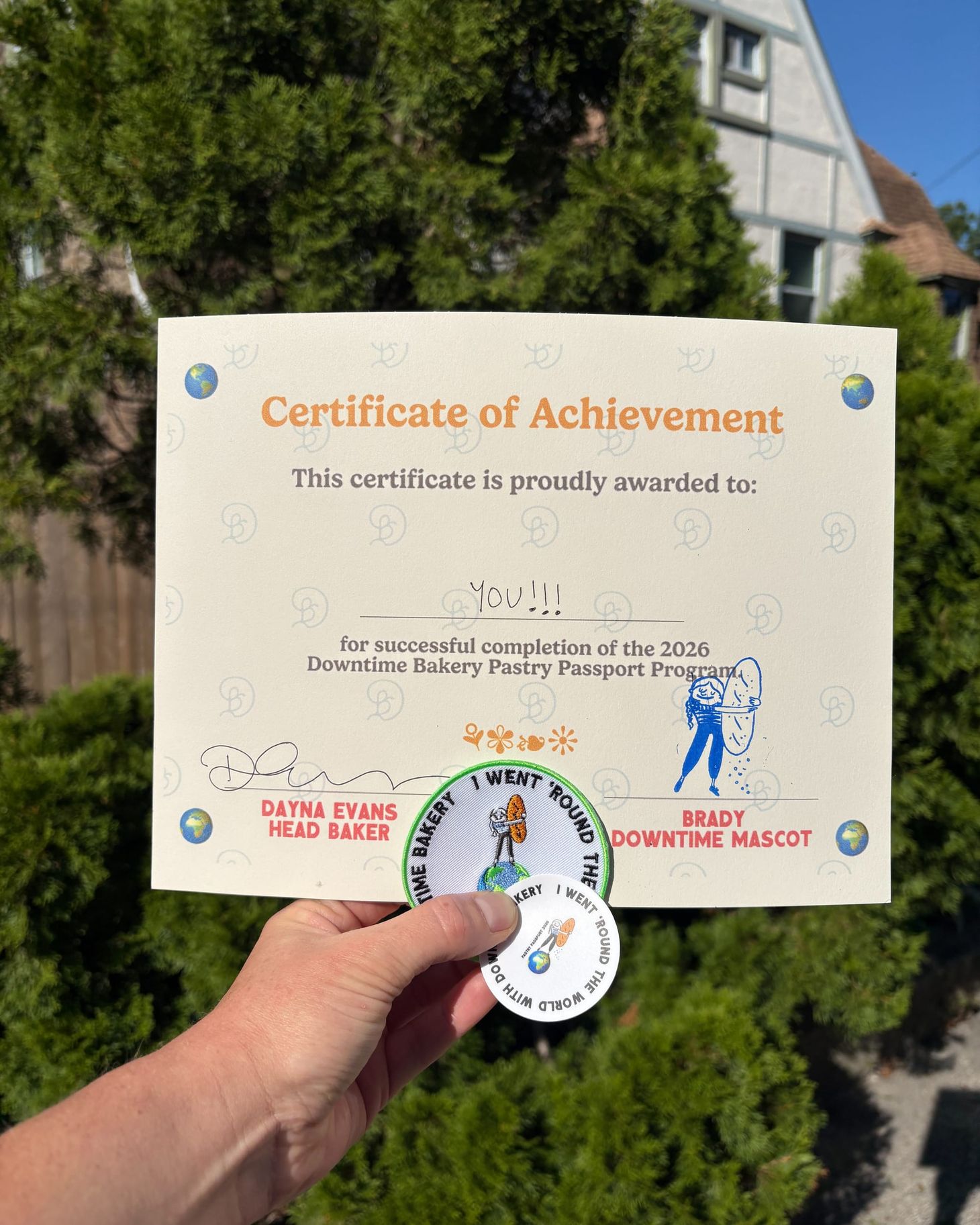
Table of Contents
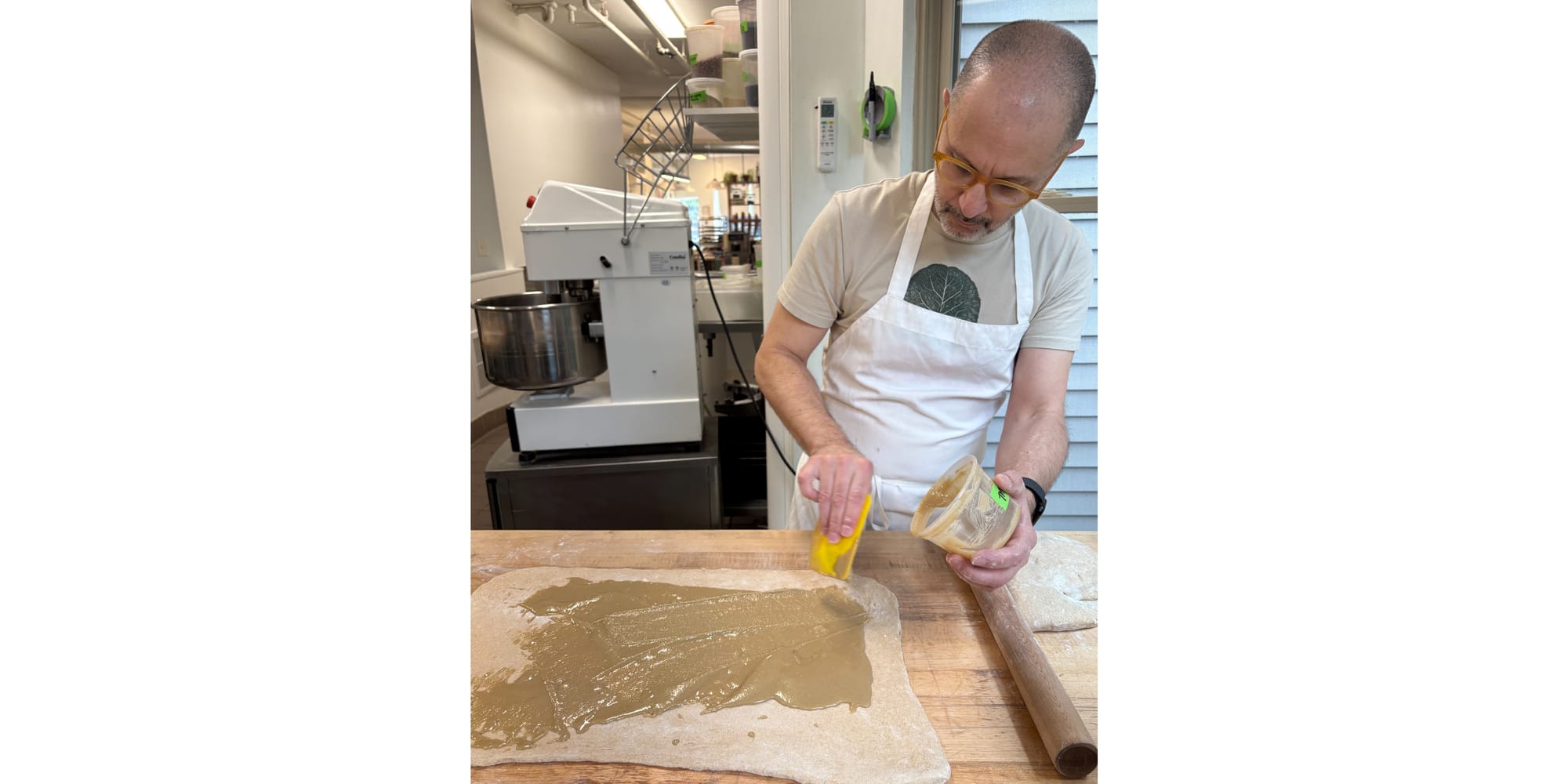
Today's newsletter is a guest post from my pal Dayna Evans, all about the "Pastry Passport" program she ran this summer at her Downtime Bakery in Philadelphia, something that I got to participate in myself, since one of the recipes she baked was one of mine. I even got to help test the recipe in person:
I loved being a part of it, even though I'm still a little sore that Dayna never used the accompanying playlist that I spent HOURS working on:

—Andrew
When you run your own bakery, no one is telling you go to work at 2:30 in the morning, but inevitably you end up doing it anyway. It doesn’t happen often. But it also isn’t often that you need several hours of undivided attention to produce bánh bò nướng, a Vietnamese pandan honeycomb cake that has proven to be a bit beyond your skillset. You’ve already tested the cake seven times, but on this day, when it hits the menu as that Saturday’s special, you are not taking any chances. You must do justice to the cake with its unparalleled texture (spongey, craggy, chewy) and unrivaled flavor (notes of coconut, warm vanilla, and toasted grass) so you get on your bike at 2:15am and turn the ovens on in the middle of the night.
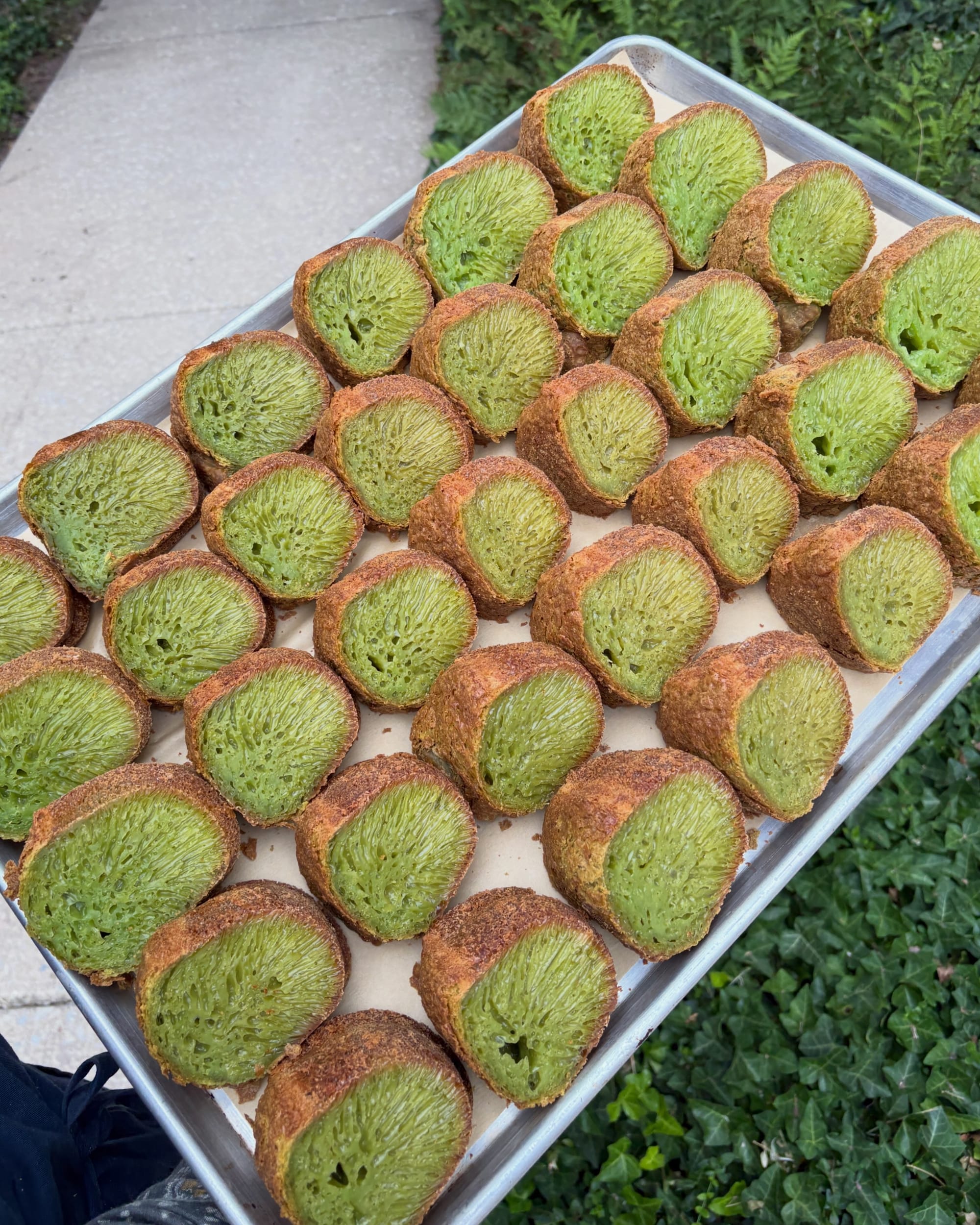
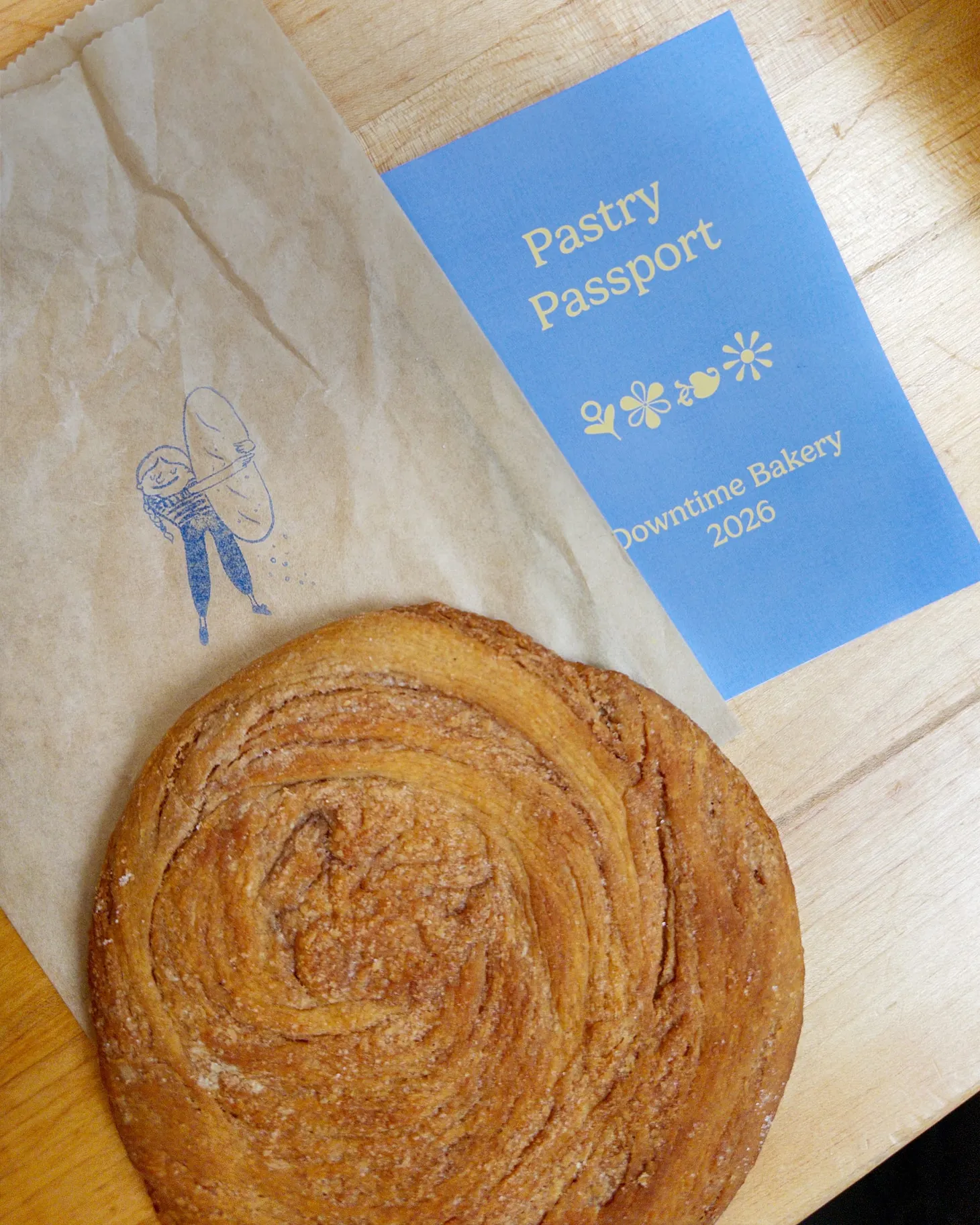
The recipe for bánh bò nướng came to me through Doris Hồ-Kane, a Vietnamese baker and writer who is raising funds to relaunch her beloved bakery Bạn Bè in Brooklyn. I had asked Hồ-Kane if she’d be willing to participate in something of a lark we were trying at our bakery from June to August—a new summer project my partner, Sam, and I had come up with to keep folks coming through the doors during the months when the bakery tends to be quieter. “It’s called Pastry Passport,” I had written to Hồ-Kane and eight other people who I admired around the world. “Every Saturday, we'll bake a special pastry inspired by a recipe from friends who are bakers with heritage in non-US places.” We planned to distribute a limited number of physical passports to customers, and every Saturday they could try the international pastry we'd made and get their passport stamped. It would be a trip around the world without ever having to leave Philadelphia.
Like most of the good ideas Sam and I have ever had, it came to us while in the car. One of the defining features of our relationship—both in marriage and business—is our attachment to and appreciation for shooting the shit. “Wanna chit-chat?” is how we usually frame it. Put us in a car for longer than an hour and undoubtedly something productive or outrageous or both will come out of it. On this drive, Pastry Passport started as an idea to showcase the esoteric, bygone-era British bakes that I grew up eating and for which I have immense nostalgia—but by the end, an hour and a half later, it had evolved into an expansive, 10-week project wherein I learned to bake pastries from countries around the world, interview bakers, chefs, and writers who had a connection to the place, and print certificates and make patches to add an incentive for our regulars to complete the project alongside us. If it seems like a lot of work, especially for a whirlwind summer fling, it’s because, well, it was.
Bánh bò nướng appeared during the fourth week of Pastry Passport summer and by then, hardly halfway through, I was fanatically devoted. No one volunteers to show up to work at 2 in the morning unless they’re committed to the bit, after all. On the first day that we had Pastry Passports available to purchase (for $1 each, to encourage those who got one to actually use it), they were sold out before lunchtime. We had only made 40 of them, but that was mostly to keep our pastry numbers from getting out of control every Saturday. With forty participants in the Pastry Passport, that meant we could make a guaranteed 40 pieces of that week’s treat, more for walk-ins. When I saw how fast the physical passports had sold, I knew we were onto something.
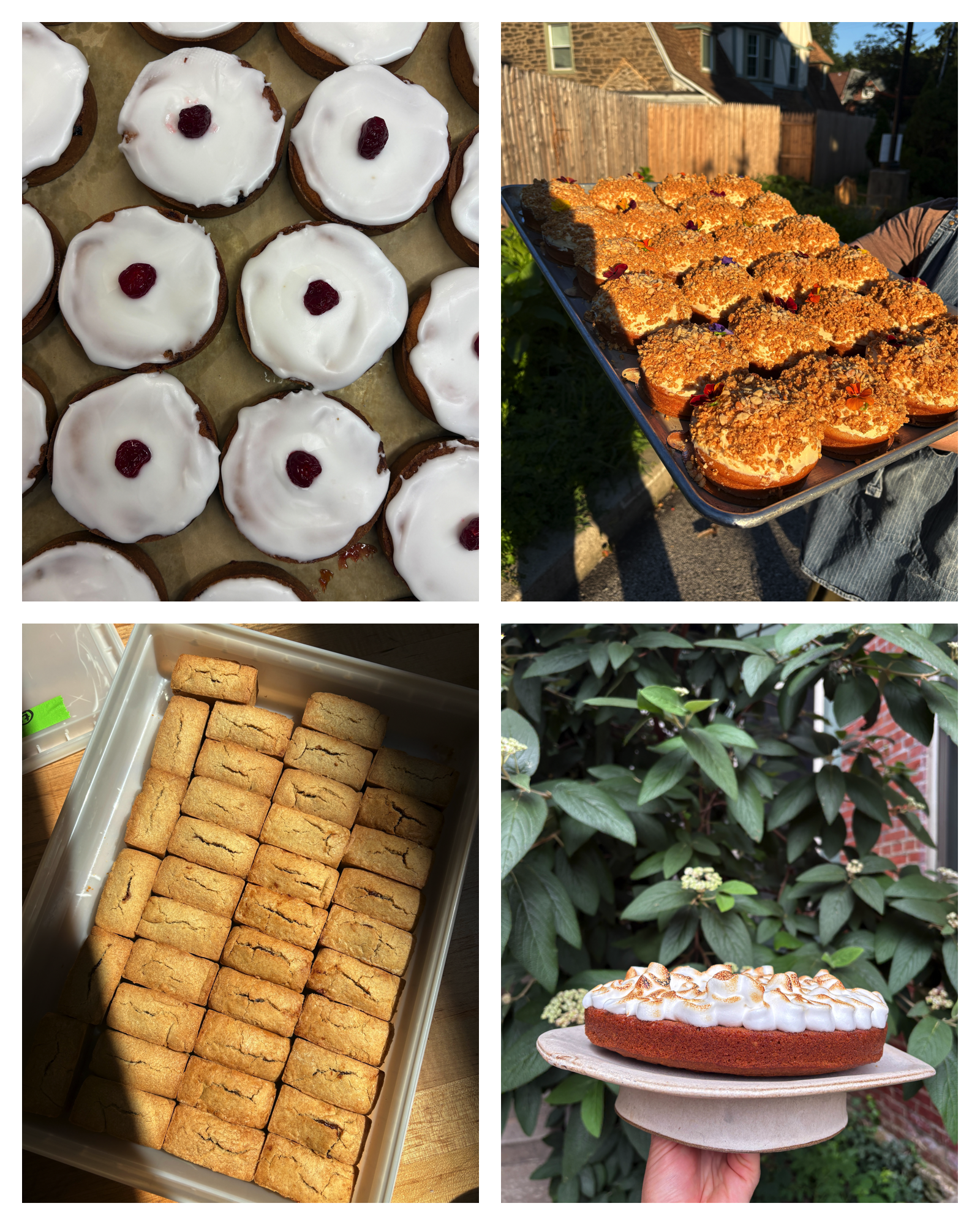
On Fridays, to preview our special on Saturdays, I’d send out a newsletter interview with the baker, chef, or writer we were highlighting that week. I’ve been a writer for a long time, and have interviewed some notable people, but these were some of the most insightful interviews I’ve ever had the pleasure of doing. Novelist ‘Pemi Aguda said this about Nigerian cooking and baking: “A lot of our food is decadent in heat and oils, and I think it’s indicative of a people who know how to enjoy their lives.” Baker and writer Gan Chin Lin told me this about being a vegan baker in Singapore: “I wish people also understood that ‘vegan baking’ or ‘alternative’ baking isn’t something modeish or new-fangled; if you only look closely, it’s always been inherent to the ways by which humans intuitively brought sweetness—not strictly necessary, yet crucial for joy and pleasure—to our lives.” Hosting these interviews and writing the newsletter was equally as fulfilling to the project as learning to bake with ingredients like piloncillo and pandan and sweetened tahini. As a bakery whose unifying mission is “as local as possible, whenever possible,” making malted pineapple jam for Taiwanese pineapple cakes was nothing short of a unique thrill.
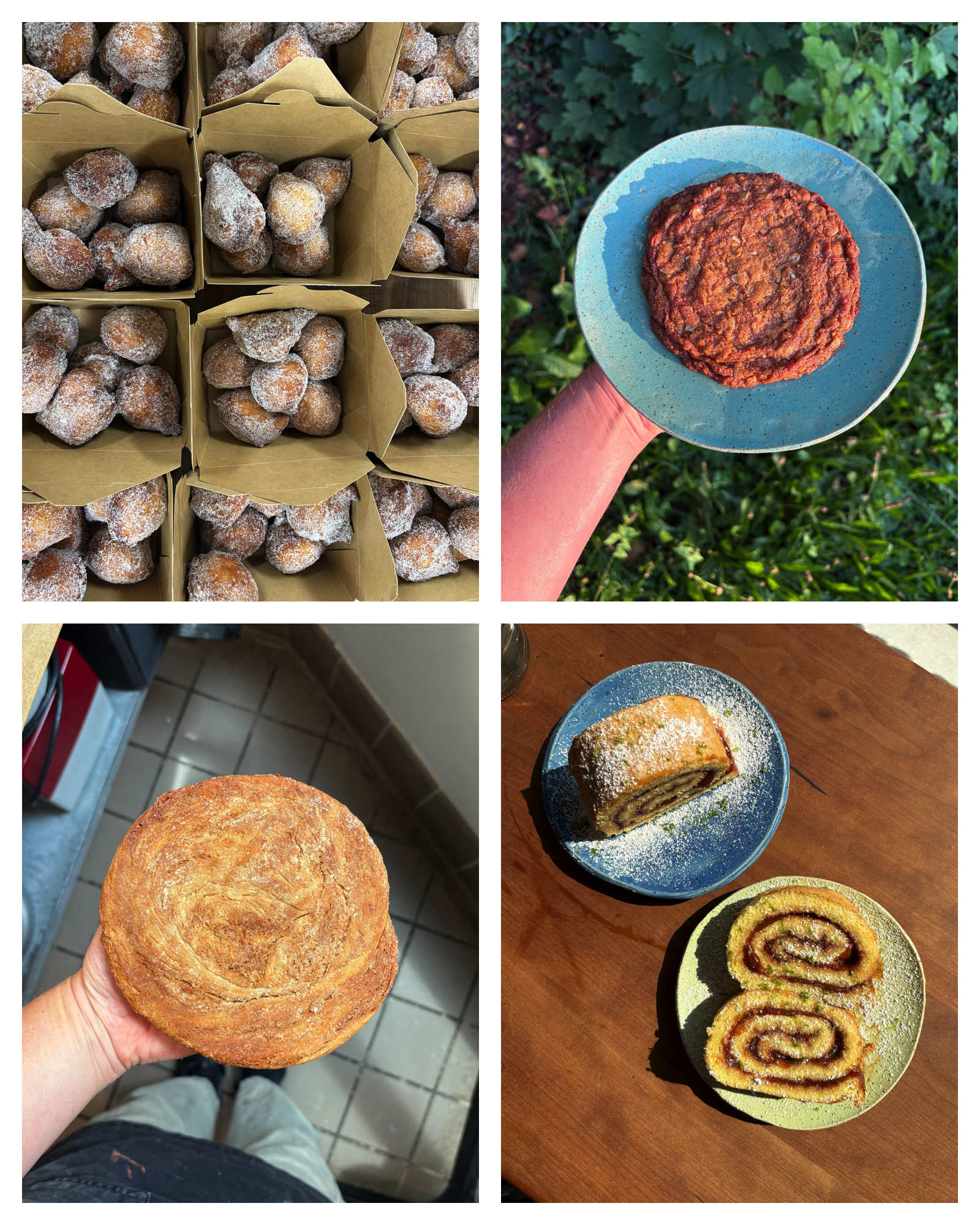
I’m not sure I will ever experience a feeling quite as good as watching people stream through the doors of the bakery, whether we’re running a crazy summer project or not. I’ve said often and will hopefully always get the chance to stand by it, but no one shows up to a bakery in a bad mood. The faces our customers make as they greet the pastry case are usually luminous, but on Saturdays this summer, when there were beautiful vegan Mexican cakes, laminated tahini breads from Armenia, Nigerian sugared donuts, milk-sweets from India, and oat-coconut biscuits from Australia, it was like a new level of joy for our regulars had been unlocked. There was a kinetic sensation at 9am when we opened, a feeling that the bakery had something exciting to share from the outside world to the world inside the bakery.
As the summer wound down, I told Sam, mournfully, “I’m going to miss Pastry Passport.” I enjoyed so much getting to learn new processes and ingredients—single-acting baking powder in bánh bò nướng; guava and lime jam in torta de goiaba; vegan Swiss meringue buttercream with aquafaba meringue in Singaporean confectionery cakes. It was all a way to deliberately expand and challenge my horizons, as well as those of our customers. In a time where cultures different from our own have begun to feel either increasingly faraway or flattened and misrepresented through the lens of technology and political despots, I felt as connected to and inspired by the nine other people who helped shape the Pastry Passport as if they had all lived down the street. I’m not so naive to think we were out here serving world peace for breakfast, but I do know that by August, I felt decidedly less lonely and, despite the best efforts of the powerhungry maniacs in charge in pretty much every sector, take your pick, I felt more hopeful that the world wasn’t fully going to shit.
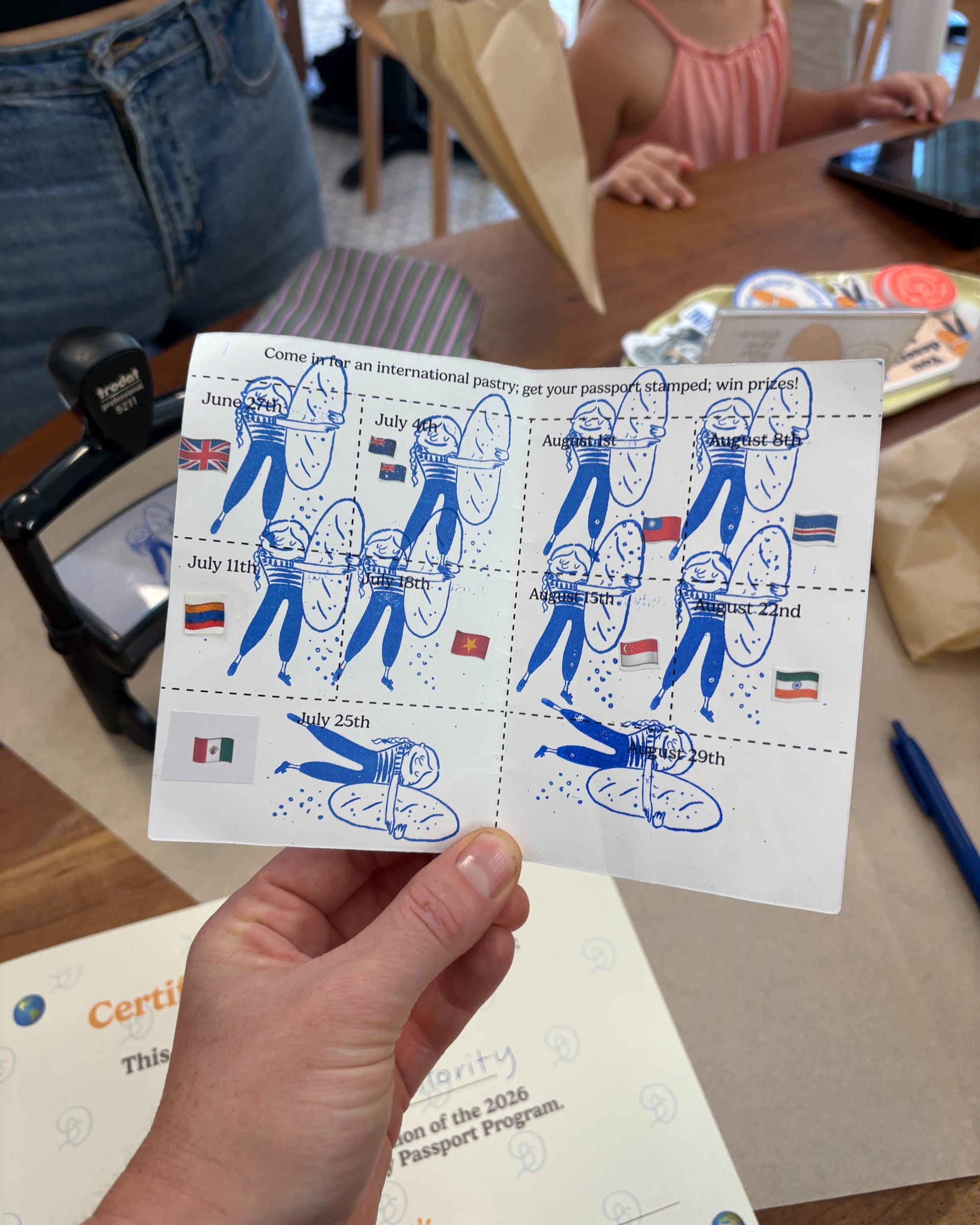
Before the final Saturday of the Pastry Passport program, the staff and I readied certificates, patches, and stickers for those who had made it to the bakery 10 weeks in a row to get their treat and their passport stamped. We had a rough estimate that at least 10 people had completed the program and we were right, it was 10 people overall. That means 10 people came to the bakery every single Saturday, through the summer, to try something new. And we had many more people who made it almost 10 times; some made it only 8, but imagine going to the same bakery every single weekend, eight weekends in a row. It was a feat. And I felt proud to pass off our little gifts to them, as a thank you for following along on something Sam and I had chit-chatted our way into existence.
A regular of ours came in that week, and, with a look of disappointment, told me that she had only made it to get her passport stamped 8 times, enough to qualify her for a sticker but not a patch or a certificate. We continued to chat, and she told me that actually she was traveling to Cambodia and Vietnam that fall, and after trying Doris’s bánh bò nướng, she was thrilled she’d get to try it or a version of it in Vietnam. “I’m going to look for it when I’m there,” she said. It was exactly the response I was hoping for. As we talked, I felt grateful to Hồ-Kane for so graciously and kindly fielding my questions about the cake, which, on that 2am morning, seven tests later, came out absolutely perfect.
wordloaf Newsletter
Join the newsletter to receive the latest updates in your inbox.